
See your price
Application

Fitting a motion sensor? Choose the right scaffold.

Fitting a motion sensor is a small job with a long tail. The box sits high on the facade or under an overhang, wiring has to reach it, and only then does the real work begin: aiming, trying it out and watching at dusk whether it triggers where you want. That means reaching one spot several times over. If the mounting point sits at six to eight metres, you hire the narrow RS51 of 75 cm for it. The rest of this page is about the rental period, the standing place and the height.

  • Order before 3 pm, delivered tomorrow
  • Professional Altrex scaffolds
  • Up to 14.2 metres working height
  • Easy to assemble yourself
4,2 tot 14,2 mWorking heights available
12Provinces served
7Days a week
200 kg/m²Load class 3
In short
  • For fitting a motion sensor we recommend the Narrow mobile scaffold.
  • A motion sensor at six to eight metres calls for the RS51, a mobile scaffold only 75 cm wide.
  • You go up three to five times: fitting, aiming, testing and correcting once it has gone dark outside.
  • Do not put the tower right under the sensor, because the build then sits in the middle of the detection field.
  • First 24 hours from €150 incl. VAT and delivery; every day after that 95% off.
Key facts for this job
FeatureValue
Recommended scaffoldNarrow mobile scaffold (Altrex RS TOWER 51)
Working height for this job6 to 8 metres
Available working heights4.2 to 14.2 metres
StandardEN 1004, load class 3 (200 kg per m²)
DeliveryOrdered before 3 pm, delivered next working day
Each extra day95% off, from €7.50 a day
Why a mobile scaffold for fitting a motion sensor?

Safe, stable and professional work at height

The fitting takes an hour, the setting up takes the rest of the day. A motion sensor has to be aimed, and whether it is right only shows when somebody walks up the path and the lamp does or does not come on. Almost always the head then has to turn a few degrees, so up you go again. You do not want to shift a ladder five times for that, certainly not in the dark with a screwdriver in your pocket. Hiring a scaffold to fit a motion sensor therefore comes down to one thing: a fixed stand that stays up until the sensor does what it should, rather than something you rebuild every time.

  • Three to five climbs for one small box
  • The sensor looks over where the tower stands
  • Working height 6 to 8 metres to the mounting point
  • Two rental days, because testing happens after dark
Read more about working safely →

Which mobile scaffold to hire for a sensor at 7 metres

For a motion sensor going on the facade at six to eight metres you hire the Altrex RS51, the narrow version at 75 cm. A box like that rarely hangs in the middle of a flat front elevation: it sits on a corner, above a drive, beside a garage door or at the start of a side path. In those places you often have no more than a metre or a metre and a half, and then 75 cm is the difference between fitting and not. Other models are under hiring a mobile scaffold.

If the mounting point stays below six metres, the MiTower comes into the running as well: a tower 75 cm wide for one person, with a working height of 4.2 to 6.2 metres. For a sensor above a front door or a carport that is enough, and you put it up single handed. Are you working higher, or do you want somebody on the ground watching while you aim, then take the RS51. Those two are set against each other in the comparison of mobile scaffold and MiTower.
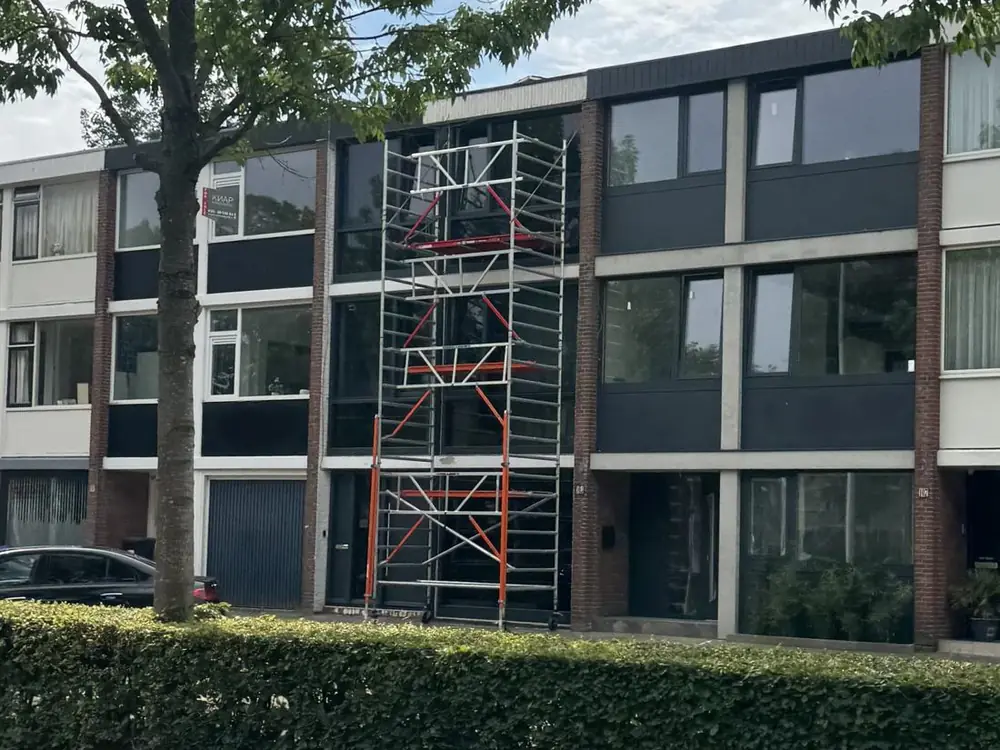
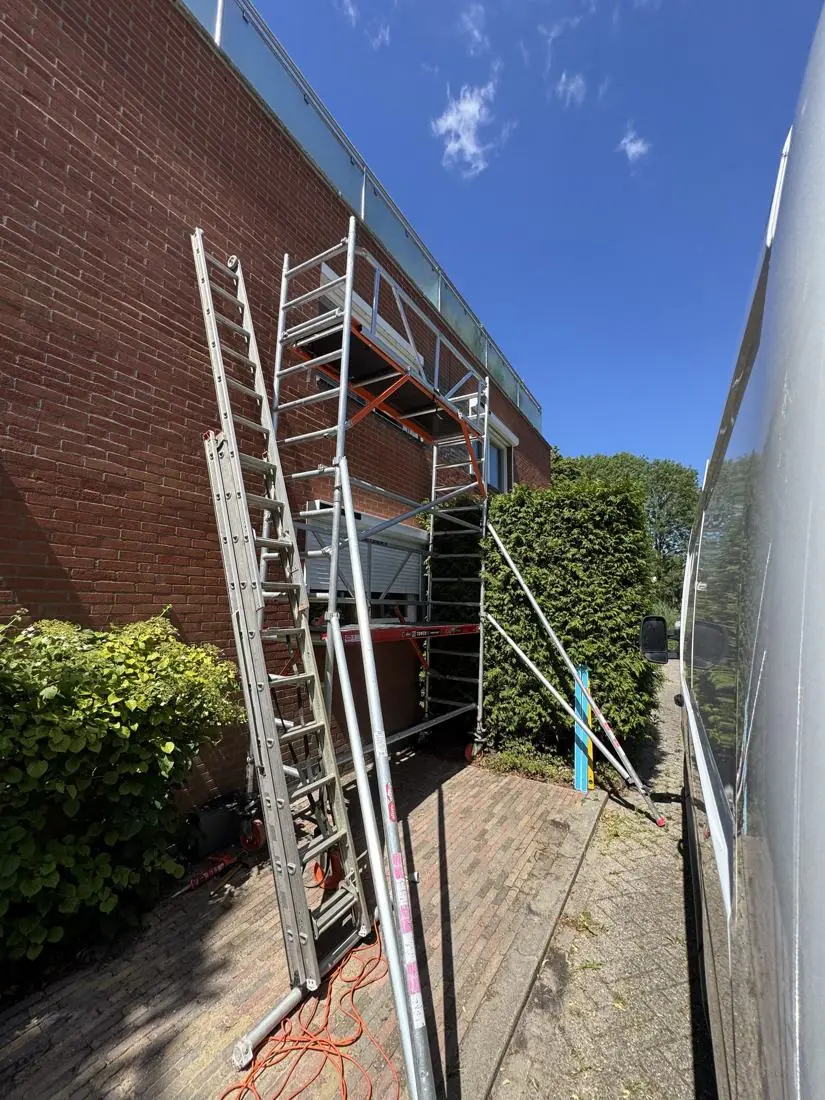
Narrow tower standing against the front of a house, the position that puts a motion sensor high on the wall within reach

On the platform you have more with you than you would expect for such a small box: a cordless drill, plugs, a screwdriver, a length of cable, a junction box and a voltage tester. A deck 245 cm long gives you the room to lay that out beside you instead of stuffing it into your pockets. On top of that you work with both hands above shoulder height on a motion sensor, and then you would rather not be balancing on a narrow rung as well. A ladder simply cannot offer you that.
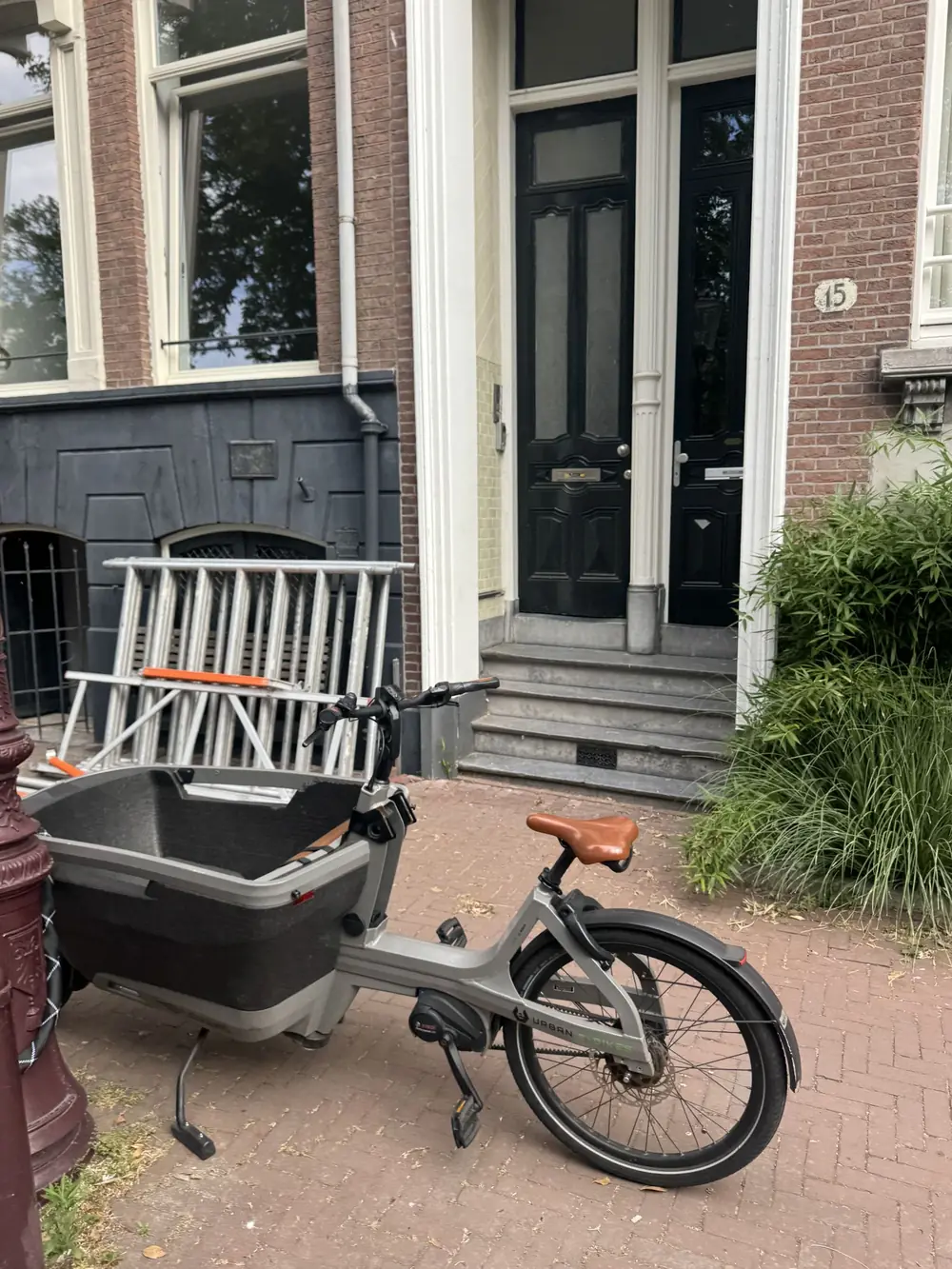
Hiring the working height up to the sensor mounting point

Do not measure to the gutter but to the point where the box will actually sit, because on this job that easily saves you a metre. With the motion sensor under the overhang of a second storey you come out at six to eight metres of working height. Reckon back from there: your deck hangs about 2 metres below that figure, since you bridge the last stretch with your arms. The page on a working height of 7 metres shows which build goes with it.

Take the ground under your wheels as the zero point, not the threshold of your front door. With a sensor above a drive that is a real difference, because a drive like that often falls away towards the street and your tower then stands lower than the house. A raised terrace or a garden that steps up shifts your starting point too. In doubt between two builds for work on the second floor, take the roomier one. Half a metre short costs you a whole build.

Mobile scaffold at working height beside a house, the reach a mounting point under a roof overhang asks of you

Choosing too tight is more of a nuisance here than on painting work. You have to drill with both hands, set a plug and then turn a small clamp inside a housing, and none of that works with your arms stretched over your head. Set your platform so the box sits at roughly chest height in front of you, and you see straight away which way the head is pointing. Stand too high and you look down on the top of it and cannot judge the lens.

Renting a tower and standing it outside the detection field

Here is the odd part of this job. A motion sensor looks down at an angle across the area it has to watch, and that is precisely the strip where you put your tower. For as long as it stands there the sensor sees tubes and platforms instead of an empty path, and you cannot judge whether it covers the right ground. Take that into account when you position: you fit the box square in front of it, and you test from the side.

The practical side is more familiar. Under the four wheels you want flat, load bearing ground, and around them enough space to splay the stabilisers. A drive of block paving or a concrete slab path is fine, loose gravel or a grass verge is not. Look at what else stands round such a spot: the car you were trying to protect, a bin, a bike rack, the downpipe and a hedge on the boundary. On a sloping drive, levelling on uneven ground takes you further.

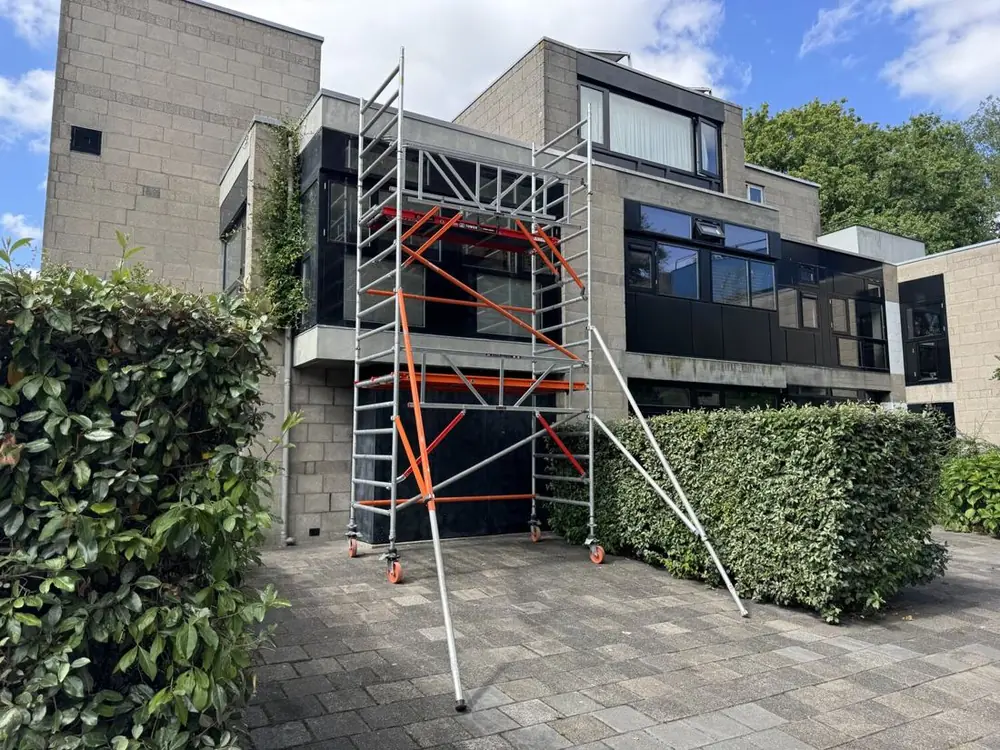
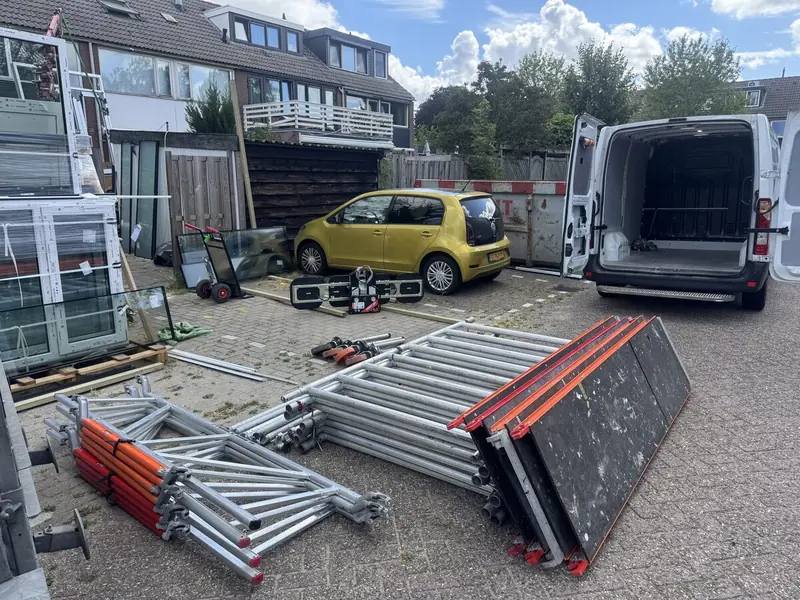
Hire set laid on flat block paving by a house, the kind of firm ground the four castors and stabilisers need

Think about the time of day as well. You test at dusk or in the dark, so there you stand beside the boundary with a lamp switching on and off. Let the neighbours know you are at it, certainly when the motion sensor looks over their side of the path. If the tower stands partly on the pavement, keep a way past clear and ask the council whether that is allowed before you reserve the mobile scaffold. A lamp that lights half the street wants aiming properly in good time.

How many rental days for fitting a motion sensor

The fitting itself is soon over: drill, plug, hang the box, wire it up and screw it shut. An hour all told, perhaps two if a cable still has to be run. Even so you do not hire the mobile scaffold for half a day, because the setting up can only be done once it goes dark. Fit in the morning, test that evening and correct the next morning. Two rental days is the realistic minimum for an hour of work, and three is more comfortable.

Count on the time the tower itself costs as well. Building to seven metres takes two people an hour to an hour and a half, dismantling a little less, and those are hours in which you are not working on the motion sensor. Hang several sensors round the house and a build comes on top per elevation, so you soon run to three or four rental days. Plan those moves one after another instead of spread over two weekends. That saves you a second booking.

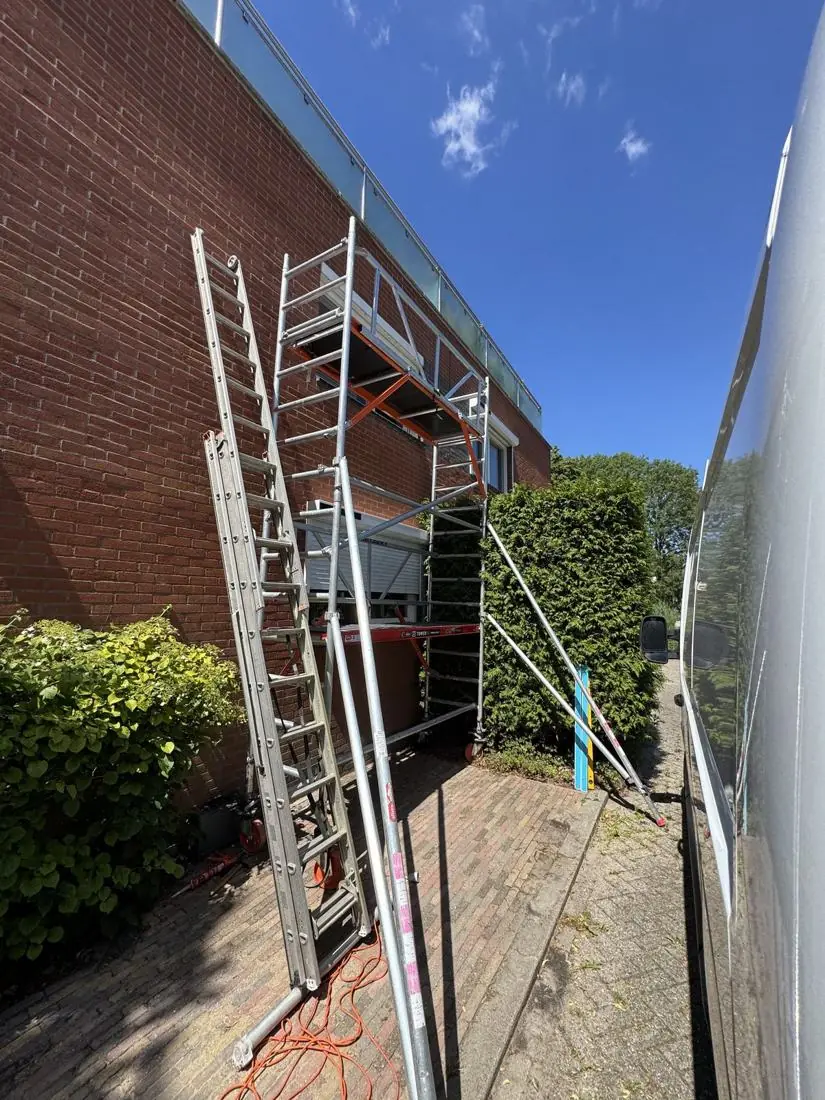
Assembled mobile scaffold along a side elevation, standing overnight as it does between fitting and the evening test

Financially, planning generously is not bad at all. The full rate applies to day one alone; every day you stick behind it goes with 95% off, so the extra morning to adjust something after the evening test costs you next to nothing. Book the tower for a single day and find out at seven in the evening that the head points the wrong way, and it is of no further use to you. Judging a period is covered at working out your rental days.

Which mobile scaffold suits fitting a motion sensor?

Kamersteiger RS44
  • Working height up to 4 metres
  • Compact and narrow
  • Great for indoor and small jobs
View and calculate →
Most chosen
Smalle rolsteiger RS51
  • Working height up to 14.2 metres
  • Narrow (75 cm)
  • Ideal for narrow passages
View and calculate →
Brede rolsteiger RS52
  • Working height up to 14.2 metres
  • Wide platform (135 cm)
  • Extra stability and workspace
View and calculate →
1-persoons steiger MiTower
  • Working height up to 6.2 metres
  • Very compact
  • Quick and easy to assemble
View and calculate →

Fitting, aiming and testing the sensor from one platform

The great advantage of a stand that stays put is that all three steps happen from the same place. Within the 245 cm of your platform sit the mounting point, the spot where the cable comes in and usually the lamp the motion sensor switches. So do not set the tower tight underneath the box but half a metre to one side, so that you stand at an angle to it and can see both the fixing and the position of the head. Then you need not keep leaning over.

The testing itself goes quickest with two of you. One walks the path the way the postman will, the other stands on the platform and turns the head a few degrees between rounds. That way you are done in a quarter of an hour with what you would never manage alone in one, because otherwise you climb the mobile scaffold up and down at every attempt. Agree how you will signal each other before it gets dark.

Hired tower put up in a narrow passage, the 245 cm deck from which several fixing points fall within arm's reach

Do not underestimate the number of trips down. Forget a plug of the right size and you are on the ground again, and at seven metres that is no small effort. So take a box with an assortment of plugs and screws up with you, and a lamp for when the light goes. Combine the job with hanging an outside light if you can, then you hire the tower once for two jobs and save a whole build.

Mobile scaffold hire with delivery for an evening job

The mobile scaffold arrives as a counted set of loose tubes, braces and platforms. On this job that takes some getting used to: you have one small box to fit and a sizeable stack of aluminium on your drive. Point out a spot beforehand where that stack is not in the way of the car or of the neighbours. Order before 15:00 on a working day and the set is there the next working day, so on a Friday you can still arrange something for the weekend.

You say yourself when the set comes and when it may go again, and on this job you choose those days around an evening when you have time to test. Have it delivered the day before the fitting, then you build without hurrying. Building is your own work: two of you, the manual to hand and the video if you are unsure anywhere. Which tube comes when is in the guide to building the tower.

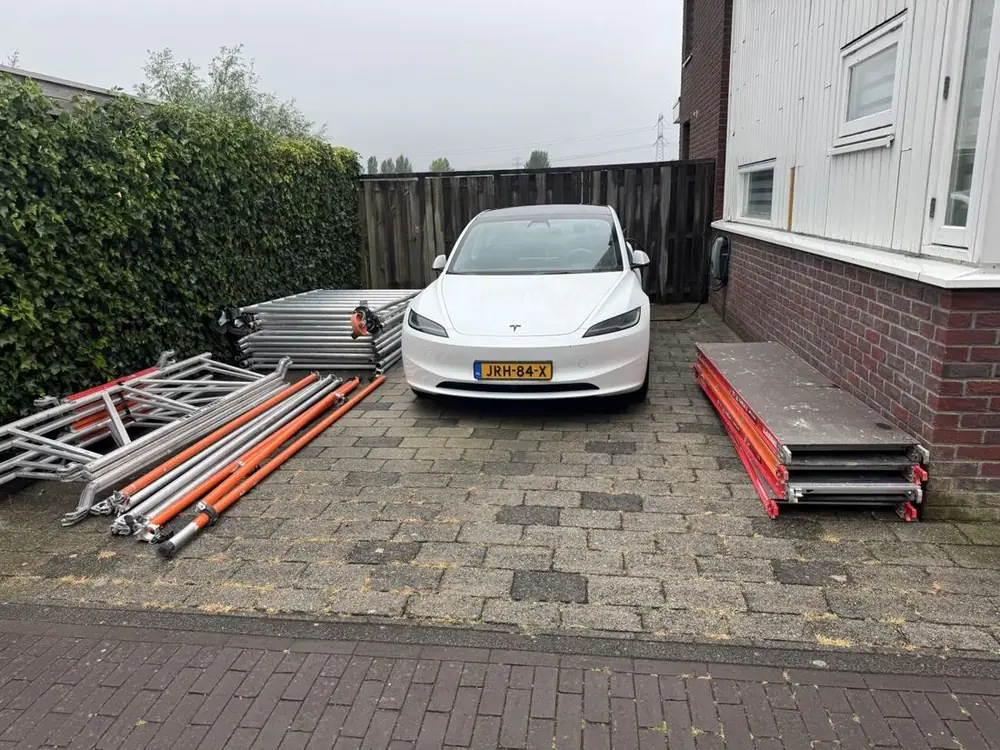
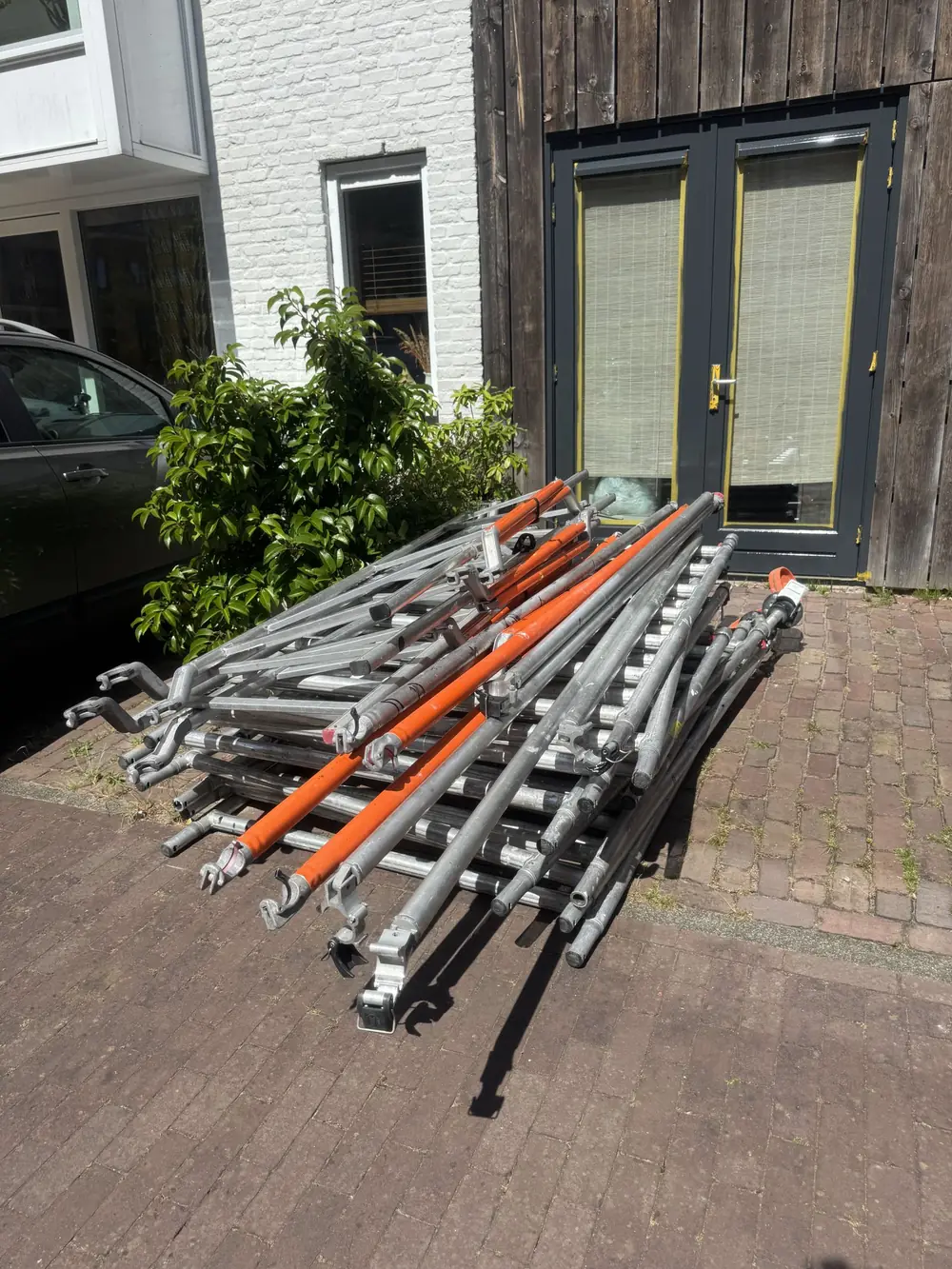
Scaffold parts delivered on site, the stack that arrives the day before the motion sensor goes up

Afterwards you take the tower apart and we come to fetch it; lay the parts together complete at a point the driver can reach. Would you rather drive yourself, then the set can be picked up free by appointment in Amsterdam, provided your trailer or van takes the length. The amount for out and back is fixed per province and is listed with the cost of bringing and fetching. Count it in, because it applies per run and not per rental day.

Working safely on the scaffold when testing after dark

The build you stand on is made to EN 1004, and its load class 3 rating leaves room for 200 kg on each square metre. For this job that is generous: you, a cordless drill and a bag of tools come nowhere near it. It is still worth knowing where the limit lies, certainly if somebody climbs up with you to look on. More about it is in the note on this scaffold standard. Two people at seven metres asks for calm in any case.

The standing rules apply to an hour of work too. Brake all the wheels before you step on, never move the tower while a person or tools are on it, and stop in strong wind. On this job the electrics come on top of that: switch the circuit off before you connect the wiring and check it with a voltage tester, even when you are sure that nothing is live. Working with power at height leaves little room for assumptions.

Stabilisers splayed at the base of a tower, the footing you need for evening work on a motion sensor

What really counts on this job is light. You test in the dark, and then the edge of your platform is suddenly hard to make out, as is the tool still lying on it. So stand a work lamp on the ground shining across the tower from the side and never work by feel. Clear everything off the deck before you climb down, the small items included. The rest of the rules for working at height does not change for it.

In 5 steps

How hiring a mobile scaffold works

1
Choose working height

Pick the height that suits your job.

2
Book online

Sorted in 60 seconds, price shown instantly.

3
We deliver

At the agreed spot the next working day.

4
Assemble safely

Assembled by you, with a manual.

5
We collect

One call and we collect the scaffold.

Good to know

Practical tips for fitting a motion sensor

1

Hang the sensor and leave the cover off for now. You have to get at it again after the first test, and with a loose cover you turn the head in ten seconds.

2

Mark with tape on the paving how far the sensor has to reach. From the platform you see that line lying there and can aim the head without anyone walking below.

3

Roll the mobile scaffold a few metres aside after fitting, before you test. Leave it standing underneath and the sensor reacts to the tubes, so you still know nothing about its aim.

4

Take an extension lead up for your drill in case the battery runs flat. A dead battery at seven metres costs you two trips and half an hour of waiting until it charges.

5

Write down the settings you choose for time and sensitivity. If you have to go back up in a month, you know what you did last time and it saves you a test round.

6

Pick your rental days so that an evening with reasonable weather falls inside them. Testing in pouring rain tells you nothing, and a wet platform is needlessly slippery into the bargain.

Frequently asked questions

Frequently asked questions about fitting a motion sensor

Which mobile scaffold should I hire for a motion sensor on the facade?+

With the mounting point between six and eight metres the RS51 is the model: narrow, 75 cm wide and readily available. Sensors often sit on a corner or beside a garage door, and space is tight there. Where the box stays below six metres, the MiTower will do, a small tower for one person that you can put up by yourself. Measure first how high the mounting point is and how much room you have beneath it before you hire.

How does the hire work when the job itself takes an hour?+

Online you pick the model and the reach, pass on two dates and settle a fixed price including VAT. On the first date the complete set stands at your place; you build, fit the motion sensor, test it and take the tower down again. We come for it on the day you gave. For an hour of work that sounds roundabout, but it takes only a couple of minutes to hire a mobile scaffold and nothing else needs arranging.

How many days will I be hiring the tower for the adjusting?+

Count on at least two days of hire. The fitting takes an hour, but adjusting can only start once it is dark, and after the first test you nearly always want to turn something. That becomes the following morning. Want sensors right round the house and every elevation needs its own build, which puts you at three to four days. Book a day too generously rather than too tight, since that extra day weighs light.

What am I paying to hire a tower for a single sensor?+

The rental price of the mobile scaffold has two parts: the model with the reach you choose, and a provincial amount that covers bringing and fetching together. Both figures appear including VAT on the page with the prices. On a job like this the transport stands out, because that amount applies per run and not per day. Anyone hanging several sensors at once therefore gets more out of it than someone fitting one.

Which working height should I hire for a sensor under the overhang?+

Look at where the box will actually go and measure to that, not to the gutter. Under the overhang of a second storey you usually end up at six to eight metres. Your platform then hangs some two metres lower, which is exactly the height at which you can drill with bent arms. Measure from the ground beneath the wheels, because a sloping drive costs you half a metre. If in doubt, hire the scaffold with the roomier reach.

Can the mobile scaffold arrive on the day the electrician comes?+

It can, because you set the delivery day. Have the set brought a day before the appointment, so the tower is already standing when the fitter pulls up and you are not building together. Do ask whether it may lie somewhere it is in nobody's way. Would you rather collect it, that is possible by appointment, provided your transport can take the longest tube. Either way it saves you half a morning on the day itself.

Is putting the tower up included in the hire?+

No, you do that yourself, even on a job that lasts only an hour. We deliver the counted set and fetch it again afterwards; erecting, rolling and dismantling are your work. With two people an RS51 at seven metres stands in about an hour and a half. Count that time in, otherwise hiring a scaffold for one sensor looks dearer than it is. Cherry pickers and facade scaffolds are deliberately missing from our range.

Can I hire for longer if the sensor is still not right after the first evening?+

Yes. Report it before the collection date you gave and we move it, as long as nobody else is waiting for this model. With a motion sensor that happens regularly: it triggers too early, it sees the neighbour's cat, or it just misses the stretch of path you wanted covered. One more day of hire gives you a second evening to test. Handing back early is fine as well, so booking generously costs you little.

How much room does the set-up need on a drive?+

Take the 75 cm tower width, add the splay of the stabilisers on every side, and in practice you are looking at an area of roughly two by three metres. On a drive that means the car out and the bins to one side. Check as well that you can still roll it a few metres afterwards, because for testing you want the tower out of the sensor's view. That clear run belongs to your preparation too.

The tower stands in the detection field: how do I test the sensor?+

That is exactly the problem everybody runs into. A motion sensor looks over the area where you have put your mobile scaffold, so while the tower is there it reacts to tubes and platforms. The answer is simple: fit first, then roll the set-up a few metres to one side, and only then test. If the head turns out to be wrong, you roll back, adjust and repeat the round. Two or three rounds is normal.

What happens to the deposit when I bring the rented scaffold back?+

You get the deposit back into your account within one working day of the return, once every part has been ticked off the list. For this job it is straightforward: no paint or coating is involved, so you only have to hand the scaffold set in complete. Watch the small items in particular, such as the clamps of the stabilisers. There is more on it in the explanation of the deposit.

Can I fit several sensors without hiring twice?+

That is the smart way round it. As long as the mobile scaffold is standing you can roll it along all the elevations and put a motion sensor on every corner. Your period does grow, though: each elevation costs building and repositioning time, and you want to test every sensor separately in the dark. So reserve three to four days rather than two and you avoid a second hire with a second delivery.

Hire a mobile scaffold for fitting a motion sensor today?

Calculate your rental price now or ask for free advice.

Rolsteiger van SteigerTaxi geleverd op locatie
Book it online

Your scaffold sorted in 2 minutes.

Choose your scaffold and working height, see the price instantly and book online.