
See your price
Application

Repairing roof tiles? Choose the right scaffold.

Repairing roof tiles is work in small portions at unpredictable spots. A broken tile sits above the bedroom and a loose one at the corner, and those points rarely lie together. So you do not climb up once but shift your set up along the roof edge each time. On a house of two storeys that calls for a wide mobile scaffold on hire, 135 cm across and built into the 8 to 12 metre range. Further down you read how to pick your positions and what that costs in rental days.

  • Order before 3 pm, delivered tomorrow
  • Professional Altrex scaffolds
  • Up to 14.2 metres working height
  • Easy to assemble yourself
4,2 tot 14,2 mWorking heights available
12Provinces served
7Days a week
200 kg/m²Load class 3
In short
  • For repairing roof tiles we recommend the Wide mobile scaffold.
  • Repairing loose roof tiles you do from an RS52 you hire: a 135 cm deck, built up to 8 to 12 metres.
  • The number of positions depends on where the damage sits, not on how long your roof edge is in total.
  • Two to three rental days is usual, because only up top do you see how many tiles are really broken.
  • First 24 hours from €175 incl. VAT and delivery; every day after that 95% off.
Key facts for this job
FeatureValue
Recommended scaffoldWide mobile scaffold (Altrex RS TOWER 52)
Working height for this job8 to 12 metres
Available working heights4.2 to 14.2 metres
StandardEN 1004, load class 3 (200 kg per m²)
DeliveryOrdered before 3 pm, delivered next working day
Each extra day95% off, from €8.75 a day
Why a mobile scaffold for repairing roof tiles?

Safe, stable and professional work at height

With a repair everything turns on getting to separate points. You do not need a long working strip but rather the ability to arrive exactly where that one tile lies broken, with a spare tile under your arm and a hand free. That is straight away why a ladder disappoints: you can put nothing down on it and up top you need two hands to lift a tile and slide the next one underneath. Hiring a scaffold for repairing roof tiles is therefore less about height than about how smoothly you move the set up along the wall and how many days all that shifting costs in total.

  • Damage sits spread across the whole roof surface
  • One or two roof tiles replaced per spot
  • Working height set by the highest damage point
  • Plenty of moving between the separate repair points
Read more about working safely →

Which mobile scaffold to hire for repairing roof tiles

For repair work on a tiled roof at two storeys you take the Altrex RS52, the wide version with 135 cm of deck width. You are not carrying stacks up here, but you do need room to lay a tile down, to put your tile hook somewhere and at the same time to work bent forward without knocking into anything. Two of you also fit up top at that size. Which versions there are you see on the page about hiring a tower.

On this job it is not about a working deck you store material on. You take one or two roof tiles up with you and no more, because hauling half a pallet upwards is work for a complete renewal and not for a repair. What does count is that a deck 245 cm long is enough to reach two or three damaged spots beside one another from a single position without moving straight away. That saves you a quarter of an hour of hauling, braking and realigning per repair point.
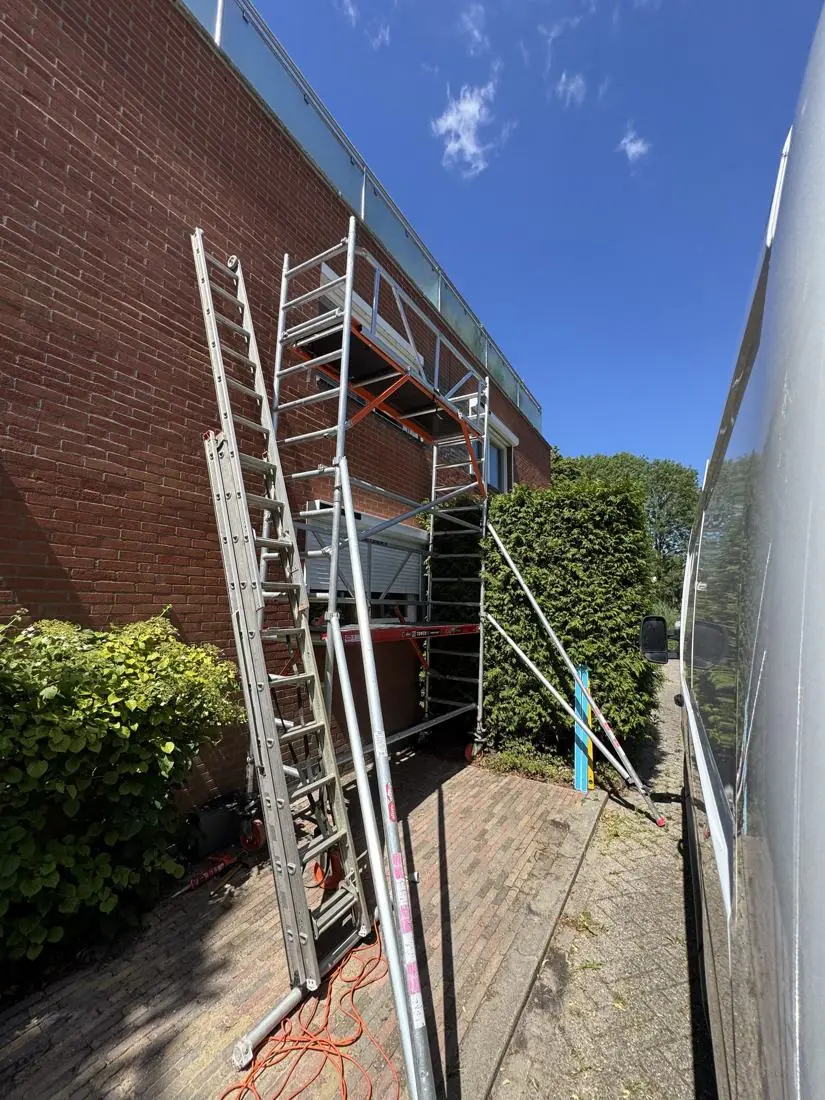
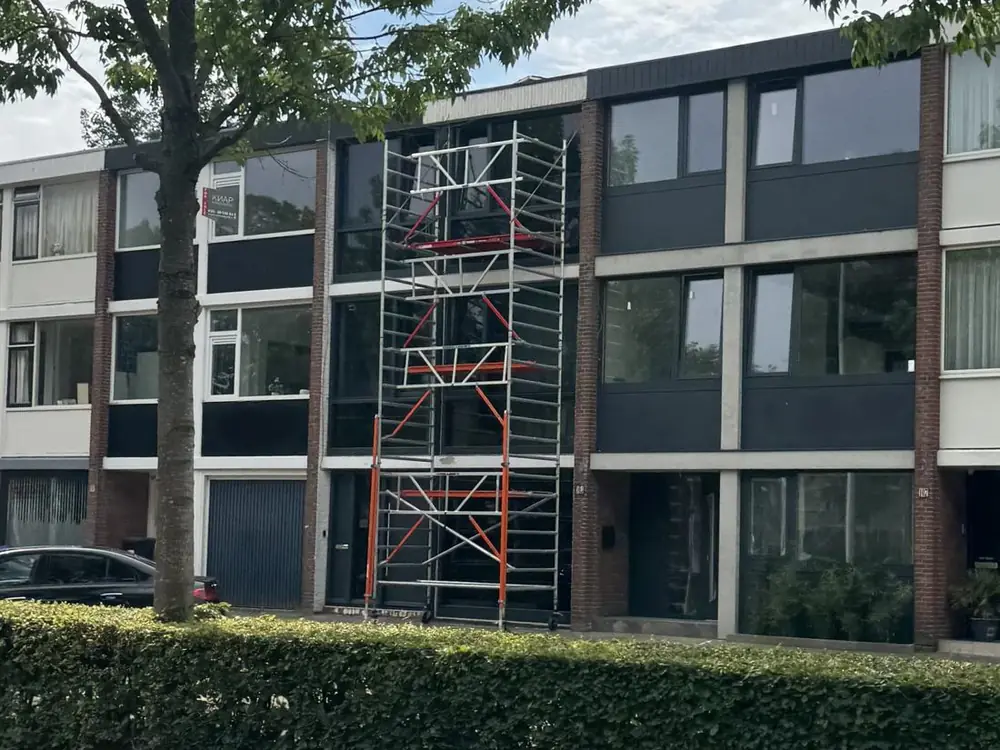
Tower built up along a side elevation to the roof edge, the set up that reaches loose tiles

The narrow RS51 at 75 cm stays possible when you are up there alone and the passage to the back is tight; it also rolls more easily along a garden path on your own. The MiTower does not reach a tiled roof at two storeys with its 6.2 metres, and the RS44 room scaffold manages 3 to 4 metres and belongs indoors, behind a door from about 70 cm. To see the models beside each other, look at the dimensions of the towers.
Which working height to hire for the highest damage point

The height you need is set here by the highest lying damage point and not by the roof as a whole. If the broken tile sits in the bottom rows above the gutter, you get by with less than when there is also something just under the ridge. So look at the roof surface first with binoculars or with the zoom on your phone, and note per point roughly how high it lies. At two storeys you almost always end up at 8 to 12 metres.

When booking you state a working height and that figure lies higher than your deck. There is about two metres between them, because from the platform you still reach a good way upwards. If you want to get at a tile three rows above the gutter, count back: that tile minus two metres gives roughly the deck height you need. Always measure from the ground under the castors. How many frames such a build takes is set out under twelve metres of working height.

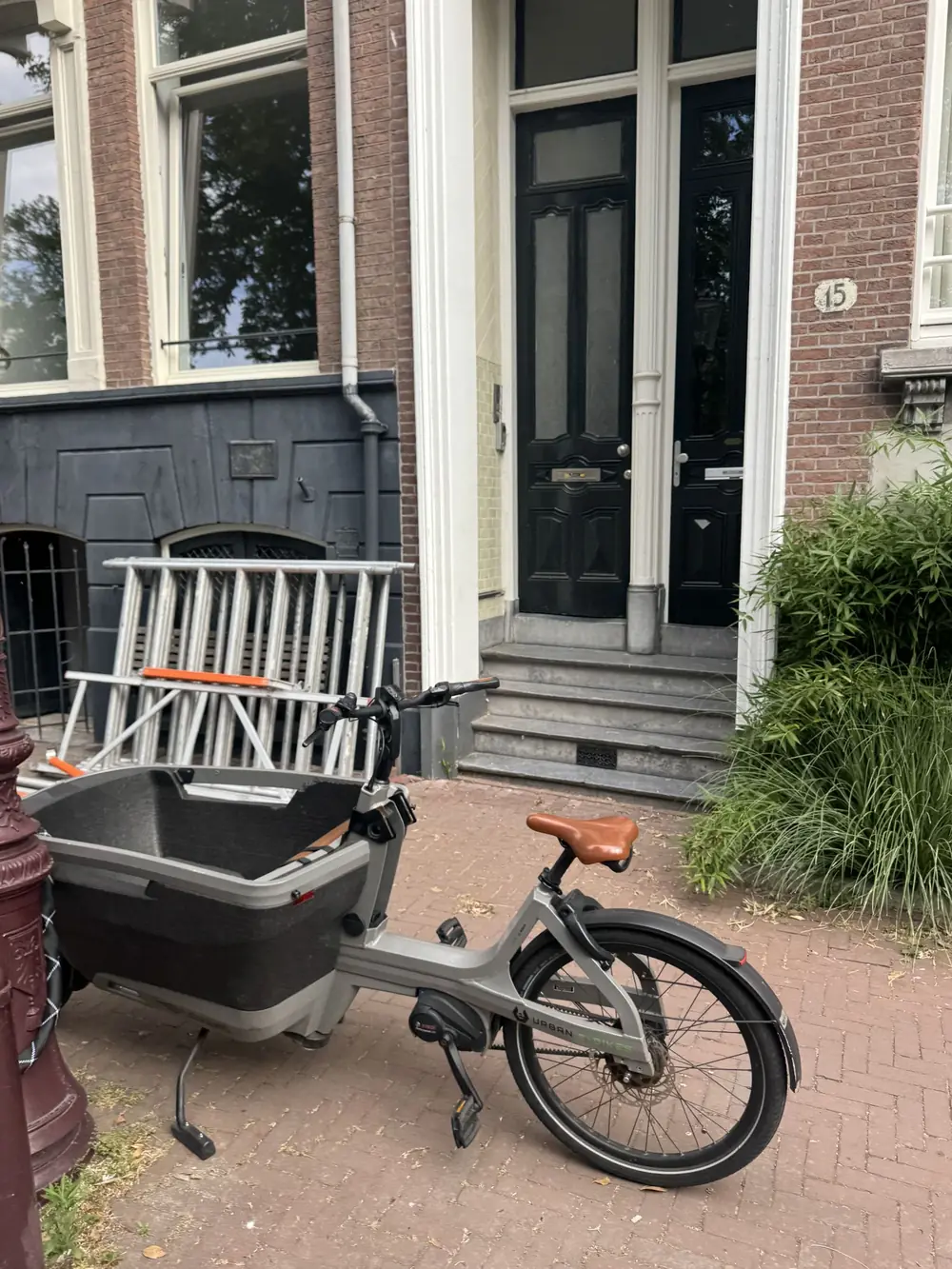
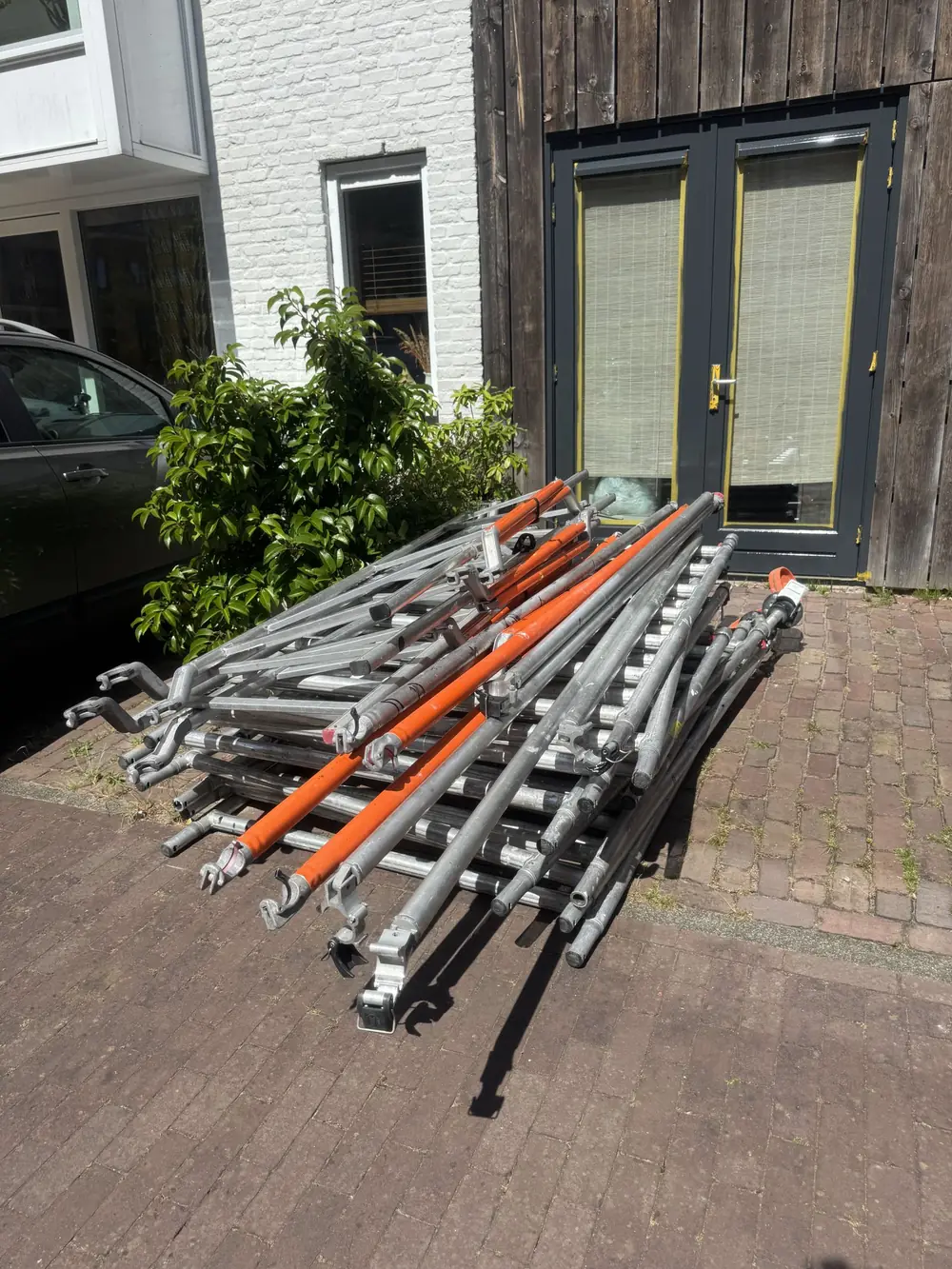
Scaffold parts on paving in front of a house, still at ground level whatever height your highest damage point sits at

Choosing tight takes its revenge here in its own way. If you just fail to reach the damage point, the temptation is great to step onto the tiles from the top rail, and that is exactly where a few more break under your feet. So rather take a build that comes a good way above your highest damage point. On a roof that only begins above the second floor, add the storey heights one by one.

Hiring a tower and moving it along the whole roof edge

Because on a repair you slide along the whole roof, you are not looking at a single position but at a route. Walk that route before you hire: can you get an erected tower from the front elevation round to the side, or do you have to take it apart for that? A garden gate of eighty centimetres, a step up to the terrace or a pergola over the path decides it for you. On this job that is more often the bottleneck than the height of the roof.

The ground has to be sound over that whole route. On slabs and tarmac the set up rolls easily, but on grass, gravel or a shell path every move costs effort and the castors sink in as soon as it has rained for a day. Allow at every spot for the four stabilisers you have to set out again. A paved walkway along the wall is worth gold on this job. More about that stands in the explanation on uneven ground.

Stabilisers set out at the foot of a tower, refastened after every move along the house

Look as well at what stands underneath the repair points. On this work shards and bits of mortar come down, and they land precisely where you put the tower. A conservatory, a shed roof, a carport or a parked car under the roof edge makes a position awkward to impossible. Put those points on a list together with the places where the roof tiles are broken, then you know beforehand how many positions are feasible, which spot you still have to clear and where you have to cover something.

How many rental days repairing loose roof tiles takes

Replacing a single broken tile takes a quarter of an hour, but that is not where your days go. The time goes into building up, into moving to the next point and into hunting for damage that stayed invisible from below. An average house therefore asks you to hire a mobile scaffold for two to three days. If the damage runs across several roof surfaces, each extra surface soon costs you half a day of building, aligning and stabilising again.

Build in slack, because this job is uncertain by definition. Only when you look along the rows at eye level do you see hairline cracks, shifted tiles and a sagged piece of ridge that you looked straight past from the street. That means extra points and sometimes a trip to the merchant for tiles that match yours, because an exact match is seldom in stock. Reckon as well on a day when it blows too hard to handle loose tiles at height.

Scaffold frames by a house front on the pavement, delivered for the two or three days a tile repair needs

Happily that slack is not dear. Only the first twenty four hours are charged at the full rate; on every day after it you get 95 per cent off, so an extra day hardly works through into the rental price you settle in the end. The rates per model and reach you find including VAT in the overview of hire prices. Booking tight costs you money instead, because a second booking means building again, aligning again and another round of transport.

Which mobile scaffold suits repairing roof tiles?

Kamersteiger RS44
  • Working height up to 4 metres
  • Compact and narrow
  • Great for indoor and small jobs
View and calculate →
Smalle rolsteiger RS51
  • Working height up to 14.2 metres
  • Narrow (75 cm)
  • Ideal for narrow passages
View and calculate →
Most chosen
Brede rolsteiger RS52
  • Working height up to 14.2 metres
  • Wide platform (135 cm)
  • Extra stability and workspace
View and calculate →
1-persoons steiger MiTower
  • Working height up to 6.2 metres
  • Very compact
  • Quick and easy to assemble
View and calculate →

Replacing a broken roof tile from a 245 cm platform

From a deck of 245 cm you cover a good two metres of roof edge, and that is enough to do two or three tiles lying next to one another. If the next damage point sits five metres further along, there is nothing for it but to move. So work out beforehand which damage points you can group: two points three metres apart ask for a position in between, and that saves you a complete move with brakes off, stabilisers in, rolling and aligning again.

Take up only what you need each time: the spare tiles for that point, a tile hook, a hammer and whatever you use to fix the tile down. Lay the removed tile flat on the deck and not against the guard rail, because a tile falling from ten metres is a serious risk for anyone standing below. Work down the row from the top, so you can lift the tile above and slide the new one underneath without disturbing the rest of the row.

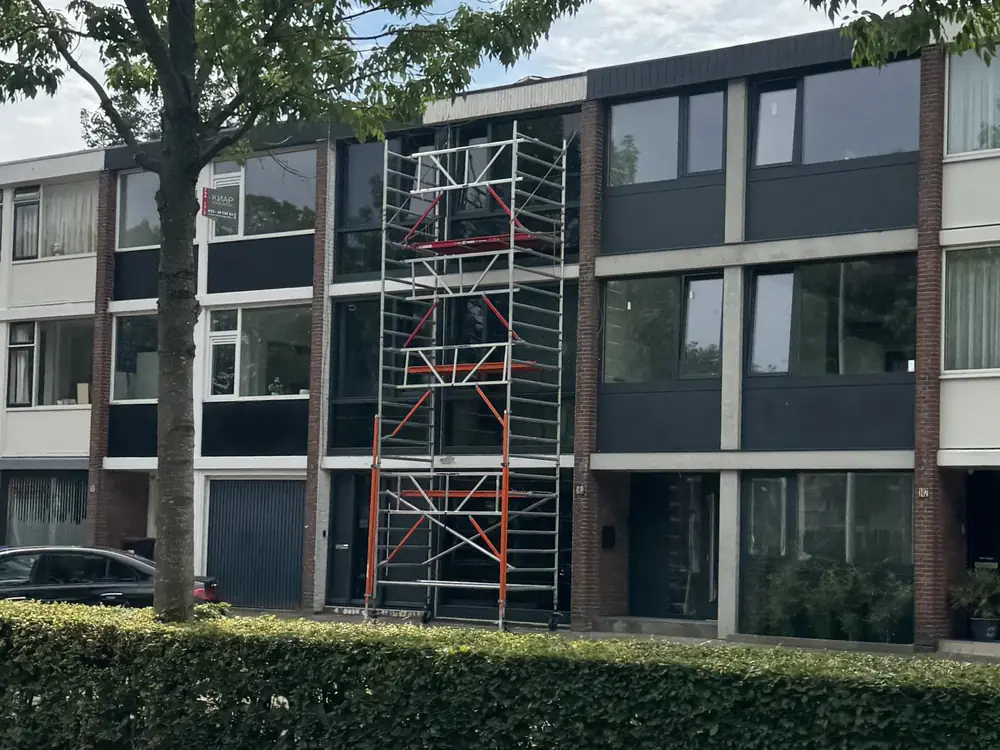
Tower against the front elevation with its top deck alongside the tile rows, the level for swapping one

What people misjudge is that every damage point can ask for a position of its own. Four broken roof tiles spread neatly over the roof surface give four separate positions, while four tiles beside one another can be done from a single set up. So count your points before you book and reckon on one move of the tower per separate point. If a whole row turns out to need lifting, the character of the job changes and you read on at replacing roof tiles.

Delivery and building up when you hire for a tile repair

The tower reaches you in loose parts, as a counted and complete set. Decide beforehand where that stack may go, and keep the strip under the repair points free, because shards come down there the moment you start. Order on a working day and stay inside the 15:00 limit, and the van already calls round with the complete set on the next working day. That way you can get going shortly after a storm or a leak without waiting weeks first.

Which day the set is brought and which day it goes away again you decide yourself. On repair work that is pleasant, because only after the first inspection do you know how many points there are and how much time they cost. Let the parts arrive one day ahead of your first working day, then you can build at your ease and start fresh on the first point. That building is your share of the work, with the supplied manual and the instruction video within reach.

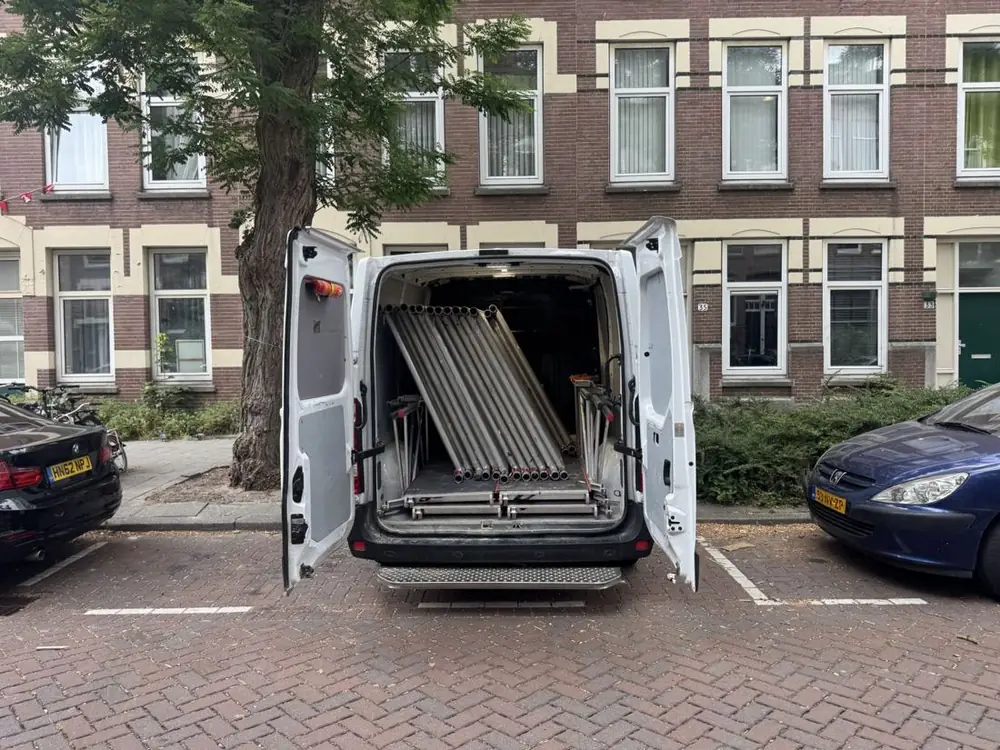
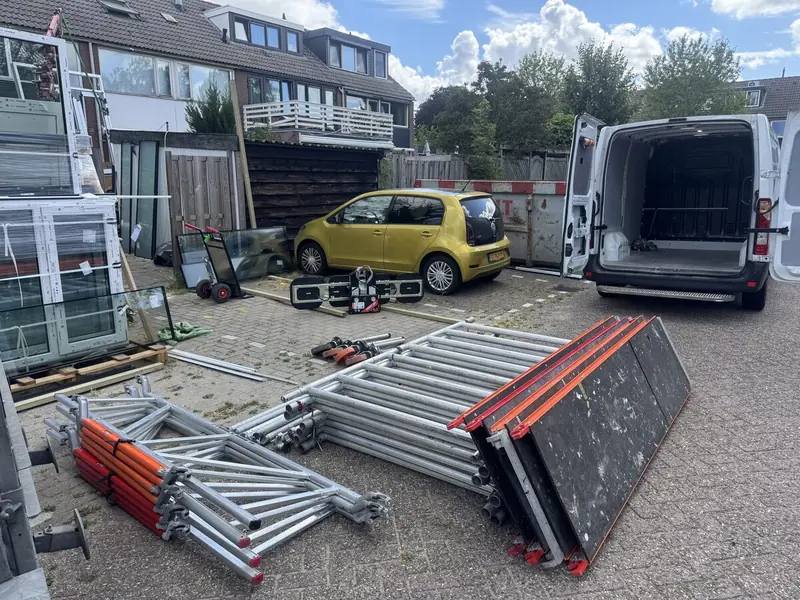
Delivery van loaded with scaffold parts standing at a house, as the counted set arrives on your chosen day

Once the last tile is in place, you take the tower apart and we put it back in the van. Lay the parts down somewhere the driver can reach and count them while you dismantle, then you are sure the set is complete before the van drives off. What the transport costs differs per province, and those amounts stand including VAT in the overview with costs for delivery, so you can set that figure beside your rental days.

Safe working on the scaffold among brittle roof tiles

You stand on a deck manufactured under EN 1004, in load class 3, which means 200 kg is allowed per square metre. On a repair you stay far under that, because you take only a few tiles up and some tools besides. Do stay alert as soon as somebody wants to pass a stack of twenty up, because fired roof tiles weigh a good deal together. What that class stands for you read back in the note on this scaffold standard.

The standing rules apply on short work too, precisely because you move so often. Brake the castors before anyone goes up, never roll the set up with a person or with material on it, and fold the four stabilisers out again after every move. That last one is what you skip quickest on a repair. Stop as well in a strong wind, because a loose tile catches far more wind in your hands than you would expect.

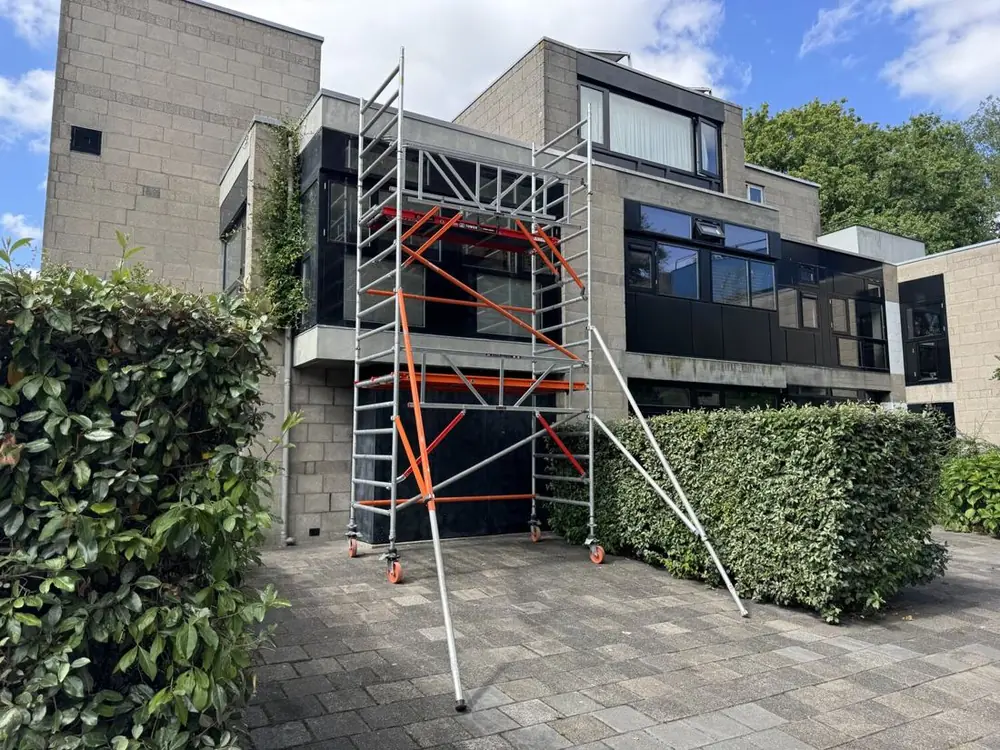
Erected tower with rails all round beside a dwelling, the deck you move to each repair point

The danger that belongs specifically to this job comes from the material itself. A weathered tile breaks while you are lifting it and the shards go over the edge, so keep the zone below you clear and put a cone or a wheelbarrow there as a marker if need be. Do not step from the top guard rail onto the roof surface for that one tile, but move the tower a metre instead. And never work directly above somebody clearing up below. More rules stand at safe working at height.

In 5 steps

How hiring a mobile scaffold works

1
Choose working height

Pick the height that suits your job.

2
Book online

Sorted in 60 seconds, price shown instantly.

3
We deliver

At the agreed spot the next working day.

4
Assemble safely

Assembled by you, with a manual.

5
We collect

One call and we collect the scaffold.

Good to know

Practical tips for repairing roof tiles

1

Photograph the roof surface from across the road with the zoom on before you hire anything. You then see where the damage sits and can count the number of positions you will need.

2

Take one more spare tile up than you think you need. One breaks as standard while you are getting it out, and then you do not want to go down the whole set up again for a single tile.

3

Lay an old blanket or some bubble wrap on the deck where you put the tiles you take out. On bare aluminium they slide away and then they break before you have been able to look at them.

4

Mark every damage point with a piece of tape at the gutter while you are still down below. Up on the scaffold you can no longer tell from row to row which tile you pointed out from the ground.

5

Group your repair points before you start moving. Two points lying within two metres of one another you do from one position, and that saves you a quarter of an hour of building and aligning each time.

6

Go over the gutter and the paving for shards after the last repair. Broken tiles leave bits behind that end up in the gutter, and you will be bothered by that at the first heavy shower.

Frequently asked questions

Frequently asked questions about repairing roof tiles

Which mobile scaffold from the hire range do you use to repair loose tiles?+

For a tiled roof on two storeys the wide version with a 135 cm deck is handiest. You are not lugging stacks, but you do want to be able to put a tile down, lay your tools out and stand up top with two people without getting in each other's way. If the passage to the back is too tight, you choose the narrow 75 cm tower, which you also roll more easily on your own.

What do you arrange yourself when hiring a scaffold for a tile repair?+

In the webshop you fix a model and a reach, choose a day on which the parts may come and a day on which they may go again, and settle a fixed rate including VAT. We bring the set, you build the tower up and move it along the points where roof tiles are broken. When you are finished you dismantle everything and we drive it away again. Beyond that there is nothing to arrange except your own planning.

How many days do you have to hire a scaffold to put roof tiles right?+

Two to three days is realistic for an average house. The replacing itself is quick, but the building, the moving and the hunt for damage you cannot see from the ground takes most of the time. If the damage lies spread over several roof surfaces, half a day comes on top per surface. So book your tower on the generous side, because on this work you almost always meet more points than you counted beforehand.

What do you pay when hiring and what alters on the second day?+

Your rate follows from the chosen model and the build height, and a fixed transport amount per province comes on top. You see all prices including VAT on the price page. On repair work it matters most that the first twenty four hours weigh heaviest and that the days after add little. For a job whose size you only discover up top, that is a pleasant feature of this hire. Check before you book which build height you really need.

Which working height do you hire if the broken tile sits high in the roof?+

Look at where the highest damage point lies and measure that height from the ground where the castors will rest. Then find the build of your tower that brings the deck just under that point, so you can get at it standing without having to climb onto anything. On a house of two storeys you are nearly always between 8 and 12 metres, which you state in the booking. The builds are set out at the working heights.

Is the tower brought or do you fetch it when hiring?+

Both routes are open to you. Delivery happens at a fixed price per province, on the day you have chosen, and after your last repair day we collect the mobile scaffold again. Fetching it yourself is free of charge by appointment in Amsterdam, where the set stands ready for you at Zeeburgerpad, provided your transport can take the frames. On a repair of a few days the convenience of delivery usually weighs heavier than two trips there and back.

Does the hire include building up for this kind of roof work?+

The building, the moving and the taking down you do yourself. We look after the hire and the transport in both directions and deliver the tower as a counted set of parts. With two people the building costs half a day, and the enclosed instructions show in which order the frames go in. System scaffolds, facade scaffolds and cherry pickers we simply do not stock, so for loose repairs at this height this is the usual choice.

Can you hire for longer if more roof tiles turn out to be broken?+

Yes, pass it on before the collection day comes and we shift that date, unless the model is already standing ready for somebody else. On this work overrun is common: as soon as you are up top you see cracks and shifted tiles that were invisible from the street. Anyone wanting to prevent that plans an extra day straight away when hiring the tower and hands it back earlier if need be, which costs you nothing further.

How much clear space does every position along the roof edge need?+

Reckon per spot on the width of your tower, the splay of the stabilisers all round and some margin to walk past, which comes down to a flat strip of several metres. Because you move several times on this work, that requirement does not hold for one spot but for every spot on your route along the house. Walk it beforehand and clear bikes, planters and garden furniture away, or you will spend half the day dragging instead of working.

Does the hire run on if it blows too hard to lay tiles?+

The set up may simply stay standing, but you put the work down. A loose tile catches a lot of wind and you only notice that when you are holding it above the row with outstretched arms. Moving the tower is also better left alone in a stiff breeze. Use such a day to fetch material or to go over the gutter and pick the repair up again the next day. Shifting costs you a single rental day at most.

What happens to your deposit after hiring for this job?+

Your deposit is back in your account one working day after the return run, once the set of the tower has been checked over and found complete. On this work you watch above all for shards and mortar residue: sweep the deck boards clean before you dismantle and check that nothing is stuck between the frames. Every part has to go back besides, from the deck boards to the last brace. More on that stands at the deposit afterwards.

Can you reach a tile halfway up the roof surface from the hired scaffold?+

From the deck of the tower you still reach about two metres up the sloping surface, so the bottom rows are easy enough. If the damage point lies higher in the surface, you hire a build with more height or you use a roof ladder to get at it safely. What you should not do is step from the top guard rail onto the roof tiles: weathered ones break under that and then you have gained a repair point.

Hire a mobile scaffold for repairing roof tiles today?

Calculate your rental price now or ask for free advice.

Rolsteiger van SteigerTaxi geleverd op locatie
Book it online

Your scaffold sorted in 2 minutes.

Choose your scaffold and working height, see the price instantly and book online.