
See your price
Application

Cleaning sun shading? Choose the right scaffold.

Cleaning sun shading is done with the fabric wound right out, and then it hangs away from the wall at an angle. You work up a slope rather than in front of a flat surface, with suds running towards the hem. The hood, the front rail and the arm joints come with it, and none of those is visible from below. For a unit above a terrace or a balcony door you hire the slim RS51, taken up so the working height lands in the 6 to 8 metre band.

  • Order before 3 pm, delivered tomorrow
  • Professional Altrex scaffolds
  • Up to 14.2 metres working height
  • Easy to assemble yourself
4,2 tot 14,2 mWorking heights available
12Provinces served
7Days a week
200 kg/m²Load class 3
In short
  • For cleaning sun shading we recommend the Narrow mobile scaffold.
  • For cleaning sun shading take the 75 cm RS51 and run the build up to somewhere between 6 and 8 metres.
  • The tower goes alongside the extended fabric, because underneath the unit there is simply no room for a set-up.
  • Allow two hire days: the washing takes a few hours, but the fabric must be bone dry before it rolls away.
  • First 24 hours from €150 incl. VAT and delivery; every day after that 95% off.
Key facts for this job
FeatureValue
Recommended scaffoldNarrow mobile scaffold (Altrex RS TOWER 51)
Working height for this job6 to 8 metres
Available working heights4.2 to 14.2 metres
StandardEN 1004, load class 3 (200 kg per m²)
DeliveryOrdered before 3 pm, delivered next working day
Each extra day95% off, from €7.50 a day
Why a mobile scaffold for cleaning sun shading?

Safe, stable and professional work at height

Cleaning sun shading means working on a sloping surface that hangs above you and carries no load at all. The fabric holds nothing, the folding arms are under spring pressure and the hood sits higher than the top of the glass. So you need a solid floor with room on it for a bucket of suds, and from which you can scrub with both hands. A ladder against the wall is out, because you cannot get alongside the fabric from one and you have nowhere to put your materials. Before you hire a mobile scaffold here, weigh the height of the cassette, the space beside the unit and the days the drying will cost.

  • The fabric hangs at an angle and carries nothing
  • Hood and front rail collect leaves and grit
  • Clean the arm joints, then lubricate them lightly
  • Puddles in the fabric mean too little fall
Read more about working safely →

Which mobile scaffold to hire for cleaning sun shading

You clean with the fabric wound out, and then it slopes away from the wall. So you have to get alongside it rather than stand square in front of it. The narrow RS51, with its 75 centimetre deck, fits that situation precisely: it travels along the edge of the terrace and stands beside the fabric instead of under it. Every version on offer, with its build stages listed, sits with the rolling towers in our hire fleet, so you can see at once which build stage suits your unit best.

A wide deck adds nothing at all to this job. Up there you want suds in a bucket, a soft brush on a long handle and a cloth, and those go on any size of platform. What does matter is the 245 centimetres of length, since that covers a good stretch of the front rail without moving. On a unit four metres wide that means two positions beside one another, taking the overlap with you properly so that no dry stripe is left standing in the middle of the fabric when it dries.
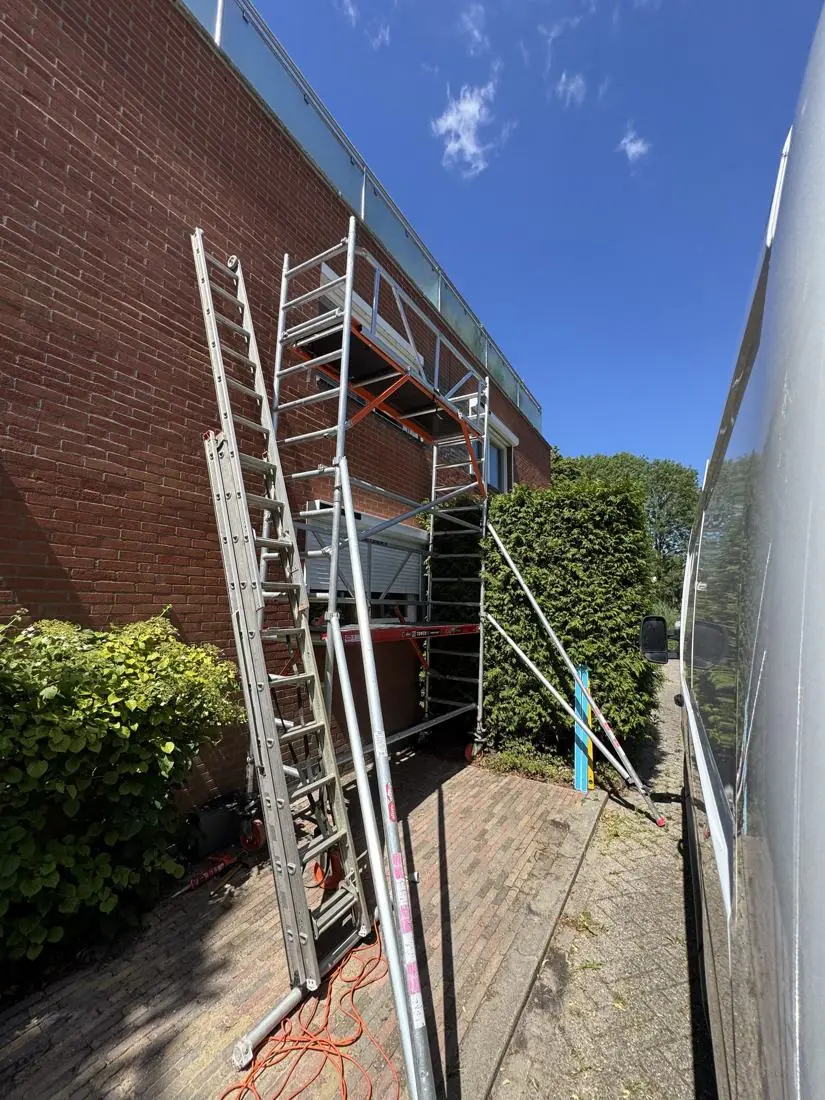
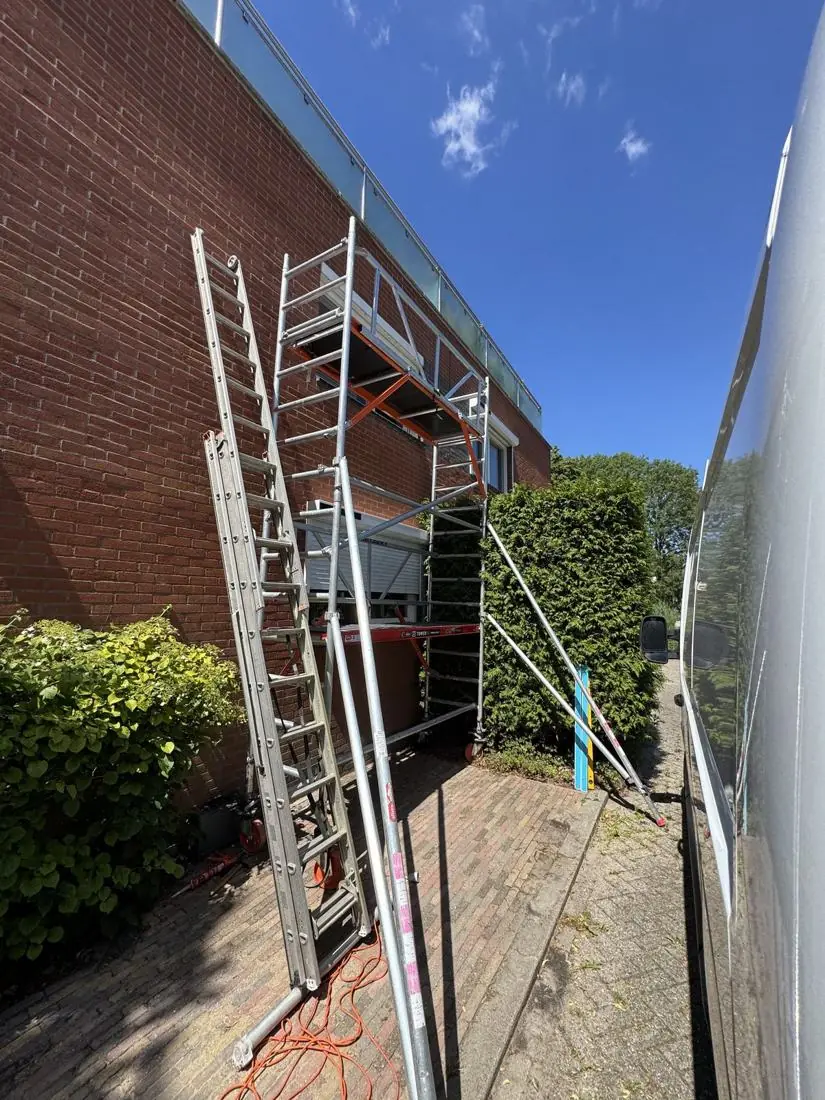
Mobile scaffold assembled in a narrow passage beside a brick wall, standing clear of the wall rather than against it

Before you book, work out how the parts reach the terrace at all. Behind a house there is usually a garden gate, a narrow alley or a path past the shed, and a wide set-up will not thread through any of them. Whether your own way through is wide enough is answered at the measurements for a tower in a doorway. Terrace chairs and planters count in that route too, so move them on the morning of delivery rather than while you are carrying frames. Cleaning sun shading starts at the gate.
Hiring enough height to look down into the cassette hood

Your highest point here is not the fabric but the hood of the cassette. That is where the dirt lands from above and that is what you have to be able to look down into. Where the unit hangs above a terrace on the ground floor, or over a balcony door a storey up, the work asks for 6 to 8 metres of working height. The sum is easy to check: take the height of your deck and add roughly 2 metres of reach on top, which is the total you hire against.

Measure from the terrace and not from the lawn beside it, because those two differ by half a metre without any trouble. Where the shading hangs over a conservatory or a single storey extension, take the reading from the spot the castors will genuinely rest on. If the unit turns out higher than you thought, the page on an eight metre build shows which stage belongs to it. Half a metre short means the hood stays dirty until next year, whatever you do with the brush below it.

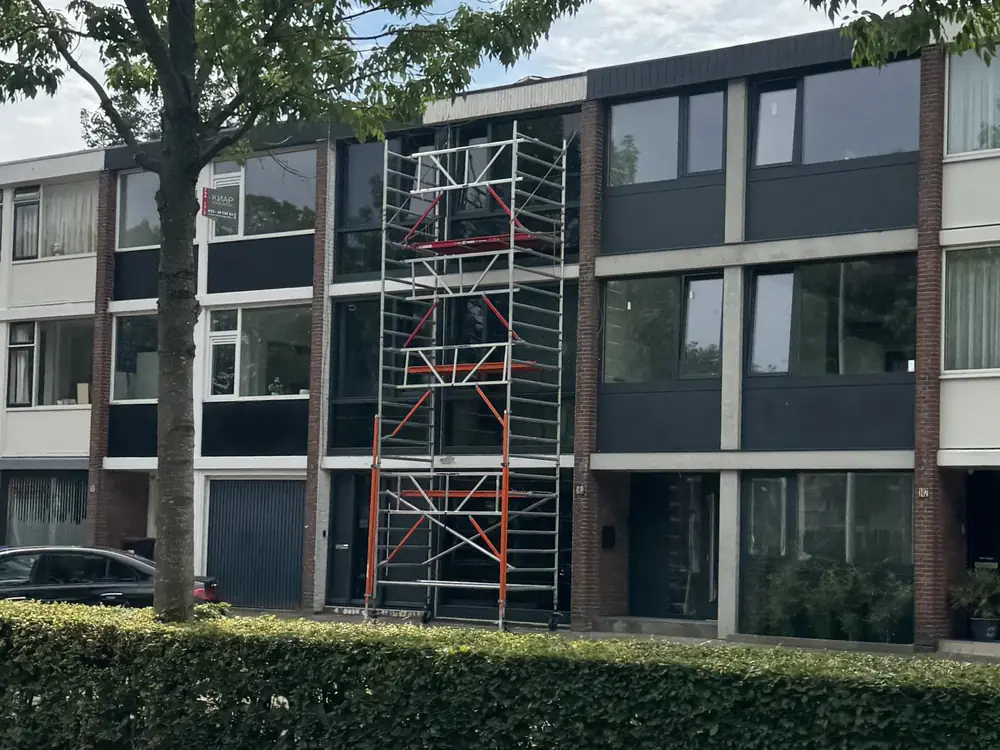
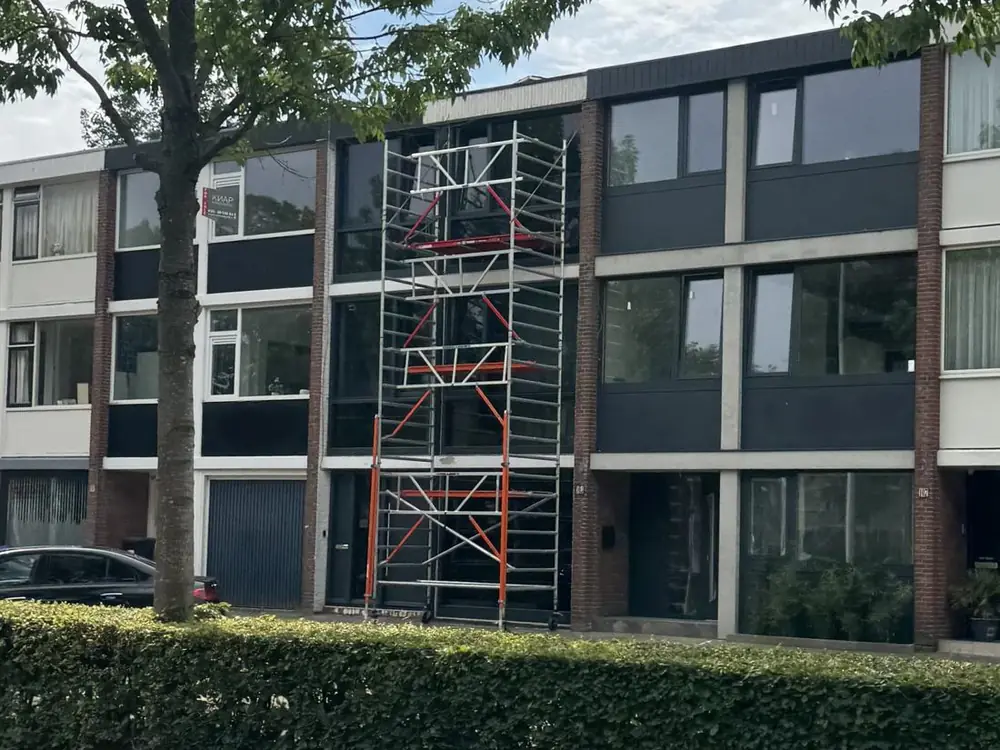
Mobile scaffold assembled at a modern block front, its top deck standing level with the upper windows

On this job take a notch more height rather than a notch less, even at the cost of an extra stage. You want to inspect the top of the cassette and to run a brush along the fabric from above, and that only works if you come out slightly over the fixings. Stay too low and you scrub with your arms up while dirty water runs down your sleeves. For shading at first floor level that counts double, since nothing up there is reachable from the ground.

Where the hired tower goes beside sun shading wound right out

The set-up goes next to the fabric and not beneath it, because an extended unit occupies the space you would otherwise stand in. Put the tower at the side of the terrace, in line with the wall, so from the deck you work at an angle across the fabric and reach all of it. Reckon on a clear strip beside the tower, because on a small terrace the boundary wall arrives surprisingly quickly. Measure that strip before you hire anything, because cleaning sun shading from a cramped pitch is miserable work.

Terraces are less level than they look. Slabs work loose, there is a fall towards the garden for drainage, and along the edge the grass begins. Check with a level at every position that the deck lies horizontal and use the spindles to take up the difference. Where there is timber decking, ask yourself whether the boards carry the tower with two people on it without flexing. Lay a board across two joists if they do not, and check it again once the deck is loaded.

Stabilisers extended onto block paving under an assembled tower, the clear strip needed at the side of a terrace

Allow for the water that comes down. You are working with suds, and they run along the fabric and down the wall onto the paving, so the furniture, the cushions and the barbecue go aside first. Make sure as well that the unit can stay fully wound out for as long as you are busy. Getting a tower steady on a terrace is covered at stabilising and tying down a rolling tower. A foot standing out of true is only noticed once you are up there scrubbing.

How many hire days a wash and a full dry need

Hiring a tower for cleaning sun shading usually calls for two days. The washing itself is done in a few hours, but the fabric has to be thoroughly dry before it may go back into the cassette. Wind a damp sheet away and you get mildew spots and a musty smell that never leaves it again, however often you wash afterwards. That drying time governs your hire period more than the scrubbing does, particularly in spring and autumn when the sun hardly warms the fabric at all.

Those two days also hold your margin for the weather. You want no rain while it dries and no strong wind while the unit stands out. If a shower comes over, wind it in and start the drying again the next morning. With several units on different walls, allow an extra day, because you shift the tower and begin a fresh drying round at each one. That mounts up faster than people expect once the units are on different sides of the house.

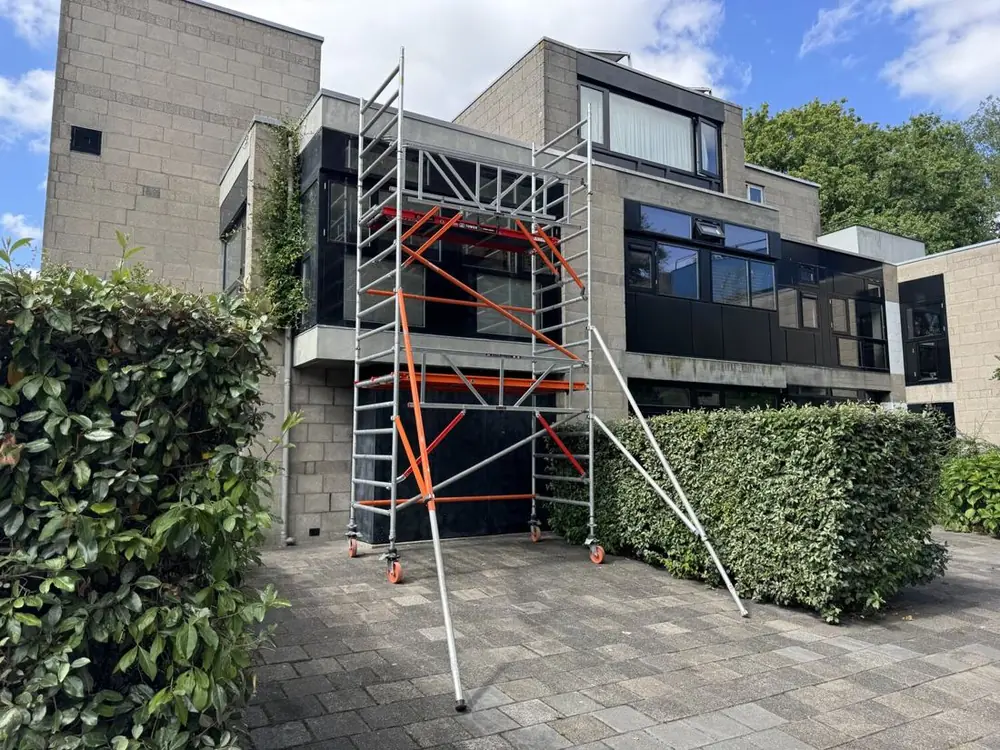
Assembled mobile scaffold standing against a modern building front, left in position for the length of the hire

The shape of the tariff makes that extra day cheap. Only that first twenty four hour block is charged whole; every day of hire behind it loses 95 per cent of the rate, so waiting for dry weather costs you almost nothing. What the rental price is for your model and height is listed with VAT at the rates for hire. Set your collection date after the day the fabric is dry and wound away, and not on the morning of it with the sheet still out.

Which mobile scaffold suits cleaning sun shading?

Kamersteiger RS44
  • Working height up to 4 metres
  • Compact and narrow
  • Great for indoor and small jobs
View and calculate →
Most chosen
Smalle rolsteiger RS51
  • Working height up to 14.2 metres
  • Narrow (75 cm)
  • Ideal for narrow passages
View and calculate →
Brede rolsteiger RS52
  • Working height up to 14.2 metres
  • Wide platform (135 cm)
  • Extra stability and workspace
View and calculate →
1-persoons steiger MiTower
  • Working height up to 6.2 metres
  • Very compact
  • Quick and easy to assemble
View and calculate →

Cleaning sun shading from the deck: fabric, front rail, arm hinges

A folding arm unit is wider than the 245 cm deck, so you take the fabric in two positions, moving the tower halfway. The sheet also hangs at an angle, and that changes your order of work: start at the top by the wall and work with suds towards the hem, so the dirty water runs down the slope with you. Use a soft brush and no pressure washer, since the coating and the seams will not stand it. Rinse each strip before the suds dry on it, working in bands from the wall outwards.

Do not forget the hood and the front rail, because that is where most of the dirt sits. Leaves fall into the cassette from above, and along the front rail green growth and grit stay behind where only somebody standing higher can see them. Take those two with you while you are up there, since nobody climbs a second time purely for them. Then go along the folding arm joints, clean them off and give each of them a single drop of lubricant while you can still reach.

Tower stood in a side passage with its climbing frames and platform hatch, the only way up to the deck

The hem and the valance deserve separate attention, since they stay wet longest and hang nearest the garden. Green growth shows there first. Watch as well for puddles in the fabric: too flat a pitch leaves water standing that holds dirt and stretches the sheet. Push a puddle like that up from below and then set the unit a notch steeper. How that pitch is arrived at is explained at fitting shading to a wall, brackets and all. Cleaning sun shading is easier on a unit hung properly in the first place.

Hiring a mobile scaffold delivered on a dry day

The set arrives counted and complete at the address you give, and the driver puts it down where you want it. Choose the front garden or the drive for that rather than the terrace itself, because the tower has to stand there and the water has to run somewhere. Anyone reserving on a working day before 15:00 sees the parts arrive on the next working day. So look at the forecast before you pick a date, since building a soaking wet set of parts starts the job badly and slows everything that follows.

Putting it up is your own work, with the manual to hand and the film that shows step by step in which order the decks and guard rails go in. Two people spend roughly an hour and a half on it at this height. Have the set come when a dry spell is beginning, because both the building and the drying of the fabric are miserable in rain. Per province the cost of that trip is listed at the overview of delivery charges, so you can add it in.

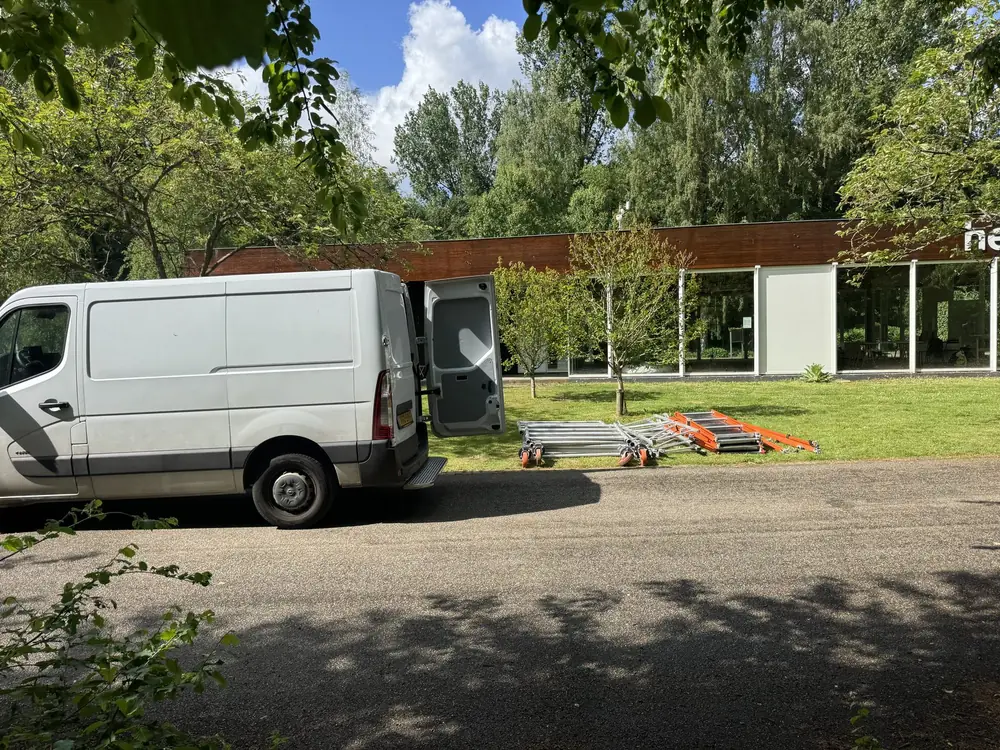
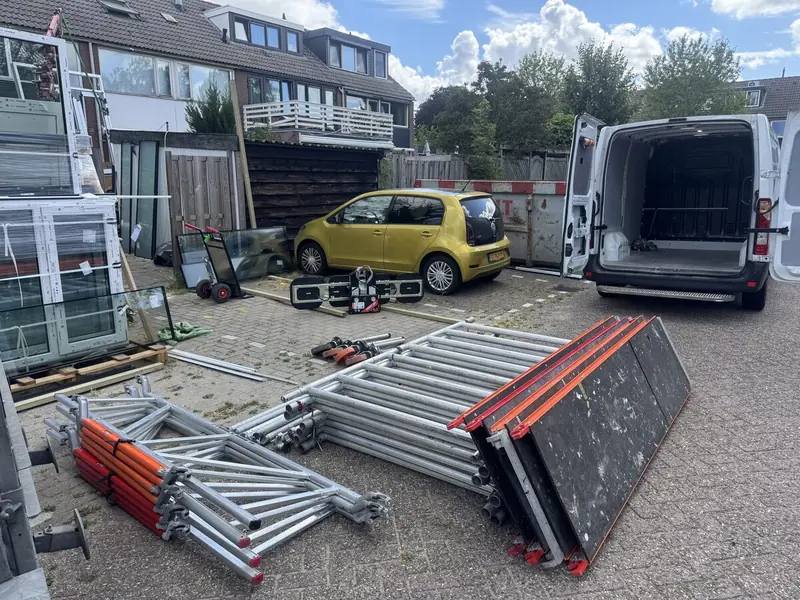
Delivery van standing on tarmac with a rear door open, scaffold frames and braces set down on the lawn

We come and collect everything afterwards on the date you chose. You break the tower down yourself and put the parts where the driver can reach them, preferably back at the front near the road. Do that only once the fabric is dry and wound away, or you are heaving tubes about with wet hands. Check the parts off as you dismantle so that nothing at all stays behind among the plants or under the decking to be found next summer.

Safe work on a soapy deck under a sloping sheet

Every set-up from our hire fleet follows EN 1004 and belongs to load class 3: 200 kg per square metre of deck. On cleaning work you come nowhere near that, not even with a second person and two buckets of water aboard. What you do watch is where those buckets sit: a full one on the edge of the deck is knocked off in a moment. Stand it against the guard rail and keep the middle of the floor free to walk on with a brush in your hand.

The castors are braked as soon as anybody goes up, and moving to the next section happens with an empty deck. Wear shoes with grip, because a platform turns slippery the instant suds land on it, and wipe the water off the boards between strips. If the wind gets up, wind the shading in and postpone the cleaning; a unit left extended and flapping is a danger both to you on the deck and to the fabric itself. Cleaning sun shading can wait for a calmer hour.

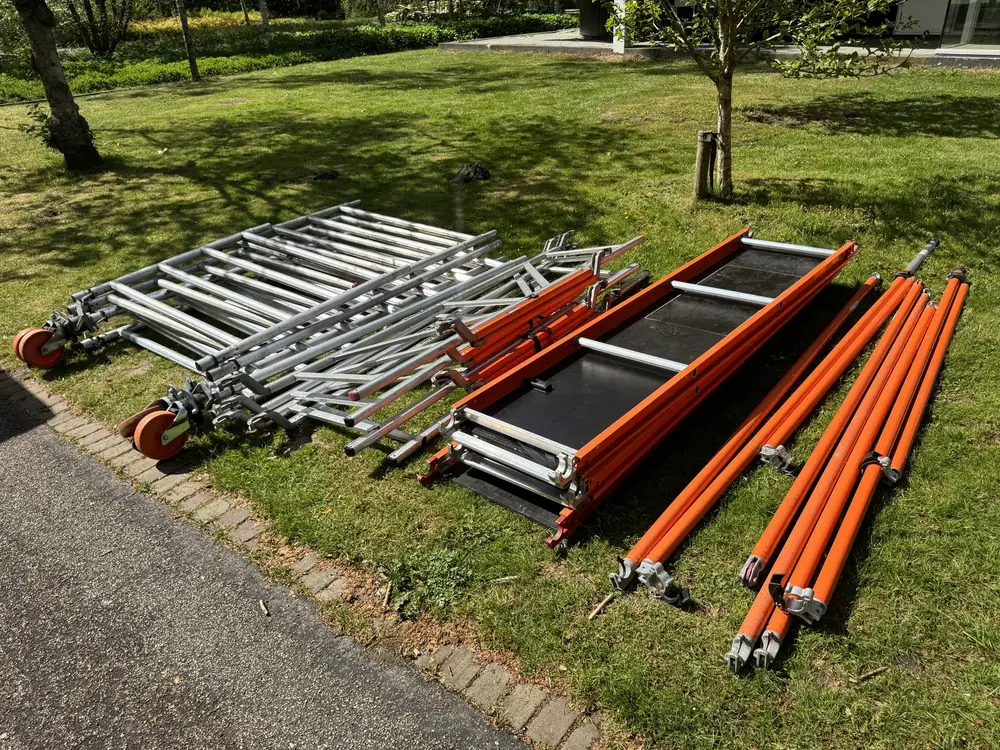
Frames with red castors, deck boards and orange braces laid out on a lawn under trees before assembly

Working alongside a sloping sheet has a trap of its own: you start leaning on it with the brush. Never do that, because an awning of any kind carries none of your weight and the folding arms are under spring pressure. Keep your weight on the deck and use a handle to reach further. Finally, let nobody sit on the terrace below you, since falling tools pick the worst moment. The rest is at the rules for work at height.

In 5 steps

How hiring a mobile scaffold works

1
Choose working height

Pick the height that suits your job.

2
Book online

Sorted in 60 seconds, price shown instantly.

3
We deliver

At the agreed spot the next working day.

4
Assemble safely

Assembled by you, with a manual.

5
We collect

One call and we collect the scaffold.

Good to know

Practical tips for cleaning sun shading

1

Wash on a cloudy day rather than in full sunshine. Suds that dry straight onto warm fabric leave rings behind that only come out again with a second wash of the whole panel a week later.

2

Always brush along the seams and never across them. On a fabric made up in strips the dirt sits in the seam, and scrubbing sideways drives it further in instead of lifting it out of the weave.

3

Put an old towel under the bucket on the deck of the tower. That saves a slop with every dip of the brush and keeps the boards under your shoes gripping for a great deal longer than they would otherwise.

4

Check the hem and the valance for loose stitching while you are washing. You are standing right there anyway, and a seam that has begun to fray can still be repaired before the sunny season starts in earnest.

5

Wind the unit a notch steeper after rinsing until the fabric is dry. Water standing on a flat pitch attracts fresh dirt and stretches the material over time, which no amount of later washing ever repairs.

6

Set your last hire day after the moment the fabric is wound away again. That leaves you half a day of drying in hand without the van already standing at the kerb waiting for the parts to be stacked.

Frequently asked questions

Frequently asked questions about cleaning sun shading

Which mobile scaffold should you hire to clean sun shading?+

The narrow version at 75 centimetres across is the handiest for a cleaning job. You stand it beside the extended fabric and shift it along the unit, and a slim tower manages that far better on a terrace full of furniture. Up top you need only a bucket, a brush and a cloth, so extra deck width earns you nothing. On a unit of four metres reckon on two positions side by side with a little overlap. You shift a metre at a time rather than rebuilding anywhere.

What is the process when you rent a tower for washing shading?+

Online you set down which version you want, the height you build to and the two days between which the scaffold stands at your house. The parts are delivered to the address, you assemble the tower beside the unit and get to work. After drying you take it apart and set it ready for the return trip. The amount is fixed in advance with VAT included and your hire runs between the dates you picked. Delivery and collection are arranged in the same booking.

How long a hire period does one unit need, washing and drying?+

Two days of hire with the tower on your terrace covers a single unit. The washing takes a few hours, but the fabric has to dry through completely before it goes back into the hood, and that will not happen the same afternoon. With two or three units on different walls you add a day, since each one needs its own drying round. Uncertain weather makes an extra day the wiser choice. Cleaning sun shading in autumn asks for that margin more often than in July.

What does the hire come to, and what does a drying day add?+

The tariff follows from the version you choose and from how far up the tower goes, with the delivery run added to that. Every amount is shown with VAT at the hire rates per model. Because it is day one that carries the full charge, an extra drying day barely registers beside it. That is exactly why people book a day wider than they expect to need, with the weather as the one real unknown in the plan.

What reach should the hire cover for shading over a terrace?+

For a unit above a terrace or a balcony door, 6 to 8 metres is the range. Do not measure to the underside of the fabric but to the top of the cassette hood, because you have to see over it to get the leaves out. Measure from the paving the tower will actually stand on rather than the lawn a step lower, which is worth half a metre on its own when you hire. Cleaning sun shading from too low a deck leaves the hood untouched.

Do you have the hired scaffold delivered, or collect it yourself?+

Delivery and collection in person are both available. Having it brought means the set arrives on your day and goes back once the drying period is over. Collecting in person is not charged for at all: you load it at Zeeburgerpad 89 in Amsterdam yourself, on a slot fixed beforehand, provided your trailer takes the longest components. For a cleaning job behind the house most people choose delivery, since the car need not be emptied for a two day hire. Tell us in advance where the van can unload.

Do I put the hired tower together myself for this job?+

Yes, the building is your part of it. We bring the set and take it away afterwards; standing it up beside the unit, moving it along the wall and dismantling it all fall inside your hire period. The instruction footage is there to work from while you go. Cherry pickers, system scaffolds and fixed facade scaffolds are simply not on the hire list, so a tower you raise yourself is what this job runs on. Count that build time into the first day of cleaning sun shading.

The shading is not dry yet: may I keep the tower another day?+

Certainly, and on this job it happens regularly. Let us know in good time and your collection day shifts back, as long as the set has not already been promised to another customer. Fabric wound away too soon turns musty and never loses the smell, so waiting always beats pressing on. Because you fix the end date of the hire yourself, that margin can be built in at the reservation and shortened again if the week turns out fine.

How much room beside the unit does the hire ask for?+

Count on a level strip a good two metres wide next to the extended fabric, with space for the four stabilisers. On a small city terrace that is usually the tightest factor, particularly where a low wall or a border runs along the edge. Clear the garden furniture before the scaffold is delivered and expect wash water to run across the paving. Cushions and rugs go indoors while you hire. Cleaning sun shading puts more water on a terrace than most people expect.

How soon is the deposit repaid after a hire like this?+

After the return it takes 1 working day before your deposit is repaid, once we have counted the tower back in as complete. That runs by itself and you do not have to chase it. On a cleaning job, take care not to hand deck boards and tubes back covered in suds and green growth, and leave no brush or bucket among the parts. More on the check sits at this piece on the deposit. A quick hose over the frames while they are still stacked does it.

Do I still hire the tower if showers are forecast that week?+

For the washing a shower matters little; for the drying it matters a great deal. You do not want to wind damp fabric away, so with changeable weather you plan a spare day into the hire. The tower simply stays standing in the meantime and you wind the unit in until it brightens up. Thanks to the way the tariff is built, a shift like that costs far less than a second reservation with a fresh delivery attached to it.

Is the hire long enough to wash the windows underneath too?+

Usually it is, and that combination saves you a second hire period. While the scaffold is standing there anyway you can reach the glass under the shading, though the fabric has to be wound in to make room. Do the windows on the day the fabric lies drying and your hire days do double duty at no extra cost. Work downwards, or you rinse the glass dirty again with water coming off the fabric above it. One hire, two jobs done.

Hire a mobile scaffold for cleaning sun shading today?

Calculate your rental price now or ask for free advice.

Rolsteiger van SteigerTaxi geleverd op locatie
Book it online

Your scaffold sorted in 2 minutes.

Choose your scaffold and working height, see the price instantly and book online.