
See your price
Application

Insulating a cavity wall? Choose the right scaffold.

Insulating a cavity wall opens with a judgement, not with a machine. Is there a cavity at all, how wide does it run, is the brickwork dry enough, and does anything live behind the open perpends? None of that is settled until you have looked from close range, seven metres up included. Two storeys of brickwork means you hire a mobile scaffold for the days that takes: the RS51, 75 cm across, standing you at 6 to 8 metres. What follows deals with the investigation and the tower it asks for.

  • Order before 3 pm, delivered tomorrow
  • Professional Altrex scaffolds
  • Up to 14.2 metres working height
  • Easy to assemble yourself
4,2 tot 14,2 mWorking heights available
12Provinces served
7Days a week
200 kg/m²Load class 3
In short
  • For insulating a cavity wall we recommend the Narrow mobile scaffold.
  • This page handles the assessment beforehand; the filling itself belongs on the sister page about installing cavity wall insulation.
  • You book the 75 cm RS51 at a 6 to 8 metre reach, so the elevation can be judged over its full height.
  • Insulating a cavity wall starts with half a day to a whole one of test holes, lintels and bird nest checks.
  • First 24 hours from €150 incl. VAT and delivery; every day after that 95% off.
Key facts for this job
FeatureValue
Recommended scaffoldNarrow mobile scaffold (Altrex RS TOWER 51)
Working height for this job6 to 8 metres
Available working heights4.2 to 14.2 metres
StandardEN 1004, load class 3 (200 kg per m²)
DeliveryOrdered before 3 pm, delivered next working day
Each extra day95% off, from €7.50 a day
Why a mobile scaffold for insulating a cavity wall?

Safe, stable and professional work at height

With a cavity, everything worth knowing hides behind the outer leaf. A test hole at eye level tells you very little, because it is up by the roof edge that the cavity most often silts up with mortar snots, and up there that rain drives hardest at the brickwork. To judge the cavity as it truly is, you drill at several heights, feed a camera in and measure the gap between inner and outer leaf. That wants two hands, a settled stance and the freedom to shuffle a few metres sideways. Hiring a tower for insulating a cavity wall therefore comes down to one plain thing: a solid deck to survey from at every height the wall happens to reach, front, flank and rear alike.

  • Drilling a test hole and measuring the cavity properly
  • An outer leaf that still keeps water out
  • Setting the hole pattern out in perpends
  • Ruling out nesting birds and any roosting bats
Read more about working safely →

Which mobile scaffold to hire before insulating a cavity wall

For a survey on a two storey cavity wall, the tower to hire is the Altrex RS51, built a mere 75 cm wide. On this job you walk the whole elevation and usually the flank and the rear as well, so the setup has to clear a shed, pass through a gate and cross a garden path without a struggle at every corner. The page listing mobile towers available for hire shows which widths exist and which of them still fit along a tight boundary strip beside a neighbour.

What travels up with you is light but plentiful: a drill with a long masonry bit, an endoscope, a tape, chalk, a small mirror and the phone that takes photographs you will certainly want again. On a 245 cm deck all of it stays within reach without rolling about underfoot. Width is not what you are short of, because you stand tight against the brickwork the whole time, looking, measuring and marking up what has to be drilled once a decision has actually been made.
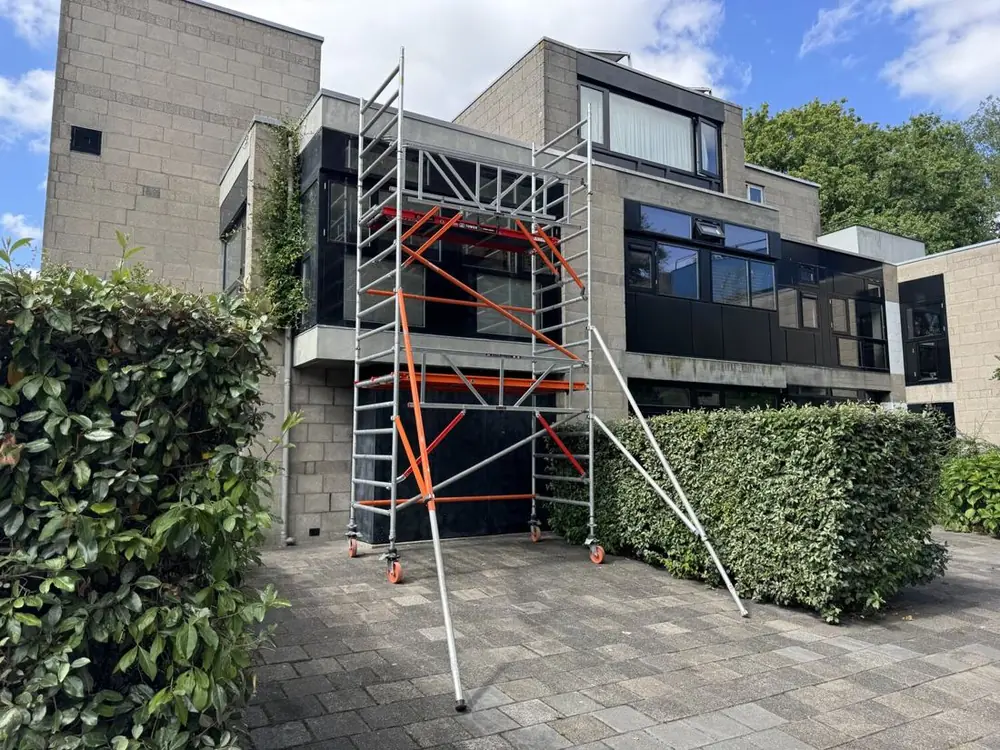
Narrow mobile scaffold alongside brickwork, the hire position from which an outer leaf is examined over its full height

Where a surveyor or a second pair of eyes walks the job with you, the 135 cm RS52 behaves more kindly: two people studying the same stretch of pointing need room to pass without the camera sliding out of the hole. For a one-person survey that never outweighs the ease of a narrow tower you can roll along on your own between one stand and the next. How the two sizes compare, and which you can still roll alone while insulating a cavity wall, sits in the table of scaffold dimensions.
Working height to hire for the top row of test holes

The highest point of this survey is not eye level but just beneath the roof edge, since that is where the top row of holes will go and where a silted cavity is likeliest of all. Two storeys puts your working height between 6 and 8 metres. Reckon it back by taking the deck height and adding the two metres or so a standing adult still covers, and the build to order becomes obvious. The explainer on working heights ranks those builds.

Measure from the level the wheels will occupy, and allow for the plinth at the bottom. Should the garden lie lower than the pavement, or the house sit on a raised bank, your entire ladder of measuring heights travels up or down with it. On a survey you also want sight of where the cavity meets the eaves, and that sits a good deal higher than the topmost brick you believe you can pick out while standing on the lawn.

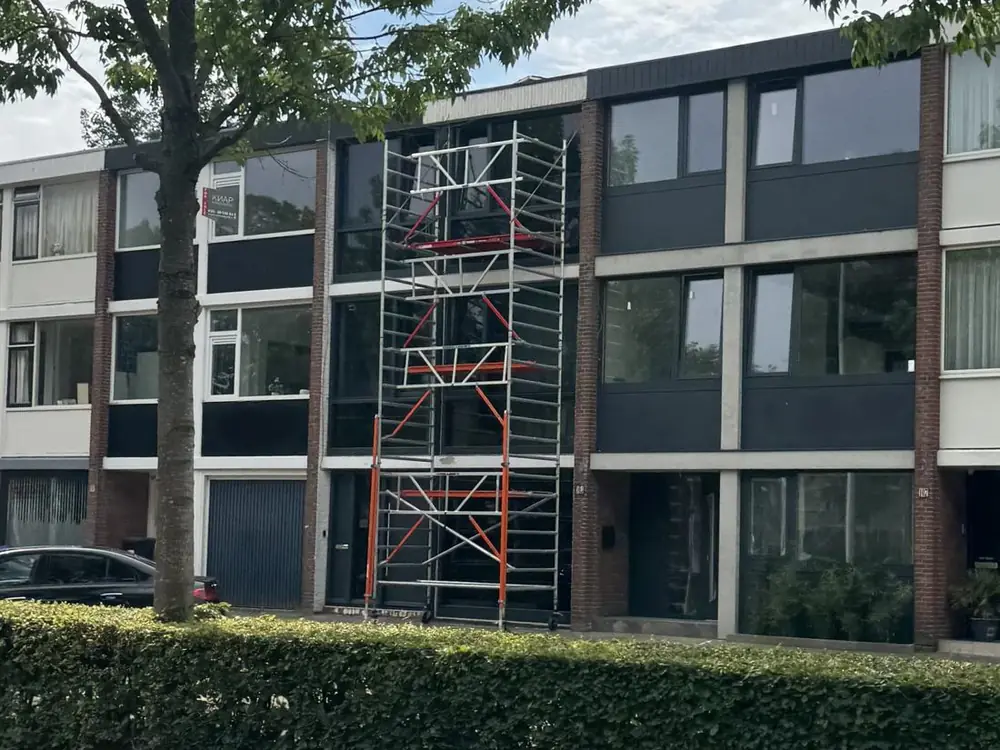
Mobile tower reaching the upper courses of a front elevation, the level at which the highest test holes are drilled

Book too low and you miss precisely the part that holds the surprises. Where the top metre has not been seen from close range, you learn only during the filling that the cavity narrows there or that a perpend holds a nest. By then a machine is waiting on your ground and standing idle costs money that the survey was meant to save. For an elevation carrying on above first floor level, hire one lift more rather than one too few, since nobody regrets spare reach when insulating a cavity wall.

Hiring a tower to stand clear of the wall you survey

A survey travels right round the house, so look at every side of the plot before you order anything. The front wall usually stands on the pavement, the flank against a narrow strip of ground, the rear behind a garden with a shed on it. Position the setup so each stand covers a decent width of wall, and mark on a rough plan where the tower goes in turn. That spares you rethinking the route halfway through the morning with a drill in one hand.

Whatever lies under the wheels must be flat and must carry weight. Garden soil that softens after a wet week, a band of gravel or a sunken slab path is no base to build several metres up from, so lay boards or sole plates. All round, keep room free for the stabilisers, which reach further out at an angle than the tower itself is wide. Where the ground falls away between terrace and lawn, look at working off a surface that is not level before the parts are dropped off.

Stabilisers extended on garden soil beside a scaffold foot, the free strip kept clear along the plinth of the brickwork

One rule counts for more here than anywhere else: the tower is never tied to the wall you are surveying. An anchor through the outer leaf damages exactly the brickwork whose watertightness you are trying to establish. The tower stands free on its own feet, which is why the strip beside the wall has to stay clearer than people assume at the moment they hire. Reckon on a good metre beside the plinth, and on the narrow side of the house as well.

How many hire days a full cavity wall survey takes

A survey on an ordinary terraced house runs to half a day or a whole one. In that time you drill test holes at several heights, look inside with the camera, measure the cavity, locate the lintels and walk the pointing for cracks and weathered joints. A detached house with four elevations and an extension soon wants a further day, simply because the tower has to be repositioned rather more often than anybody expects at the outset, and each move costs a quarter of an hour.

Season matters here in a way it does not for other facade work. Nesting birds and bat roosts decide when the cavity may be opened at all, and you check for them on that same circuit. Spot nesting material, or behaviour pointing to it, and the filling shifts to another period even though the survey is already behind you. A wall still drying out after a wet week moves the date for precisely the same reason, and neither of those is a delay you can argue with.

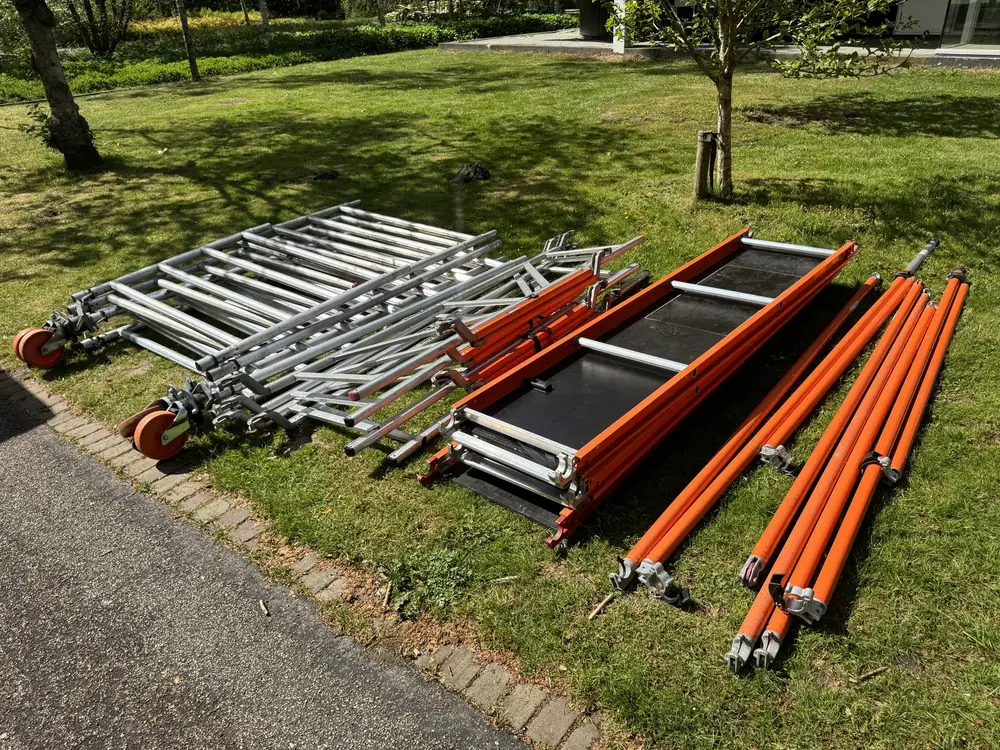
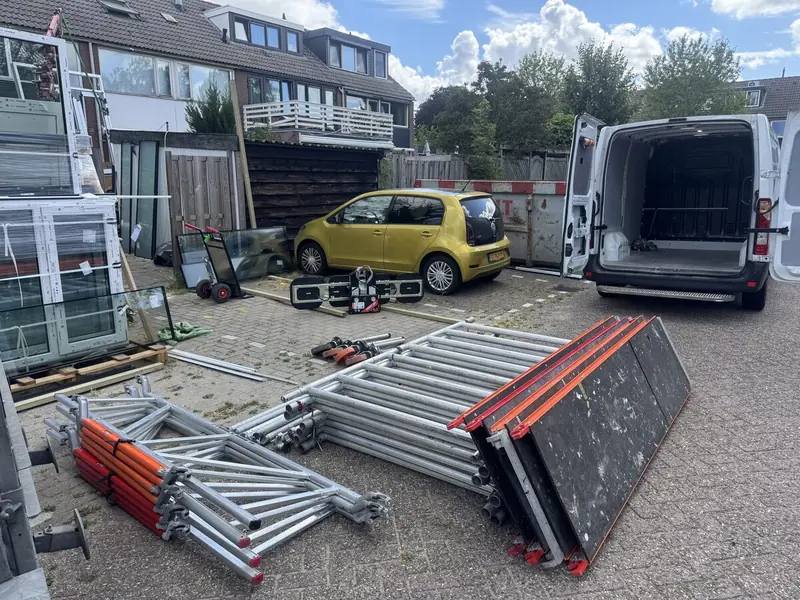
Counted scaffold parts laid out on grass, the hired set that stays on the plot for the days a survey runs

On the rental price it pays to glue survey and execution together. The full figure is charged across the opening twenty four hours; every following day counts with 95 per cent taken off, so letting the booking simply run on costs next to nothing at all. Prove the wall suitable and the tower already stands ready for the day the cavity is actually filled, which is the sister page to this one. Two separate periods mean two deliveries and two assemblies, and that adds up however you count it.

Which mobile scaffold suits insulating a cavity wall?

Kamersteiger RS44
  • Working height up to 4 metres
  • Compact and narrow
  • Great for indoor and small jobs
View and calculate →
Most chosen
Smalle rolsteiger RS51
  • Working height up to 14.2 metres
  • Narrow (75 cm)
  • Ideal for narrow passages
View and calculate →
Brede rolsteiger RS52
  • Working height up to 14.2 metres
  • Wide platform (135 cm)
  • Extra stability and workspace
View and calculate →
1-persoons steiger MiTower
  • Working height up to 6.2 metres
  • Very compact
  • Quick and easy to assemble
View and calculate →

Insulating a cavity wall: setting out holes per 245 cm deck

From a 245 cm deck you chalk a band of wall that gets finished in one visit. The pattern goes in the perpends rather than through a brick: it fills neatly later and the making good draws less attention. Use the brick course as your grid, hold the rows at a steady spacing and mark at once wherever an extra hole is wanted. Work band by band and the pattern stays in line across the whole elevation instead of drifting.

Around openings that grid always breaks down. Above every frame sits a lintel interrupting the cavity, and at the reveals of windows and doors there is frequently a closed return. Those panels need holes of their own, or a cold strip is left behind that nothing can reach afterwards. Mark up as well where the cavity is blocked with mortar, because that is what the test hole told you and it is exactly the sort of detail lost within a week.

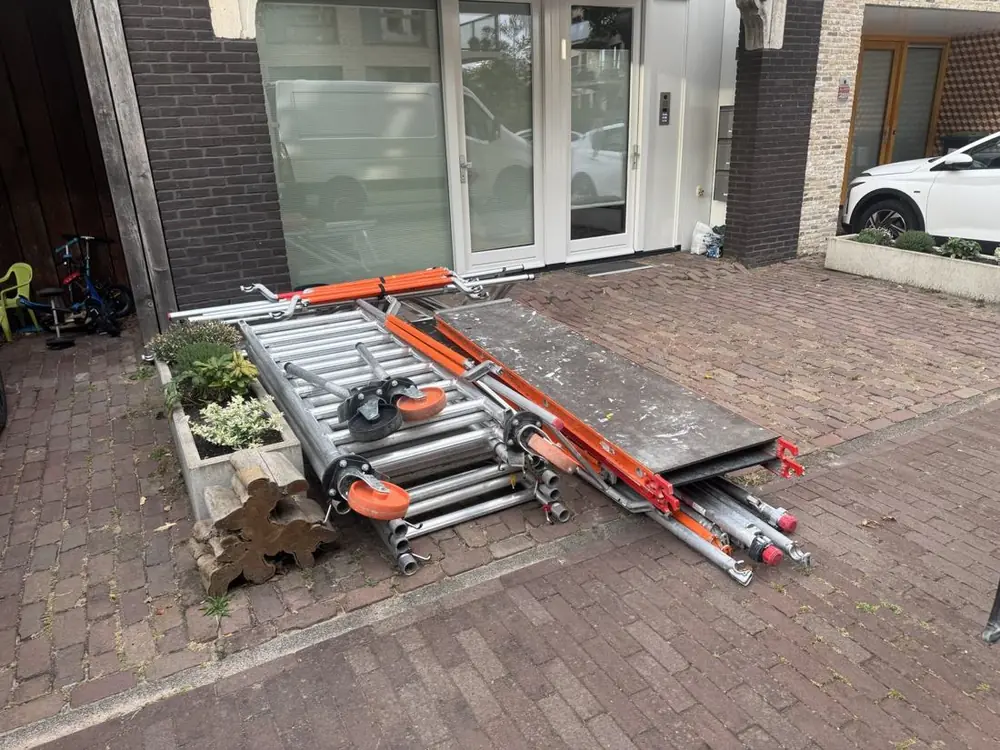
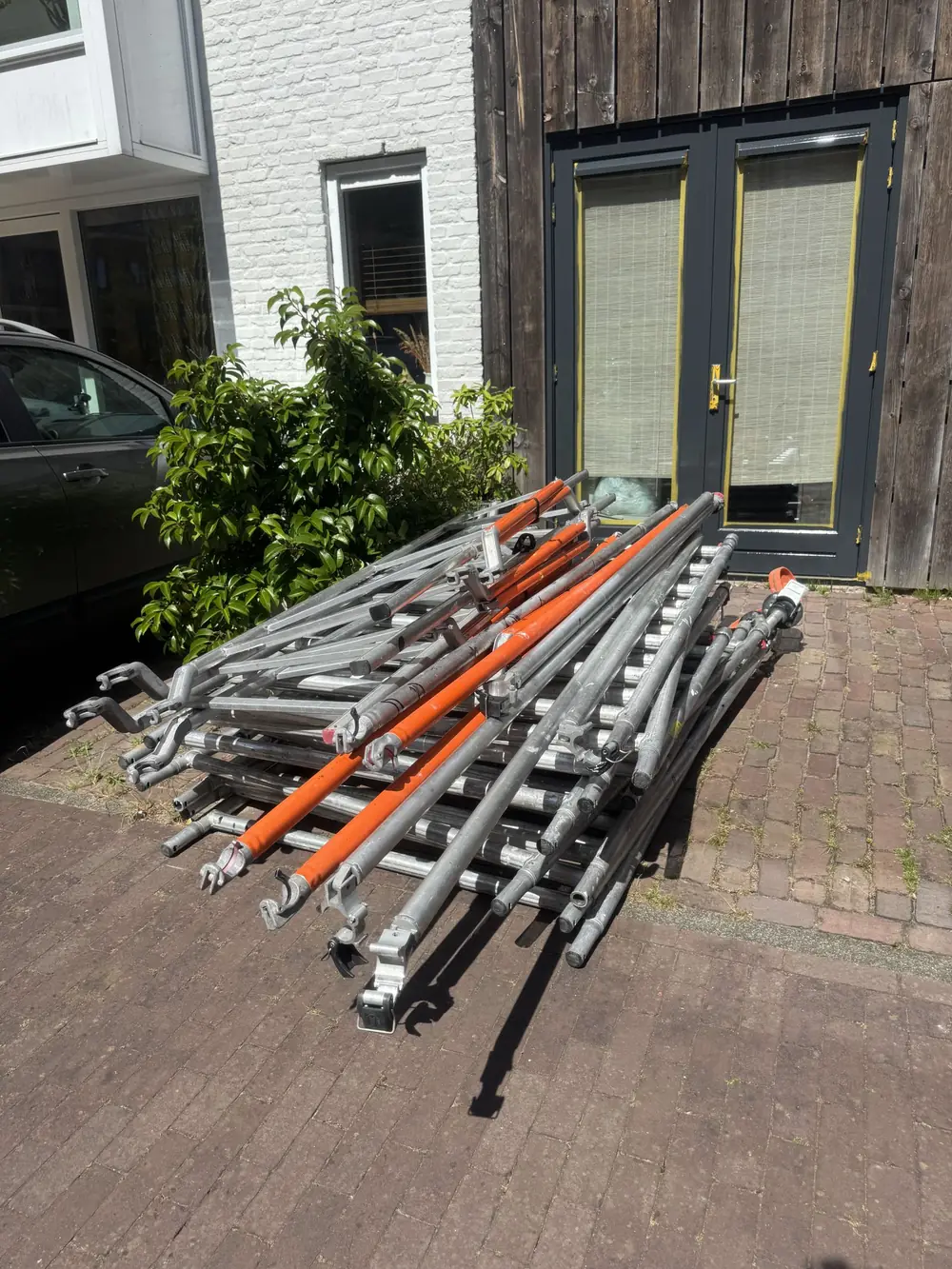
Scaffold parts stacked beside a front door, including the 245 cm deck that fixes how much wall one stand covers

Every test hole carries a short check for life behind the wall. Feathers, droppings or dragged-in material in an open perpend means you stop drilling and establish first what is in there. Bats squeeze through gaps barely a centimetre across and seldom show themselves at all while you happen to be standing right there on the deck. This page covers the judgement that precedes insulating a cavity wall; going hole by hole afterwards sits on the sister page about filling the cavity, where the machine and the lance take over.

Delivery when you hire a tower for the survey days

Your scaffold arrives as loose parts, counted and gathered into one complete set. Choose a spot for that stack in advance where nothing leans against the wall, since that surface is the one you want to sight along and drill into unimpeded. A drive, a patch of lawn or the verge in front of the house all serve. An order wrapped up by 15:00 on a weekday puts the parts on the van for the following working day.

Arrival and collection dates are both picked by you at the booking stage. When insulating a cavity wall it pays to take delivery the day before the survey starts, since assembly is your own work: two people, a couple of hours, manual and video open beside them. Your survey morning then opens with a tower already standing over the plinth and the entire span of daylight still in front of you rather than half spent on frames and braces.

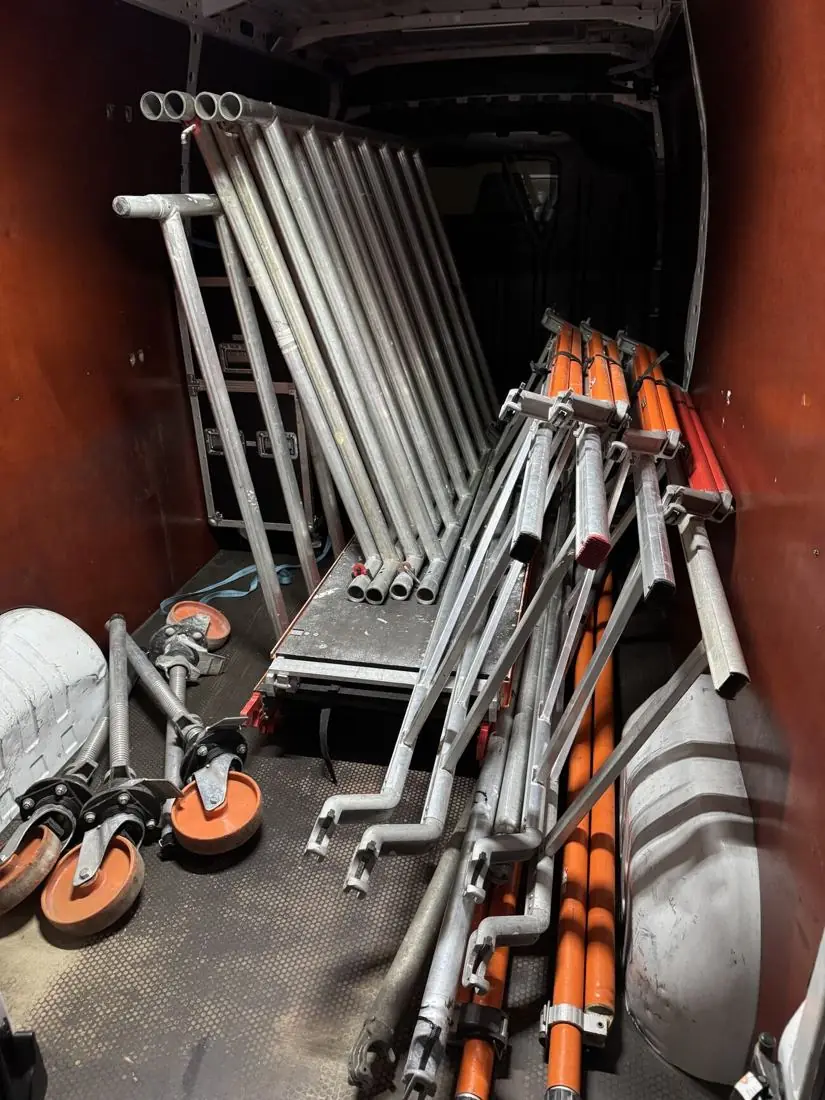
Bundled scaffold frames and decks strapped for transport, the counted set that arrives for a run of survey days

Afterwards we fetch the parts; dismantling and stacking the set complete stays with you. Wait until you are certain everything has been seen and recorded, because returning for one detail otherwise means a fresh assembly and a fresh hire day for the sake of one photograph. Count the parts as you release them and the set tallies exactly at handover. What your own province carries for the round trip appears on the page about delivery and collection charges.

Safe drilling and inspection work high on a cavity wall

Load class 3 of the EN 1004 standard covers this deck, meaning every square metre carries up to 200 kg. A drill, a camera and a handful of tools come nowhere near the limit, so what the deck bears is seldom your worry on a survey. What you do feel is the moment the long bit breaks through the outer leaf: the machine lunges forward, and that is exactly why the wheel brakes go on before you press the trigger.

You roll with an empty deck, no tools aboard and nobody standing on it, then set all four stabilisers down hard again wherever the tower comes to rest. When the wind picks up you stop; along a bare wall with no shelter you feel it sooner than in an enclosed back garden. Bear in mind as well that you are pushing a machine against the brickwork, and that the reaction keeps trying to shove the tower away from the wall.

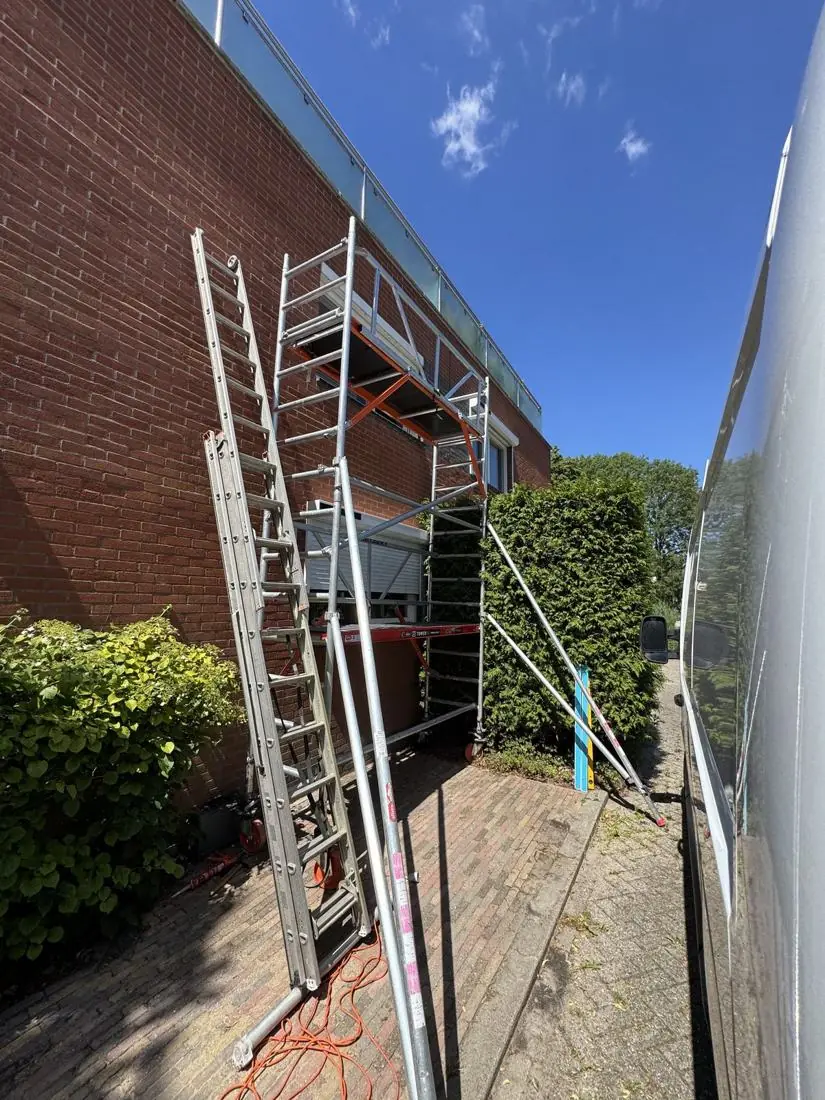
Hired tower built up beside a brick wall with stabilisers spread out, a loose ladder resting on the wall alongside.

Drilling into brick throws fine dust straight into your face whenever you are working at height above your own head, so goggles and a mask are hardly excessive on this job. Let nobody stand directly beneath you, because a bit or an endoscope slipping from your hand arrives below at a fair speed indeed. Everything else that applies aloft, even when you are inspecting for an hour and coming straight back down to the grass, sits at the safety rules that apply on a tower.

In 5 steps

How hiring a mobile scaffold works

1
Choose working height

Pick the height that suits your job.

2
Book online

Sorted in 60 seconds, price shown instantly.

3
We deliver

At the agreed spot the next working day.

4
Assemble safely

Assembled by you, with a manual.

5
We collect

One call and we collect the scaffold.

Good to know

Practical tips for insulating a cavity wall

1

Photograph every test hole with a rule beside it and write the height on the picture. Without that record you end up arguing about cavity width later and hiring a tower again purely to look a second time.

2

Drill your test hole into a perpend rather than straight through a brick. The making good then disappears into the pointing and the outer leaf stays whole at the point where water finds its way in fastest.

3

Walk the elevation dry first, hunting cracks, weathered joints and damp patches beneath the roof edge. Water getting in now will end up inside the insulation afterwards and sit there a great deal longer.

4

Shine a torch into every open perpend before you commit to anything at all. Feathers, droppings or dragged-in nesting material mean the filling waits and that expert advice has to come first.

5

Locate the lintels and mark them on your photograph of the elevation. The cavity stops above each frame, and those panels are the ones most often forgotten by anyone who never set the pattern out beforehand.

6

Plan the survey outside the breeding season and outside a wet spell. A wall that must dry first otherwise costs you a second hire period before anything whatever goes into the cavity behind the brickwork.

Frequently asked questions

Frequently asked questions about insulating a cavity wall

Which mobile scaffold do you hire before insulating a cavity wall?+

For a survey across two storeys the narrow RS51 at 75 cm does everything asked of it. You reposition constantly during this investigation, past sheds, gates and boundary lines, and narrow wins every one of those arguments. Little goes up with you either: a drill, a camera, a tape and a stick of chalk. Where two people work the same elevation at once, hire the wider RS52 so you can pass one another without breaking off in the middle of a reading.

How does hiring a tower work for an investigation into the cavity?+

Model and build height are fixed online, together with your start and finish dates, and a set price including VAT is paid up front. The scaffold set is put down on your ground, after which you assemble it and begin the survey. At the end you dismantle, gather everything complete, and it is collected. Should the investigation show the wall is suitable, the running hire period can simply carry on into the work itself without a break in the middle.

How many hire days does a test hole and a full survey need?+

A terraced house is finished in half a day to a whole one, drilling, measuring and photographing included. A detached house with four elevations wants a day on top, because shifting the tower absorbs more time than the looking does. Hire a day more generously than exactly: if something catches your eye at a joint or a sill, you want to be back up there from close range in the same week. Insulating a cavity wall properly begins with seeing all of it.

What does the rental price depend on when you hire for a survey?+

It follows from the model you want and the height the scaffold is built to, and a fixed amount applies per province for the journey out and back. Every figure carries VAT and appears before you confirm the booking, so nothing arrives later. The number of test holes you end up drilling has no bearing on any of it. Rates for each separate build, model by model, are gathered on the page of hire rates so you can compare before booking.

Which working height do you hire to judge a cavity wall properly?+

Take 6 to 8 metres for two storeys, measured to just beneath the roof edge where the top row of holes lands. Start the tape at the point the wheels will rest on rather than at the front door. High up is where the cavity most often silts with mortar, so that is where a test hole matters most. Hire the tower too low and that stretch of wall stays unseen, which means you are guessing.

Is the hired tower brought out to me, or do I fetch it?+

You settle that when you hire. Have it brought and the set arrives on your own date and goes back afterwards, against a fixed amount determined by province. Prefer to drive, and an appointment at the Amsterdam depot, Zeeburgerpad 89, lets you load it yourself without charge, provided your trailer takes the length of the frames. For a survey lasting a single day, having the scaffold brought out is easier in practice than driving across town twice over.

Does assembly come with the hire, or do I build the tower myself?+

Putting it together is your task. The scaffold arrives counted and complete and disappears again afterwards, but assembly and dismantling are handled by you. A pair of people spend a couple of hours at it, checking the sequence against the manual and the video supplied with the set. Neither facade scaffolds nor cherry pickers sit in this hire fleet, so when insulating a cavity wall across two storeys a mobile tower is the correct answer.

What if the investigation overruns and I want to hire for longer?+

The collection date shifts, provided the set has not already been booked out to the next customer. During a cavity survey that happens regularly: you meet a blocked cavity high up and want holes at further positions to establish how far the obstruction runs. One more day of hire stays cheaper than dismantling and rebuilding a week later on the same elevation, with another van journey added on top of it. Say the word early rather than on the collection morning.

How much clear space does the tower want beside the wall?+

Beyond the 75 cm the tower itself takes, you need room all round for stabilisers that reach outwards at an angle. Reckon on a good metre of free, reasonably flat ground beside the plinth. Move garden furniture, planters and the water butt before the hired scaffold arrives. One point matters more than the rest: nothing is fastened to the brickwork, so that free strip genuinely is what keeps the hired tower steady while you lean out to look.

Can I carry on hiring if the wall is too wet to judge?+

Nothing has to come down; only the investigation moves along a day. A soaked wall gives you a false picture, because you cannot tell which patches genuinely let water through and which are merely wet from the last shower. Wait for a dry morning and spend the wet hours drawing up your plan and hole pattern. Since you hold the collection date yourself, the postponement adds very little to the hire and nothing at all to the assembly work.

When do I get back the sum I put down at the time of hire?+

Count the scaffold parts back in, find nothing missing, and the deposit is on its way to you inside a single working day. On a survey it is drilling dust and grit that need attention: sweep the decks before dismantling and the hired set goes home as complete and as tidy as it reached you. Small items such as clips and pins vanish into the grass beneath a wall remarkably quickly.

What is the difference between this page and installing cavity wall insulation?+

Everything here turns on the decision: is there a cavity, how wide is it, does the wall shed water, where do the lintels sit and is anything living behind the perpends. The other page describes the execution, so filling hole by hole, closing the brickwork up again and checking the result afterwards. Anyone scheduling both phases back to back hires the tower once for the whole run of days rather than twice over, which is the cheaper and faster way round.

Hire a mobile scaffold for insulating a cavity wall today?

Calculate your rental price now or ask for free advice.

Rolsteiger van SteigerTaxi geleverd op locatie
Book it online

Your scaffold sorted in 2 minutes.

Choose your scaffold and working height, see the price instantly and book online.