
See your price
Application

Installing screens? Choose the right scaffold.

Installing screens starts with measuring and finishes with adjustment. The opening decides which screen you order, the free space above the frame decides whether the headbox still fits, and only then comes the question of how you get up there. With windows on the first and second floors, the RS51 is the model to hire: 75 cm slim, put together to 6 or 8 metres of reach. Below you will find where that set-up lands, how many hire days an elevation full of fabric costs, and what your fixings actually go into.

  • Order before 3 pm, delivered tomorrow
  • Professional Altrex scaffolds
  • Up to 14.2 metres working height
  • Easy to assemble yourself
4,2 tot 14,2 mWorking heights available
12Provinces served
7Days a week
200 kg/m²Load class 3
In short
  • For installing screens we recommend the Narrow mobile scaffold.
  • Screens across two floors call for the RS51 from our hire fleet, a slim mobile scaffold built to 6 or 8 metres of reach.
  • Measure the opening and the free space above the frame first, because those two figures together settle which screen will actually fit.
  • The headbox has to sit level and the guides dead plumb, so you want a platform per window that gives away nothing.
  • First 24 hours from €150 incl. VAT and delivery; every day after that 95% off.
Key facts for this job
FeatureValue
Recommended scaffoldNarrow mobile scaffold (Altrex RS TOWER 51)
Working height for this job6 to 8 metres
Available working heights4.2 to 14.2 metres
StandardEN 1004, load class 3 (200 kg per m²)
DeliveryOrdered before 3 pm, delivered next working day
Each extra day95% off, from €7.50 a day
Why a mobile scaffold for installing screens?

Safe, stable and professional work at height

A screen forgives nothing. Let the headbox hang a couple of millimetres out of true and the fabric runs crooked into the guides, so the zip pulls open along one edge. Up there you therefore need to do more than drill: you have to look, measure and adjust, with a level in one hand and a driver on your belt. On a ladder none of that works, because you hang at an angle, you cannot move sideways and there is nowhere to put the cassette. Hiring a tower for installing screens buys you a solid floor at exactly the height of the brackets, plus room to lay the headbox down beside you.

  • Headbox dead level, the guides pulled truly plumb
  • Opening and free space both measured up front
  • Fixings into lintel, insulation or timber backing
  • Six to eight metres of reach per window
Read more about working safely →

Which mobile scaffold to hire for installing screens upstairs

For fabric on the upper storeys you hire the RS51, the Altrex RS TOWER 51 at 75 cm wide, a model carrying on to 14.2 metres of working height. On this job you stay far below that ceiling. The narrow base is a deliberate choice rather than an accident: the tower goes down afresh at every window, usually onto a pavement or into a front garden strip where a hedge leaves very little room to spare. Which versions stand ready is shown in the overview of the mobile scaffolds we hire out.

That width works well on the platform. You stand facing the reveal, the cassette lies lengthways along the guardrail and your tools sit at your feet. A screen cassette of two to three metres overhangs the deck at both ends, which is no obstacle at all so long as you keep it flat against the elevation instead of swinging it round. Everything else you need for installing screens fits into a single bucket hooked over the edge of the guardrail.
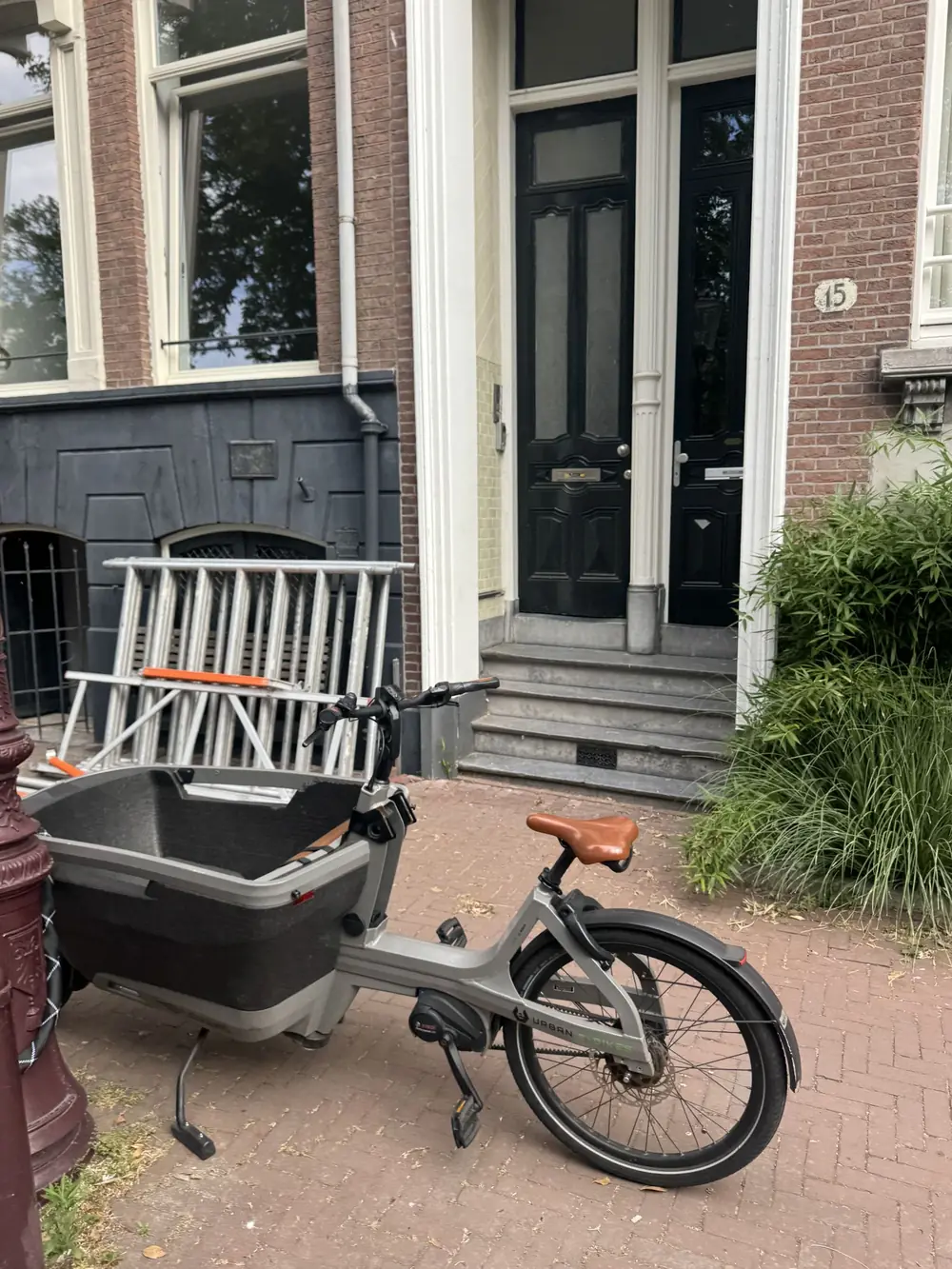
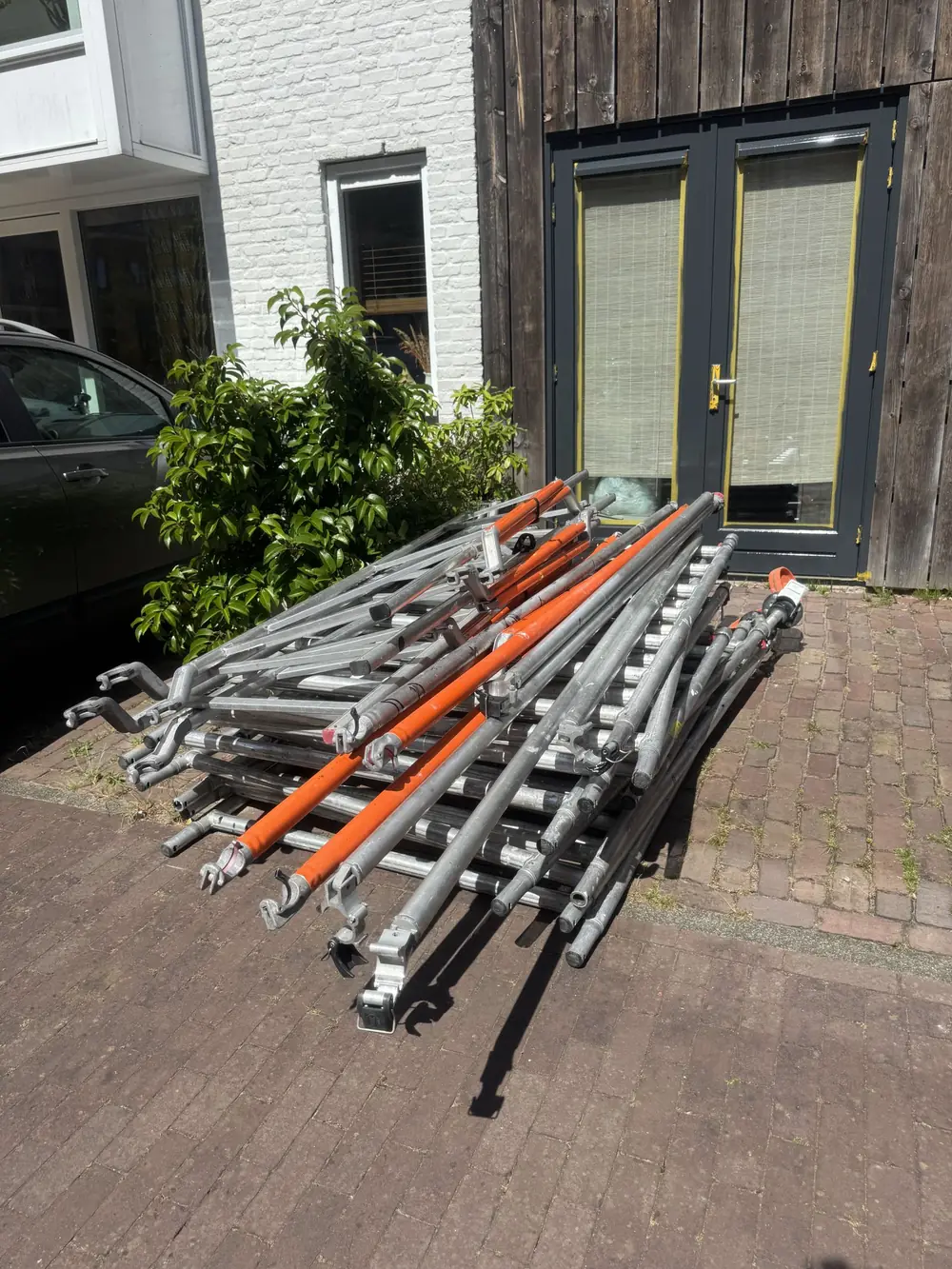
Parts of a 75 cm hire set propped on a pavement strip, the width that goes down again under every window.

Where two of you lift a heavy cassette for a wide opening, the broad RS52 at 135 cm is worth weighing up. Two fitters stand side by side on that deck without getting in each other's way, and the headbox can be laid down flat while the brackets are being adjusted. The price of that is a tower harder to shuffle along an elevation and hungrier for pavement. On two or three ordinary windows it does not repay the extra carrying.
Hiring working height above the headbox of your screen

What you measure to on this job lies higher up the wall than most people assume. Forget the top of the glass and forget the top of the frame: aim at the upper edge of the brackets the headbox will finally hang from. Those brackets sit above the opening itself, inside the free space you surveyed before ordering anything. Then add half a metre again, because you want to stand square to a drill and to sight along the top of the box while setting it true.

Turn that measurement into a reach: platform height is what you climb to, and roughly two metres of arm and shoulder sits above it, and together they give the working height you book on. Fabric across an upper storey and the one below it therefore asks for six to eight metres, on a deck landing four to six metres above the pavement. State that range when you reserve, alongside the number of openings in the period. What such a build looks like is shown at an eight metre reach.

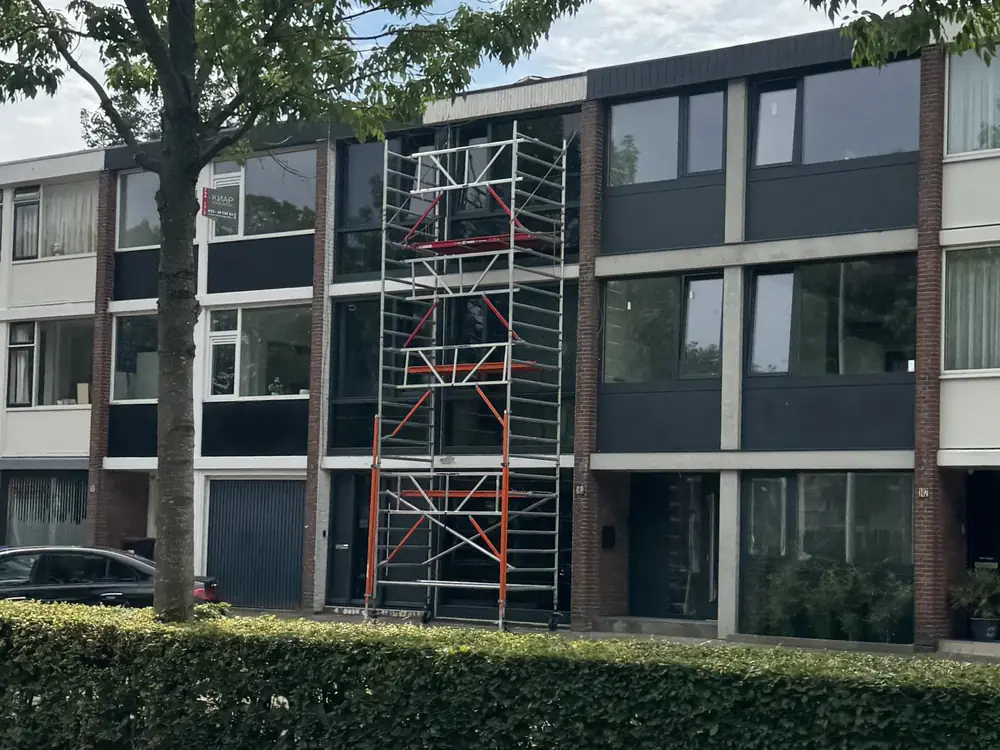
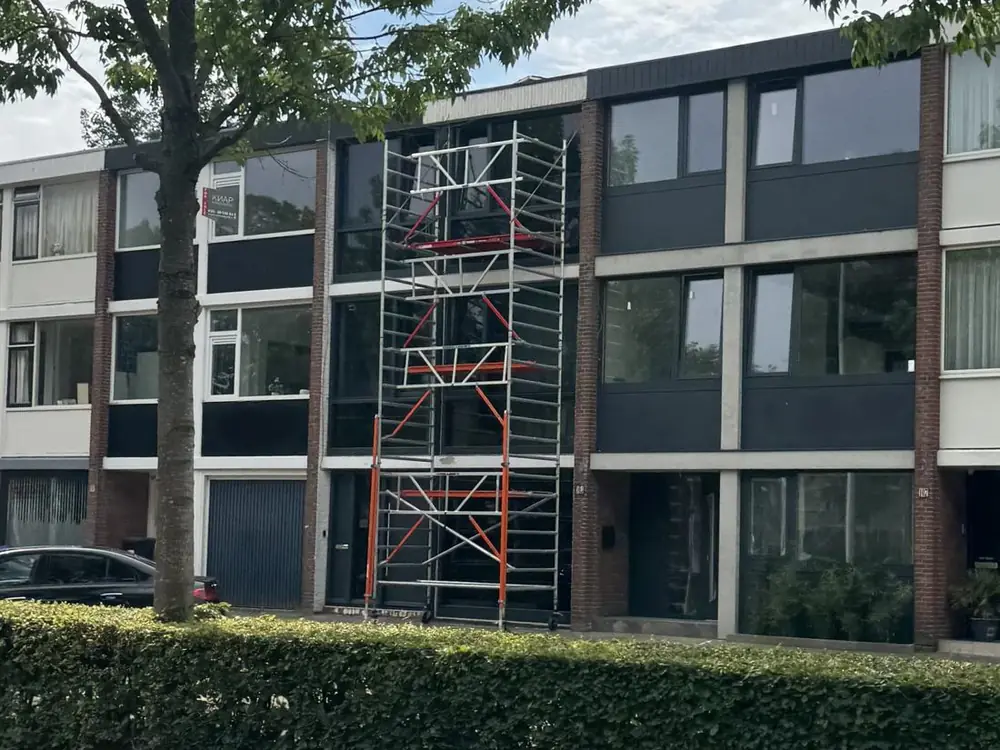
Tower built up the front of a house past the upper windows, the reach hired to work above a window opening

Setting the tower a stage too low punishes you the moment adjustment begins. With your eyes under the box you cannot tell whether it hangs level and you end up drilling by feel. You are also working with your arms above your head on a cassette you want to nudge a millimetre at a time. So pick the stage that puts the top of the headbox roughly at eye level. On a second floor window opening that choice saves half a working day when installing screens.

Where the tower stands when installing screens window by window

The position of your set-up follows the window rather than the other way round. The mobile scaffold therefore ends up centred on the reveal, with the deck at bracket height. That means a fresh pitch per window, and it means checking per window what lies underneath. At the front that is usually pavement or a tiled path; round the back it is a terrace, a planted border, or an outbuilding standing just that bit too close for comfort. Neither surface is a given until you have looked.

Look above all for what could put the frame out of true. A sloping drive, a sunken paving slab, a manhole cover or the grille over a basement light are the classics. All four adjustable legs have to rest on firm ground, because you will be drilling hard up there and that pushes the whole thing away from the wall. On soft or freshly dug ground, put boards down under each leg first. Taking up a difference in level neatly is covered in the advice for ground that is not flat.

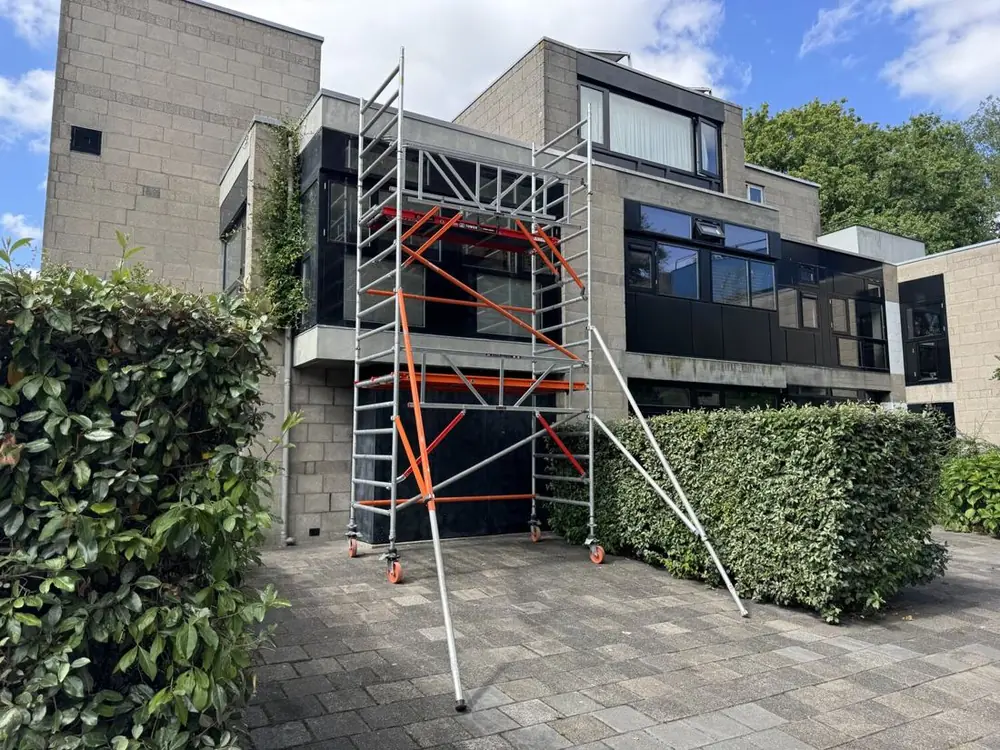
Legs extended from the base of a mobile scaffold onto paving, the firm footing that drilling overhead demands

Allow for the space you need in order to look, as well. A guide is not adjusted with your nose against it; you want to step back a few metres and judge whether the line is true. Where the tower ends up on a public footway, keep a route past it clear for pedestrians and check what is permitted in your street. At a bay or an extension, plan on two pitches for that one window instead of one, and count both of those moves into the hire day you booked.

How many hire days for installing screens on one elevation

Installing screens goes window by window, so it is the count of openings that matters and not the square metres of wall. Allow half a day per screen: take up the pitch, mark the brackets out, drill, hang the headbox, set the guides and run the fabric up and down a few times to watch it. Four screens on a front elevation therefore fill two full days, and that is before the motors are wired and before the morning spent building the tower. Count the moves between openings into the total as well.

The waiting comes from things outside your control. Fabric is cut to size for your openings, so the day it lands is the day that settles your start date. Beyond that you want dry and still weather: a wet reveal gives your plugs nothing to grip, and in any sort of breeze a three metre cassette refuses to sit quietly against the wall. Put your hire period after the screens themselves have been delivered rather than before, however tempting an earlier slot in the diary may look.

Mobile scaffold assembled against a modern house front, roughly the position that one window occupies for half a day

Booking wide is cheaper than starting again. That first 24 hour stretch takes the whole amount, and every later day is added at 95 per cent below it. Booking three days when you expect two therefore adds very little to the rental price, while it rescues the week if a motor refuses to run or a guide needs resetting from scratch. That saves a second delivery and a second build day. The rates per model and build are online including VAT.

Which mobile scaffold suits installing screens?

Kamersteiger RS44
  • Working height up to 4 metres
  • Compact and narrow
  • Great for indoor and small jobs
View and calculate →
Most chosen
Smalle rolsteiger RS51
  • Working height up to 14.2 metres
  • Narrow (75 cm)
  • Ideal for narrow passages
View and calculate →
Brede rolsteiger RS52
  • Working height up to 14.2 metres
  • Wide platform (135 cm)
  • Extra stability and workspace
View and calculate →
1-persoons steiger MiTower
  • Working height up to 6.2 metres
  • Very compact
  • Quick and easy to assemble
View and calculate →

Installing screens from the scaffold deck: level headbox, plumb guides

You get 245 cm of deck length, and on this job that is rarely generous. A screen for a wide opening is often broader than the floor you stand on, so hang the headbox from a pitch taken mid-reveal and work outwards to both ends. Lay the cassette down lengthways before you lift it, never across the guardrail, where one end will always be in your way. When installing screens, set every bracket out first and hang the box into them afterwards in one movement rather than in stages.

Where the screw actually goes is the question that governs everything else on this job. Above a window opening there is usually a concrete or steel lintel, and that is sound ground. With external insulation in front of it you do not fix into the render but through the layer into the structure, using spacers so the box cannot pull back into soft material. On a timber-clad house you locate the backing behind the boarding, mark it out along the full width and only then reach for the drill.

Platform of a mobile scaffold held tight along a house wall, the working floor used at bracket height

Adjusting then happens in two directions. The headbox must hang level over its whole length, because a millimetre of difference shows up as fabric drifting to one side. The guides go up plumb and at exactly equal spacing, or the zip pulls crooked and wears itself out inside a single season. Let the fabric run all the way down and back up again several times while you watch it, and correct everything before you begin dismantling the hired mobile scaffold.

Hiring, delivery and collection of the loose scaffold parts

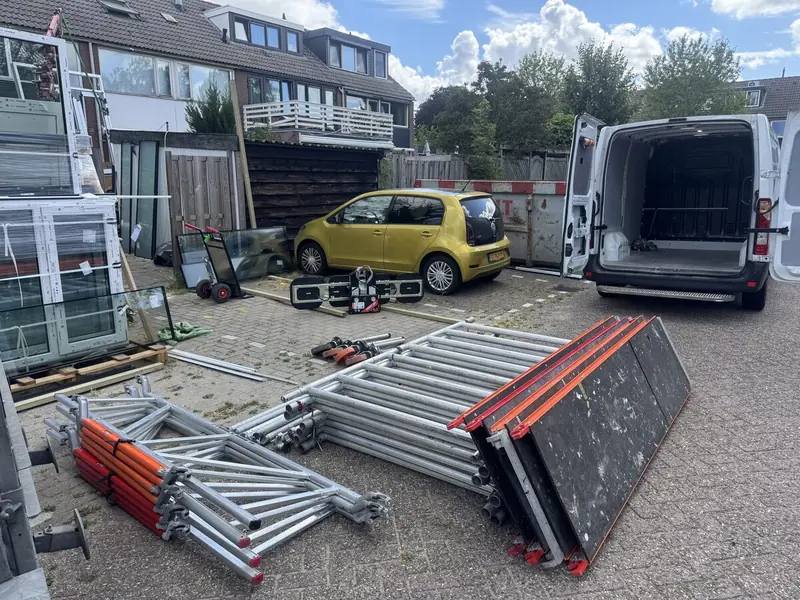
The mobile scaffold reaches you in parts, counted and bundled, and not in a built state. Before the van draws up, work out where that pile is allowed to go, because the pavement directly under the window is exactly the ground you need to keep free. A drive, a garage path or the grass strip beside a hedge suits far better. Order it on a weekday, with 15:00 as the deadline, and the next working day becomes your delivery day, so no morning goes to waiting in.

Arrival and departure dates are both yours to name at the moment of booking. For installing screens that mainly means talking to whoever supplies the fabric: only let the tower come once you are certain the cassettes have landed and been checked. Erecting it belongs to you. Work from the assembly booklet, watch the film once through beforehand, and at this height two people are finished inside an hour. See also how a tower goes up step by step.

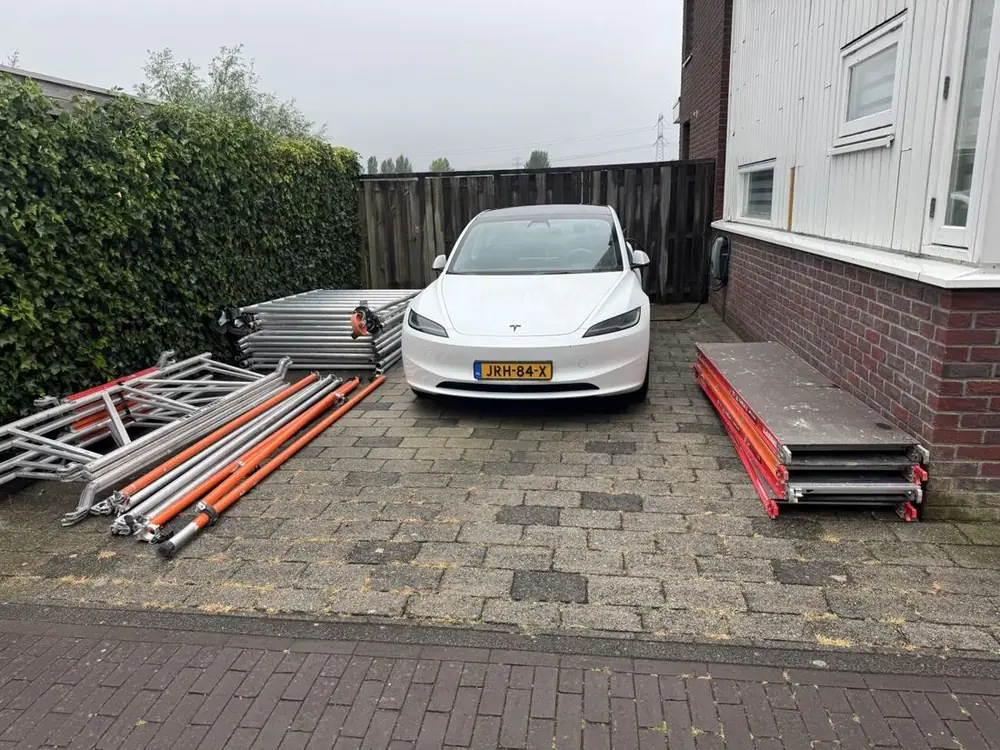
Scaffold parts delivered on site outside a house, the bundled stack dropped off the day before fitting begins

After the final test run you take the set-up down and heap the parts together, and we collect them on the date you picked. Count the pieces as you dismantle and you will not be left short a brace at the end. Having your own transport and no wish to wait, you can load up by appointment at Zeeburgerpad 89 in Amsterdam, with nothing charged for it. What transport to your province costs is fixed in advance at the rates per province.

Drilling safely at height from a hired mobile scaffold

Load class 3 of EN 1004 is what every tower in the fleet is built to, and it carries 200 kg on each square metre of decking. On screen work you approach that sooner than you would guess: a three metre cassette runs to thirty kilos easily, and there are usually two fitters standing together. So share the weight out along the deck, and do not set the headbox down while two people are standing on the same board. The background is at what this standard actually governs.

The basic rules do not change. Brakes on before you climb, nobody and nothing aboard while you move it, and off you come in strong wind. That wind limit counts double here, because a three metre cassette behaves like a sail the moment you raise it. Never reposition the tower with the headbox still lying on the deck either: put it down at ground level first and send it back up only once the four legs stand firm.

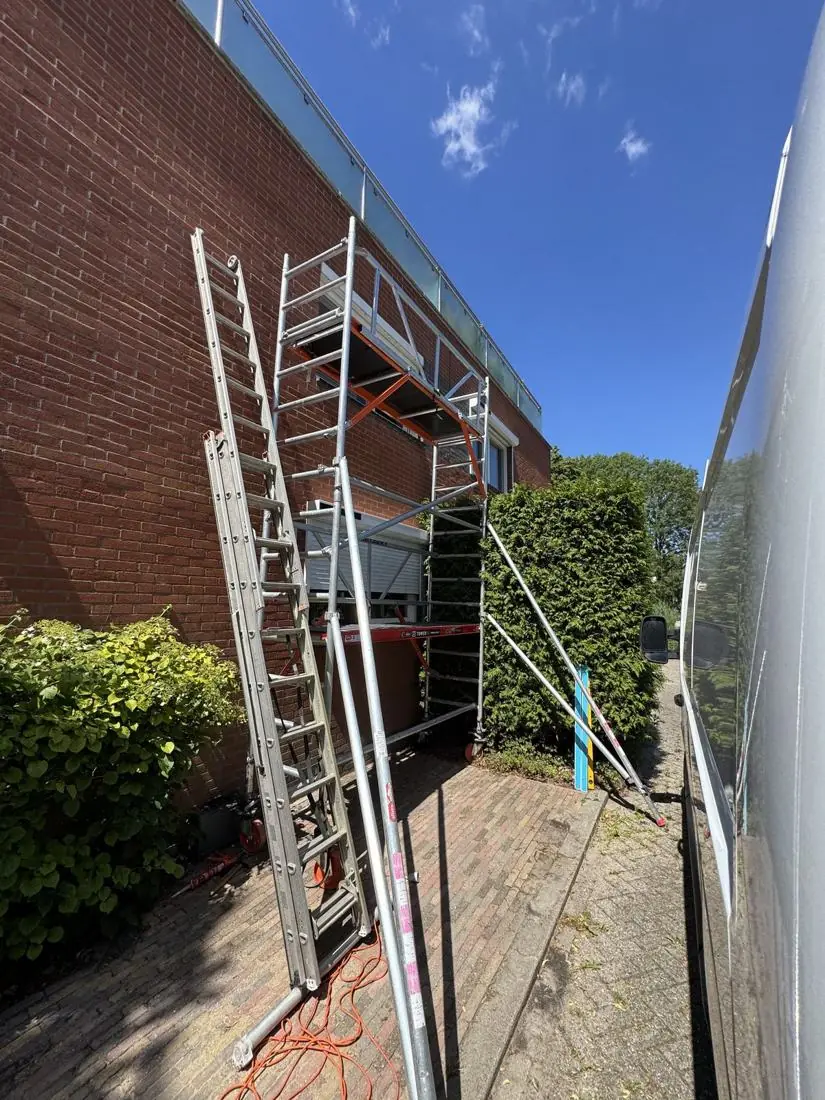
Rolling tower up against a brick side wall, with a separate extension ladder leaning on the wall a step away.

The hazard belonging to this work comes from above your head. You drill at eye level or higher, so wear glasses and sweep grit off the deck before it turns slippery. Put the machine on a lanyard, because a drill that falls four metres cannot be stopped by anyone standing down below. Fence the area underneath off where people walk along that pavement, and leave the barrier standing for as long as the drill is running. More rules are set out at work at height in practice.

In 5 steps

How hiring a mobile scaffold works

1
Choose working height

Pick the height that suits your job.

2
Book online

Sorted in 60 seconds, price shown instantly.

3
We deliver

At the agreed spot the next working day.

4
Assemble safely

Assembled by you, with a manual.

5
We collect

One call and we collect the scaffold.

Good to know

Practical tips for installing screens

1

Measure the opening at three heights and the free space in both upper corners. A frame a centimetre out of square is far better discovered at the ordering stage than when you are up there holding the headbox.

2

Mark the bracket holes out with a long level spanning the full width of the opening rather than a short one held on two separate points. A box dropping two millimetres at one end sends the fabric off immediately.

3

Take plugs and spacers up with you before you start. With external insulation the fixings supplied with the screen never reach far enough, and climbing down each time costs five minutes a go.

4

Run the fabric fully down and back up three times while you are still standing on the deck. A zip catching along one edge is a two minute correction now and a whole rebuild later.

5

When installing screens, put the tower centred on the window instead of over towards the motor end. You need both corners of the headbox, and the motor side happens to be the heaviest part to lift alone.

6

Ask your supplier to deliver the fabric a day before your hire period starts and do not unwrap it in the rain. Damp fabric rolled into a box comes out marked.

Frequently asked questions

Frequently asked questions about installing screens

Which mobile scaffold do you hire for installing screens over two floors?+

The RS51 is the right pick here: a slim 75 cm version you move from window to window, which fits a pavement or a narrow strip of front garden. Build it out to six or eight metres of reach and you arrive at the brackets above an opening on either upper storey. Where two fitters handle wide cassettes, it is more comfortable to hire a mobile scaffold on the wider base, though you give up some of the manoeuvrability that this job leans on.

What do I arrange from booking to collection when I hire?+

Online you pick the type and the build stage, put a date against the delivery, another against the collection, and pay up front with VAT included. The set arrives in parts, you stand it up, hang your fabric and put the tower back down dismantled on the last day. The only thing to time properly is the sequence: cassettes in the house first, then the scaffold, then the drill. Doing it the other way round leaves you waiting beside an idle set-up that is costing you hire days.

How many days should you hire for four screens on a front elevation?+

Two days is realistic for four units, working on half a day per opening including adjustment and a test run. If one wide unit needs two people to lift, or a motor has to be wired in, count on three instead. Add the hour in which you put the mobile scaffold up and level it. When a guide goes wrong you really do not want the hire period ending on the very last window of the elevation.

What is the outlay on hiring a tower for screen fitting?+

That follows from the type, the build height and the province the van has to cross; the amounts appear including VAT at the rates per tower. For this job the rental price is shaped in your favour, since the opening day bears almost all of it and the days behind barely register at all. An elevation with six screens planned as one continuous block therefore beats two separate hire periods with two lots of transport on top.

Which working height do I hire when the box sits above the upper window?+

Measure to the upper edge of the brackets the headbox hangs from, so above the free space and not up to the glass. Add half a metre so you can stand square to the work and sight along the top. On an upper window that puts you at six to eight metres of working height, with the deck sitting four to six metres above the ground. Torn between two stages, hire the tower one stage higher and work with your arms down.

Can the hired scaffold be delivered to the pavement, or do I fetch it?+

Delivery is available; the van sets the parts down on the pavement or on your drive. From there you carry them to the wall yourself, which this narrow model allows one person to manage. If your house sits along a path no van can enter, tell us that when you hire. Preferring your own transport, you may load by appointment instead, provided your vehicle takes the full length of the uprights.

Does the tower arrive assembled, or do I build it after hiring?+

You build it. Parts arrive loose, accompanied by written instructions and a film running through the sequence, and at this height a second pair of hands has the set-up standing within the hour. Build that hour into your first fitting day and avoid starting late in the afternoon. We do not come to build and we deliver nothing ready assembled, and facade scaffolds and cherry pickers are absent from the range, so this is what the job runs on.

Can I hire for longer if the screens are delivered late?+

Yes, and delays like that are common, because every piece of fabric is cut to measure. Shift your collection day and the tower simply stays put, provided nobody else is already waiting on that particular set. Wiser still is to fix the period only once your supplier has given a firm delivery date in writing. Handing the set back early is always allowed, so booking wide works out cheaper than paying for a second round of transport.

How much clear ground in front of the window does the hire need?+

Keep the footprint of the tower clear in front of the reveal, add what the legs take up as they splay out on both sides, and then allow a few metres for stepping backwards. That backward look is what tells you whether the guides really do stand plumb. Move the bikes, the planters and the wheelie bin before you hire anything, because shuffling the tower sideways with a cassette lying on the deck is simply not an option.

Is renting worthwhile if rain or wind is forecast?+

In rain you can carry on with the hire, you just do not hang the fabric. Fixings driven into a soaked reveal never sit as they should, and a cassette lifted in a breeze swings every way at once. The tower meanwhile stays standing where it is, so continuing the hire almost always beats having everything collected early. Turn the morning into marking out, pre-drilling and getting every bracket screwed onto its final position ready for tomorrow.

And the deposit, when does that come back after the hire?+

A deposit is paid when you book the tower, and it returns to your account within one working day once the set has been counted back in. On this job the small things matter: leave no drilling dust on the deck and return every guardrail and brace. If a part is missing, settling your hire simply waits for it. So count along while you take the mobile scaffold apart at the end.

Can the motor cable be wired from the same hired set-up?+

It can, and it saves you a second hire period. While the tower stands in front of the window an electrician runs the cable to the box and connects the motor from that same deck. Line that up with your hire days, because an electrician who turns up two days later means the set-up has to stand idle in your front garden in between. Run the screen through once more before you dismantle.

Hire a mobile scaffold for installing screens today?

Calculate your rental price now or ask for free advice.

Rolsteiger van SteigerTaxi geleverd op locatie
Book it online

Your scaffold sorted in 2 minutes.

Choose your scaffold and working height, see the price instantly and book online.