
See your price
Application

Removing a satellite dish? Choose the right scaffold.

Removing a satellite dish runs the fitting sequence backwards. Coaxial cable off first, then the reflector lifts away from the mast, then the arm, and the wall bracket leaves the brickwork last of all. Everything you unbolt has to travel down, and the holes left behind want closing the same day. A dish perched high on the elevation points you at the wide Altrex RS TOWER 52, a 135 cm deck ordered in the 8 to 12 metre range. Below is how to lay that hire period out.

  • Order before 3 pm, delivered tomorrow
  • Professional Altrex scaffolds
  • Up to 14.2 metres working height
  • Easy to assemble yourself
4,2 tot 14,2 mWorking heights available
12Provinces served
7Days a week
200 kg/m²Load class 3
In short
  • For removing a satellite dish we recommend the Wide mobile scaffold.
  • With the old dish hanging close under the gutter, removing a satellite dish calls for the 135 cm RS52 deck width.
  • You work top down and small to large, lifting the reflector clear of the mast before anything heavier is touched.
  • Allow half a day extra for filling the anchor holes and sealing the cable entry before your tower is collected.
  • First 24 hours from €175 incl. VAT and delivery; every day after that 95% off.
Key facts for this job
FeatureValue
Recommended scaffoldWide mobile scaffold (Altrex RS TOWER 52)
Working height for this job8 to 12 metres
Available working heights4.2 to 14.2 metres
StandardEN 1004, load class 3 (200 kg per m²)
DeliveryOrdered before 3 pm, delivered next working day
Each extra day95% off, from €8.75 a day
Why a mobile scaffold for removing a satellite dish?

Safe, stable and professional work at height

Taking hardware off a wall sounds faster than putting it up, and it seldom is. Bolts left outdoors for a decade have seized, the bracket is held by four anchors driven into brickwork, and the old cable still runs somewhere inside. You end up hauling on a socket bar at a point where your feet must stay planted, while nothing whatsoever may drop onto the pavement underneath. On top of that the wall wants leaving tidy: anchor holes filled, cable entry sealed, the mark below it dealt with. A ladder is finished the moment both hands are busy steadying a loose reflector. That mixture of force, disposal and making good is why people hire a mobile scaffold.

  • Seized anchor bolts demand force and a planted stance
  • Removing a satellite dish sends parts downwards
  • Four anchor holes want filling before collection day
  • Nothing may land unplanned on the pavement below
Read more about working safely →

Which mobile scaffold to hire for removing a satellite dish

For stripping a dish off brickwork the sensible pick is the Altrex RS TOWER 52, the wide version whose deck measures 135 cm across. What separates this from a fitting job is the direction the material travels: everything comes towards you rather than away from you. Reflector, arm, mast, bracket and a length of tired coaxial cable all arrive on the boards at once, and they need somewhere to lie without becoming a trip hazard underfoot. Each available build is listed among the mobile towers in our hire fleet.

The narrow 75 cm version manages it too, but then you work in two rounds and send the reflector down partway through. That costs a climb, and unbolting is exactly the stage where breaking off is unwelcome. Only when the route to the wall is too tight for a wide frame, a garden door of eighty centimetres for instance, does the slimmer size become the better answer. Both sit side by side in the comparison of the two deck widths, which settles it quickly.
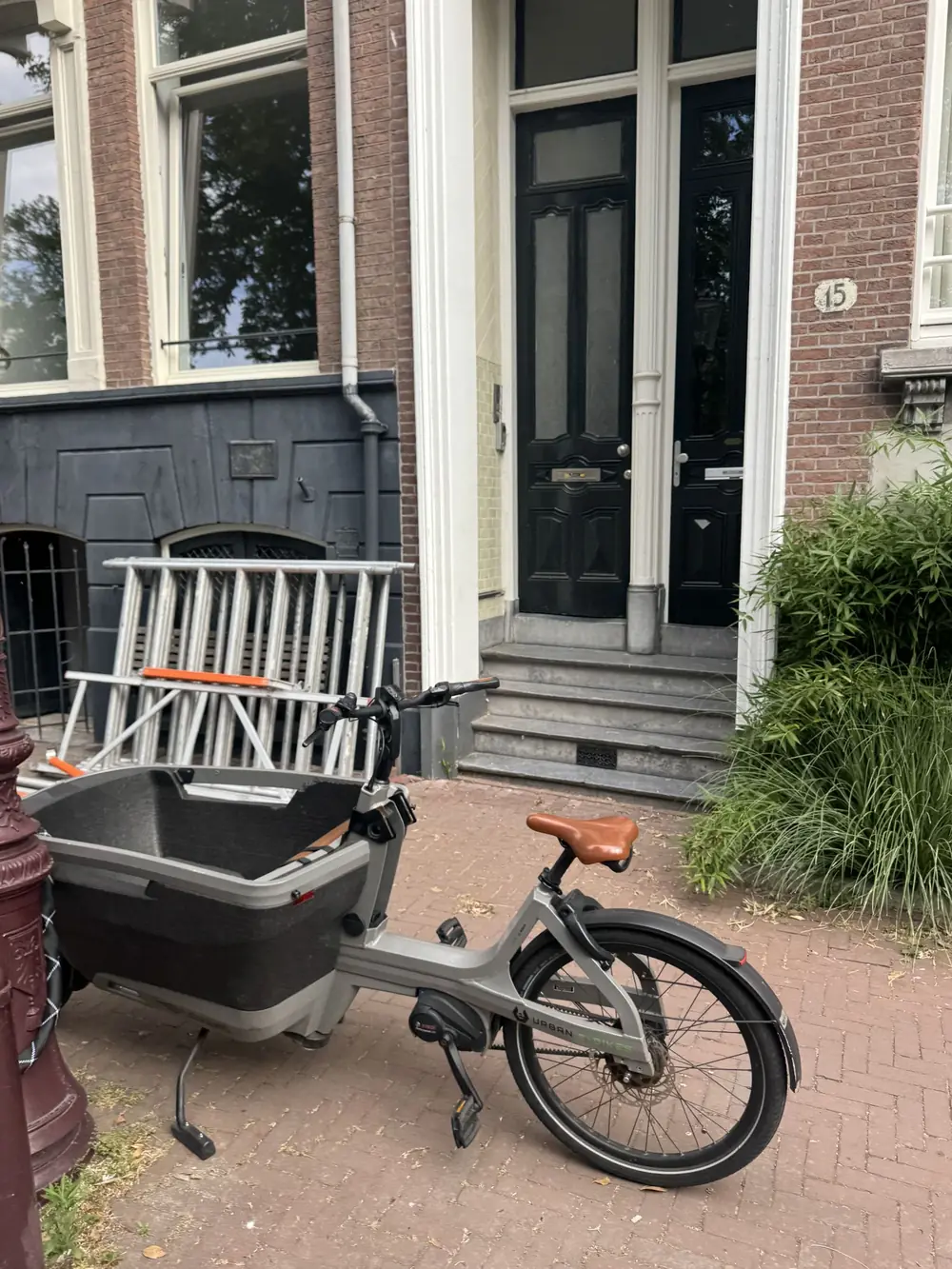
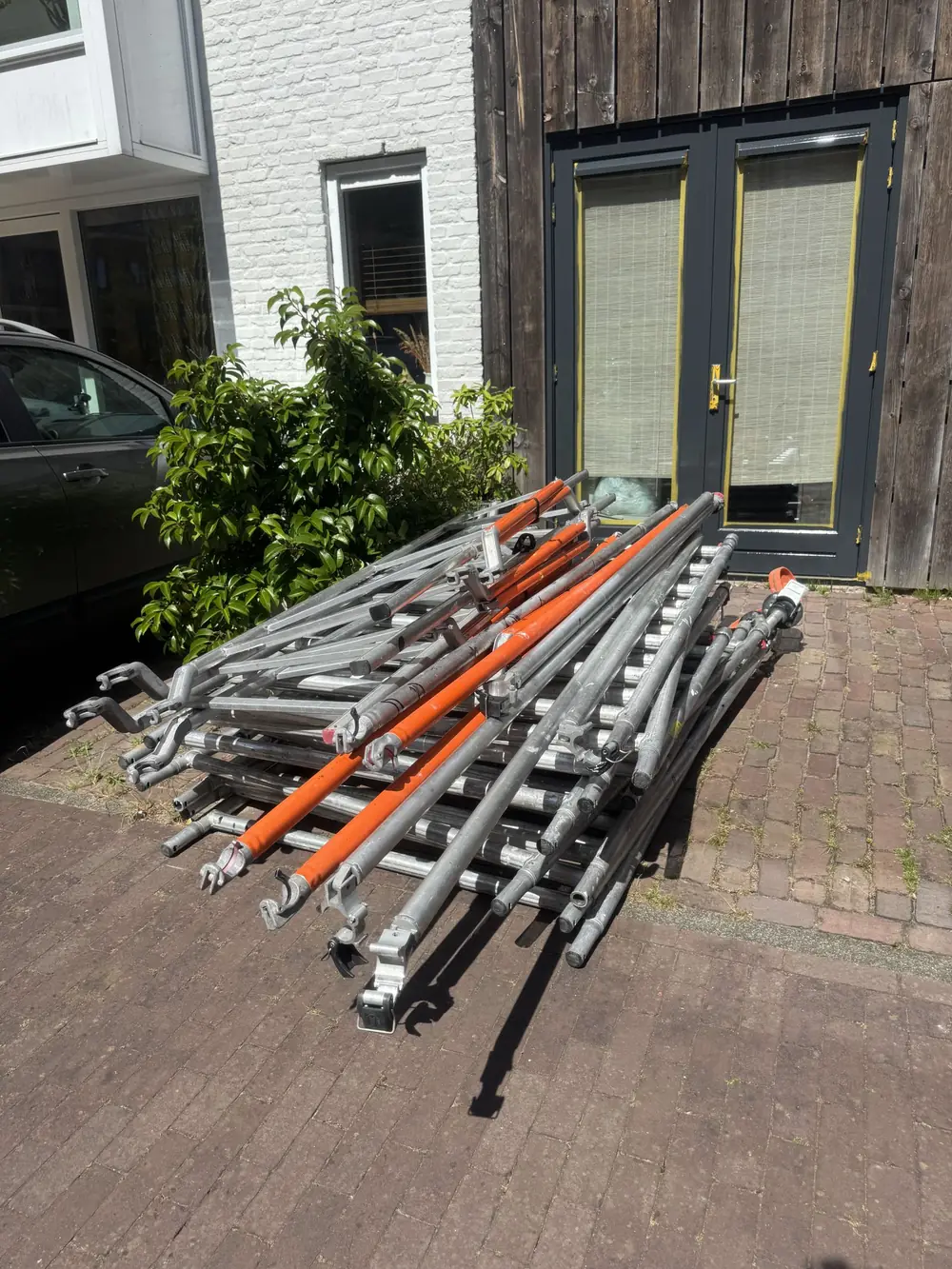
Scaffold frames propped on a pavement by a front door, delivered loose whichever width of set you have booked.

That deck length of 245 cm earns its keep as a sorting bench. A tray for bolts, nuts and washers goes at one end, the components you have freed go at the other, and the middle stays clear as walking room. Then at every stage of removing a satellite dish you know where each piece went, and you are not shuffling ironmongery about with your boots. It also lets the old coax be coiled rather than left snaking across the boards where somebody will catch it.
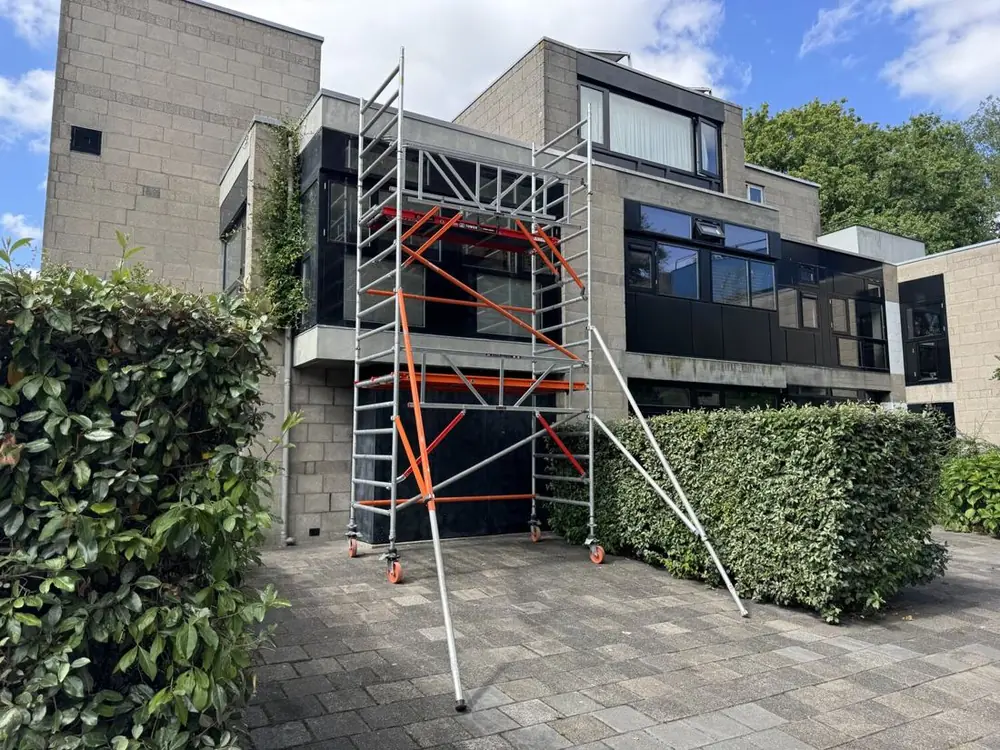
Working height to hire for a dish sitting under the gutter

Your measuring point is the underside of the wall bracket, since that is where the final anchors come out and where you will stand longest. When the assembly hangs just below the gutter of a three storey house, removing a satellite dish suits a build covering 8 to 12 metres. Take the deck height you mean to stand on and count roughly two further metres of arm reach on top of it; that total is the working height you order. Start by looking at what ten metres of reach actually delivers.

Err high rather than low. When a seized bolt finally yields you want to be pressing downwards instead of dragging upwards, because that puts your body weight behind the bar without you hanging off the wall itself. That only happens when the workpiece sits somewhere between chest and waist. So choose the build from the lowest bolt on the bracket and never from the top rim of the reflector, which stands a good deal higher and will quietly mislead your whole calculation.

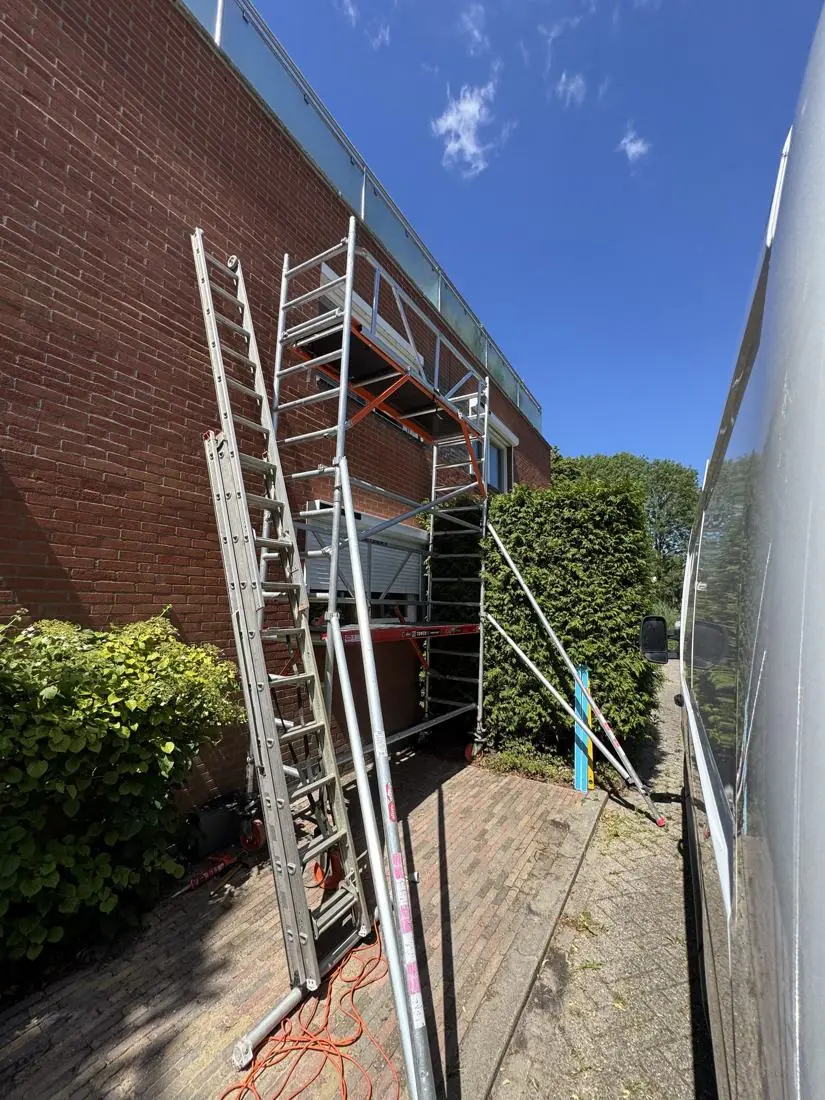
Assembled tower erected beside a side elevation up to the gutter, the sort of build ordered for high wall fixings

Measure where the components have to end up as well. If a bucket or a rope is going to take the reflector down, the distance from boards to ground belongs in the plan too. At the level of a second floor that is already a serious length of line. Be generous with it, because a rope that just fails to reach leaves you holding a heavy hollow panel at deck level with nowhere sensible to set it down while you think about the problem.

Hiring a mobile scaffold: where the tower stands beneath the dish

The setup goes directly under the point where the bracket is fixed, which on most houses means the street elevation. The base wants level ground with a margin all round, since the stabilisers swing outwards rather than tucking under the frame. Paving or a drive will carry it; a border of soil along the wall, or a path sunk on one side, will not. Park the castors where you will not keep correcting them, because this job is mostly pulling and pushing against stubborn fixings rather than reaching gently sideways with a brush.

Keep a clear strip below where freed components are allowed to land. A reflector coming down on a line needs that room, and bicycles, a car or planters must not be in it. Where the pavement runs underneath, set out a cone or a length of tape while removing a satellite dish, and give the neighbours notice when their car sits right below you. On ground that falls away, the method for an uneven surface sorts the levelling.

Stabilisers angled outwards under the base of a mobile scaffold, marking the ground kept clear below the working position

Think about the point where the cable disappears into the wall too. That hole often sits a couple of metres to one side of the bracket, or below it, and it needs sealing as well. Choose a standing position from which both the bracket and that entry fall within arm's length, otherwise you are dropping the tower and rebuilding it for the sake of one grommet. Walk the line of the cable at ground level before any parts arrive, and mark the entry point with chalk so it is not forgotten later.

Hire days needed for removing a satellite dish properly

The unbolting itself is a matter of hours. Disconnect the cable, lift the reflector clear of the mast, take the arm away, slide the mast out of its bracket and release four anchors, and with ordinary tools a morning covers it, unless the threads have rusted solid. What stretches the work is making good afterwards. Filling holes, sealing the entry and washing the wall belong to the same visit, and you want them behind you before the components go back on the lorry.

So plan on two days. Day one covers the build and freeing the installation from the wall. Day two covers repairing the brickwork and taking the structure apart again. If repair mortar or a facade sealant comes into it, that wants curing time before anything else goes over the top. Rain on your repair day is reason enough to slide everything twenty four hours, since damp masonry will not take filler at all. Let the collection date you choose reflect that likelihood before you confirm it.

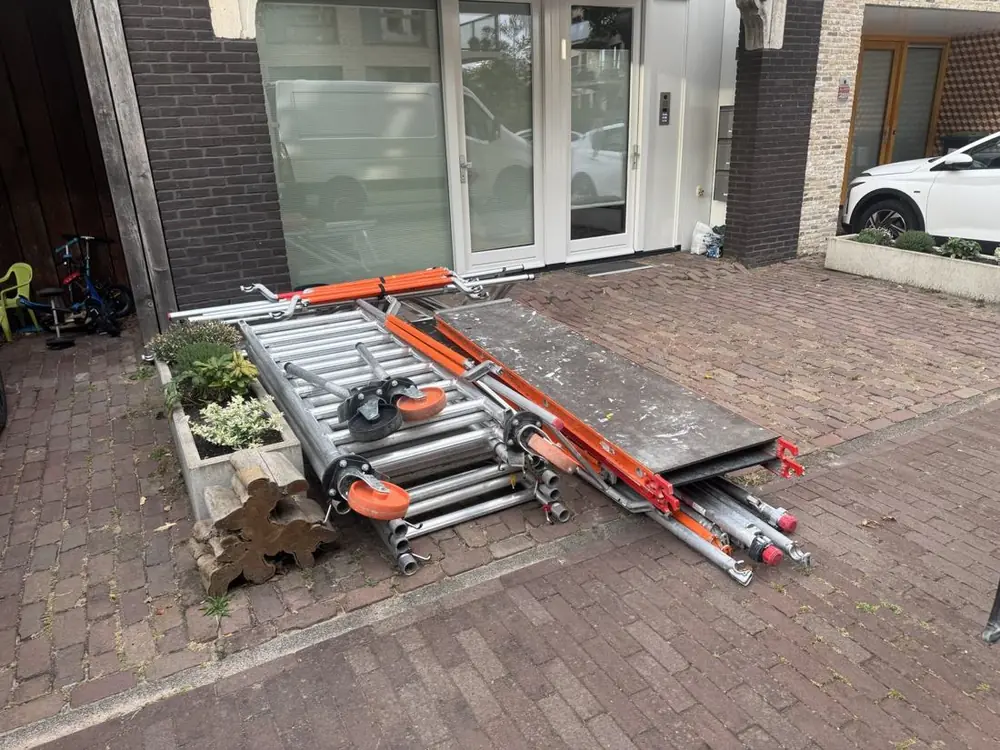
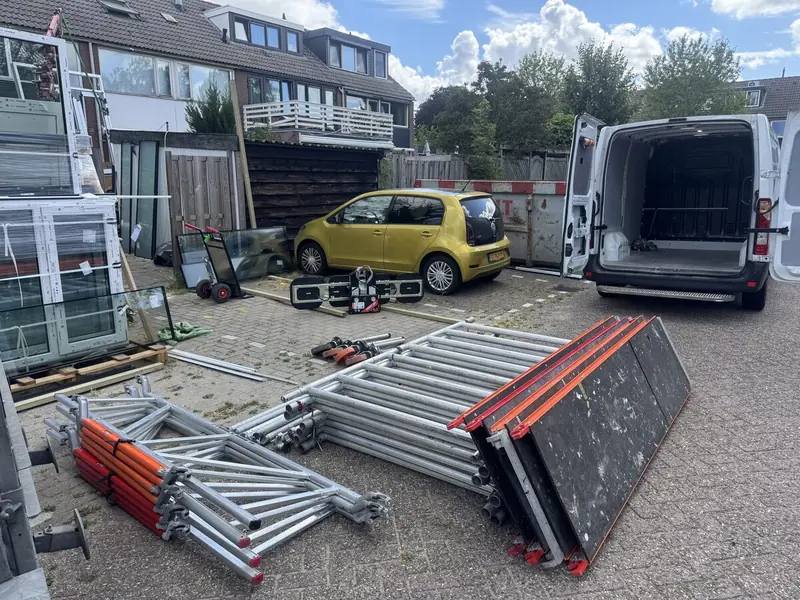
Loose parts on a brick drive beside a parked car, the hire set that keeps you company across both booked days.

The extra day is not an expensive one. The full rate applies to the first day alone; every further day is discounted by ninety five per cent, which makes an allowance for slippage almost free and keeps the rental price predictable. Finish early and you simply ask us to come sooner. Working out a realistic span for removing a satellite dish is easier with this guide to judging the length of a job open beside your diary and a look at the coming week of weather.

Which mobile scaffold suits removing a satellite dish?

Kamersteiger RS44
  • Working height up to 4 metres
  • Compact and narrow
  • Great for indoor and small jobs
View and calculate →
Smalle rolsteiger RS51
  • Working height up to 14.2 metres
  • Narrow (75 cm)
  • Ideal for narrow passages
View and calculate →
Most chosen
Brede rolsteiger RS52
  • Working height up to 14.2 metres
  • Wide platform (135 cm)
  • Extra stability and workspace
View and calculate →
1-persoons steiger MiTower
  • Working height up to 6.2 metres
  • Very compact
  • Quick and easy to assemble
View and calculate →

Working the installation apart in reverse from the scaffold platform

One dish falls within reach of a single 245 cm setup, so the tower stays put until the wall is closed up again. Begin at the top with the cable rather than the bracket: uncouple the coax, tape the cut end so moisture cannot creep in, and leave it hanging until the rest has gone. Then the reflector comes off the mast, clamp bolts on the arm first and the panel itself last. Reverse that and removing a satellite dish leaves you steadying half an assembly still tethered.

After that the arm and the mast come away, and only then the bracket. Four anchors hold it in the brickwork, and those fixings will have suffered most over the years. A long socket bar beats a cordless driver at this point, and penetrating oil applied a quarter of an hour ahead saves a great deal of grunting on the boards. Grind the studs back flush into the stone and keep the freed plugs together in one tray instead of letting them scatter loose across the boards of the deck.

Counted scaffold components stacked beside a front door, the hired set that goes up before any bracket can be reached

Finish by closing the holes. The four anchor holes take a facade filler matched to your brick, and the cable entry is sealed from outside so neither water nor vermin gets behind it. Do all of that while you are still standing up there, because from ground level none of it is reachable. That single point is the argument for keeping the scaffold standing one more day rather than racing the collection lorry and leaving four open holes in a wall you cannot reach again.

Delivery and collection when you hire a tower for wall work

What turns up is a complete, counted set of loose components rather than a finished structure. Pick the drop spot in advance and keep it off the ground where the old reflector will later come down, or everything gets carried twice. A front garden or the path beside the door suits nicely. A weekday booking logged with us before the 15:00 deadline puts the whole set down on your ground the next working day, so removing a satellite dish can begin that same morning without delay.

Putting it up is yours to do: we never erect towers and we never hand one over assembled. With the supplied manual and the instruction video open beside you, two people manage perfectly well, and half a day is a fair allowance before the thing is ready to work from. The order of the lifts appears in this ordered guide to raising each lift. Arrival date and departure date are both named by you at the moment of booking, not by us.

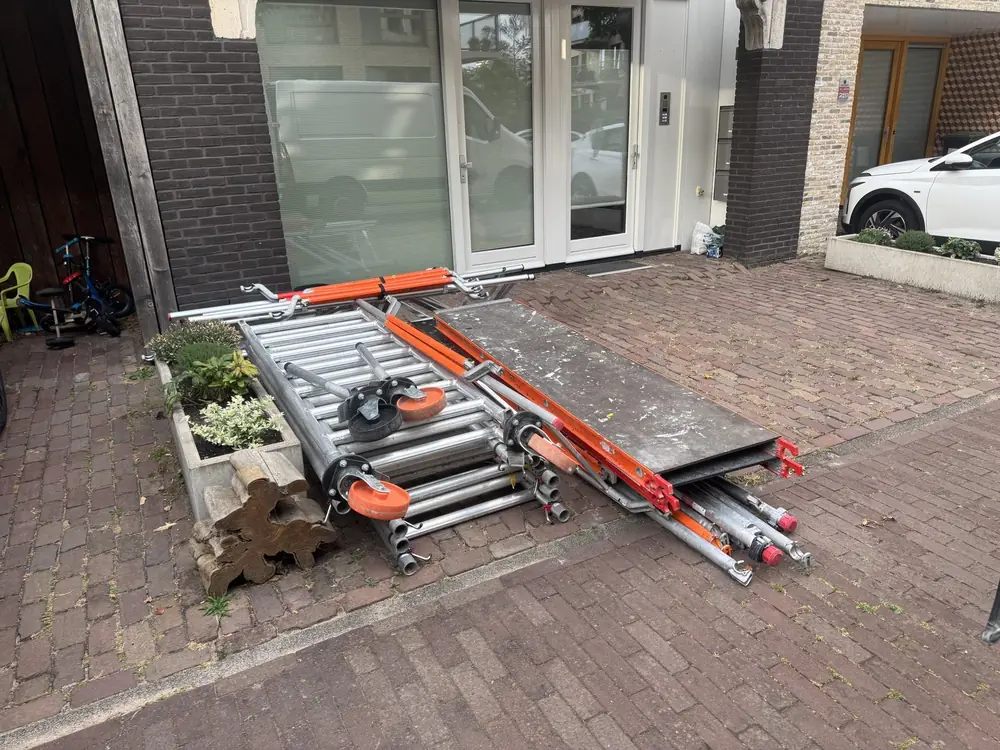
Scaffold tubes and deck sections dropped on the pavement outside a house, a delivered hire set waiting to be built

Once the repair has cured you take the tower down, stack the components where they were dropped, and we drive round to load them. Anyone working near the city can skip the lorry and collect the set in person, by appointment and without charge, from our yard on Zeeburgerpad 89 in Amsterdam, provided a van swallows every tube in one run. Otherwise the fixed amount charged for your province covers both journeys, out and back, with nothing further to settle on the day.

Safety on a hired mobile scaffold once the dish comes loose

A reflector is a hollow face that gathers wind, and the instant the last clamp bolt is out that face becomes a free object. If it is blowing harder than a light breeze, postpone the release; leaving the dish hanging one more day beats having it pull against your arm at height. Tie a line round the arm before going anywhere near the clamps. On this job the wind, not the tool kit, decides how the day gets arranged.

Lower the panel down the upright on that line rather than carrying it under one elbow. On a ladder that is simply impossible, and even on a broad deck a reflector under your arm leaves a single free hand. Have somebody at ground level watching, keeping the landing strip empty and calling out when a passer by turns the corner. While removing a satellite dish, loose bolts and plugs drop straight down as well, so agree all of that first.

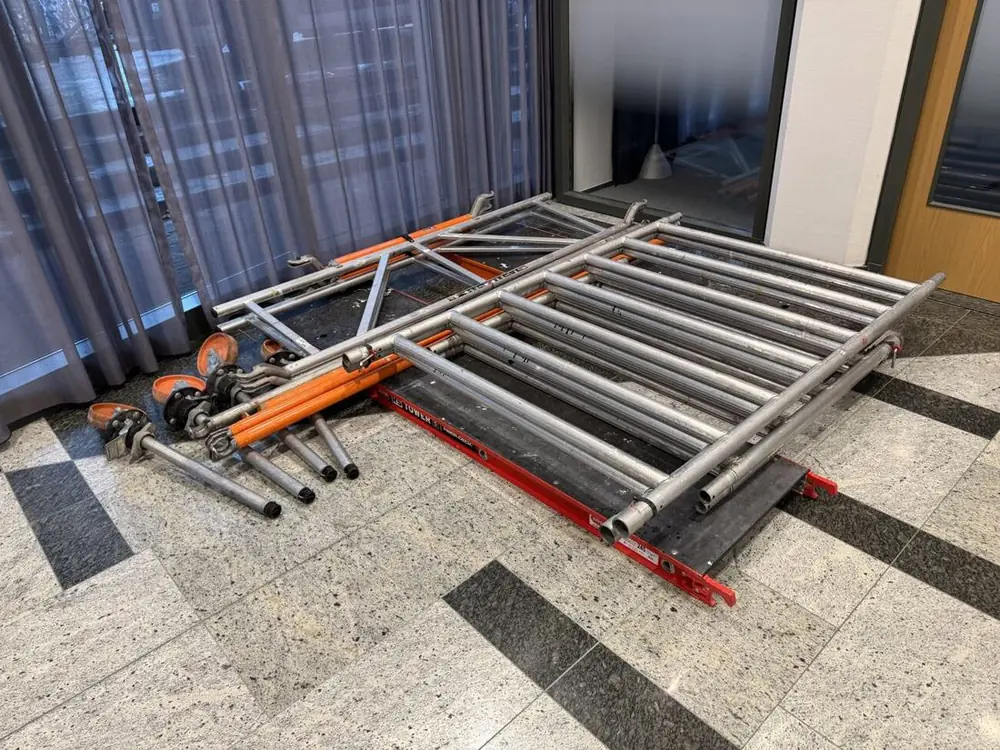
Complete inspected scaffold set laid out ready for use, the counted components that leave the yard on every hire

The structure itself is more than equal to the work. Every tower we hire out is manufactured to EN 1004 in load class 3, permitting two hundred kilograms on each square metre of boards, comfortably more than you, your tools and a dismantled assembly together. Stick to the basics regardless: brakes locked before anyone climbs the frame, nobody aboard while it is being rolled along the pavement, and the guard rails left exactly where the manual puts them rather than stacked in a corner.

In 5 steps

How hiring a mobile scaffold works

1
Choose working height

Pick the height that suits your job.

2
Book online

Sorted in 60 seconds, price shown instantly.

3
We deliver

At the agreed spot the next working day.

4
Assemble safely

Assembled by you, with a manual.

5
We collect

One call and we collect the scaffold.

Good to know

Practical tips for removing a satellite dish

1

Spray the four anchor bolts on the bracket with penetrating oil a quarter of an hour before starting. Seized iron then gives up more easily, and you pull less hard where you want to stay planted.

2

Knot a rope around the arm of the dish before touching the first clamp bolt. If something releases faster than planned, the reflector hangs on that line instead of swinging off your wrist at deck level.

3

Carry a lidded bucket up for bolts, nuts, washers and plugs. Anything that vanishes loose into a pocket ends up in the gutter or wedged between paving slabs sooner or later, which is annoying.

4

Photograph the installation before dismantling it. If a replacement ever goes back up on that wall, you will know which bracket was there and which holes might have been left open rather than filled.

5

Take the filler for the anchor holes up with you rather than making a separate trip. You are standing there anyway, and at that moment the brickwork around every hole is still clean and dry.

6

Set your collection date one day past the day you fill and seal. Curing mortar and sealant want time, and touching up is only possible while the hired tower is still standing there.

Frequently asked questions

Frequently asked questions about removing a satellite dish

Which scaffold should I hire for removing a satellite dish?+

The wide RS52 is the pleasant one here, because a 135 cm deck gives every component somewhere to sit. Reflector, arm, mast and bracket end up together on the boards, along with tools and a tray for fixings. If a wide frame cannot reach the wall through the access you have, the 75 cm tower is the fallback, though parts then travel down in stages. Measure the tightest gap on the route before you book, and a wide deck will also keep the coiled old coax clear of your feet.

How does the hire work when stripping hardware off a wall?+

At booking you fix the model, the build height and the two dates on which the set arrives and departs, at amounts that include VAT. Counted components are dropped on the agreed day, you assemble the tower, free the old installation and repair the brickwork. When you have finished, the parts go back in the same stack and our driver loads them. Beyond that you only want somebody on the ground whenever anything is being lowered, and nothing else about the hire needs arranging in advance.

For how many days do people hire a tower here?+

Two days is the normal span for removing a satellite dish. The first goes on building up and freeing the installation, the second on filling anchor holes, sealing the cable entry and taking the structure down. With sound threads and filler already to hand it squeezes into one long day. If rust or weather slows things down, you simply keep the scaffold a day longer rather than rewriting the whole plan around it, and most people find that second day pays for itself.

What does hiring a mobile scaffold for this removal cost?+

The amount follows the model you choose and how high the build goes, with a separate fixed sum per province for bringing the set and fetching it back. All of it appears including VAT on our page of hire rates. That tariff shape suits dismantling work, since the opening day carries nearly all of the weight while the days after it barely register at all. Booking one generous window therefore beats two short separate periods, and the whole total is visible before you confirm, with nothing added later.

What working height do I hire for a dish under the roofline?+

With the bracket below the gutter of a three storey house, hire a build reaching 8 to 12 metres. Measure to the lowest bolt on the bracket, because that fixing is the one you lean on hardest. The overview of available working heights shows which tower matches that. Falling between two options, take the taller of them, since pressing down on a long bar will always beat hauling upwards on it. Measure from the ground under the castors and not from the doorstep.

Do you deliver, or can I fetch the hired scaffold myself?+

Delivery is the usual route: the set arrives on the date you named and disappears again on the return date you gave, for a sum fixed per province. Fetching it yourself works equally well by appointment, provided your transport takes every tube and deck section in one run. On dismantling jobs most customers prefer delivery to collection, simply because their own van is wanted for carting the old dish and its bracket away afterwards. Either way the scaffold turns up as a counted set of loose parts.

Is putting the tower up part of what you hire out?+

Assembly belongs to the customer. We bring the full set and take it away afterwards; erecting, repositioning and dismantling stay your work, guided by the supplied instructions and the film. With a second pair of hands that runs to about half a day. Bear it in mind, because on build day you rarely get as far as loosening a single bolt. We do not stock cherry pickers, nor facade or system scaffolds, at any height. Allow it a slot of its own inside the hire period.

If the job overruns, can I keep the scaffold on hire longer?+

One message ahead of time is enough, and the pick up date shifts unless the set is already spoken for. On this work the hold up is nearly always seized anchors, or weather on the day you meant to fill holes. Build a spare day into the reservation from the start and tell us if it went quicker. That keeps the tower there exactly as long as the wall needs it. Stretching a booking after the event is possible, though planning the margin in advance is calmer.

How much clear ground is needed under the old dish when you hire?+

Reckon on the footprint of the tower, widened each side by the swing of the stabilisers, plus a separate strip where released components may land. On a street elevation that comes to several metres with no car, bicycle or skip in it. Clearing all that beforehand means you never shunt an assembled scaffold during the hire, and shunting a built structure is precisely the work worth avoiding on a busy pavement. Ask the neighbours to move a car before the delivery van turns up.

Can I extend the rental when wind stops me freeing the reflector?+

You can, and here it is often the wise move. The tower stays exactly where it stands meanwhile. Once the final bolt is out the reflector becomes a loose panel that catches every gust, so a stiff breeze is reason enough to wait. Spend such a day disconnecting cable or preparing the filling work instead. Because the pick up date is yours to move, delay rarely costs more than a single day. Use the pause to tidy the ground below the tower as well.

How is the deposit handled once the hire period ends?+

A deposit is settled at booking, and once the returned scaffold set has been counted the money is back with you inside one working day. Provided everything comes home complete and clean there is nothing to discuss. On stripping work watch for scratches and for smears of sealant or mortar left on the boards; a cloth spread out before any filling begins saves you all of the scrubbing afterwards. Stack every brace and coupler in one pile so the count runs quickly.

Must the drilled holes be sealed before the hire is collected?+

It is far wiser, because once the tower has gone none of them can be reached without hiring again. Four open anchor holes and an empty cable entry let water run into masonry and eventually invite vermin behind it. Fill them with a product matched to your brick and seal the entry from outside. Schedule that for the final day with margin for curing, since one extra day beats a second build. Leaving the tower standing one more night costs very little by comparison.

Hire a mobile scaffold for removing a satellite dish today?

Calculate your rental price now or ask for free advice.

Rolsteiger van SteigerTaxi geleverd op locatie
Book it online

Your scaffold sorted in 2 minutes.

Choose your scaffold and working height, see the price instantly and book online.