
See your price
Application

Removing solar panels? Choose the right scaffold.

Removing solar panels means taking the installation apart in reverse. The inverter comes off on the AC side first, the string connectors follow, and the clamps only come loose once nothing is live. After that every panel has to travel down over the roof edge on its own and go upright into a shed. For that handover, and for the carrying, you hire a wide mobile scaffold: the RS52 on a 135 cm base, built to between eight and ten metres of working height. What stays behind on the roof is covered further down.

  • Order before 3 pm, delivered tomorrow
  • Professional Altrex scaffolds
  • Up to 14.2 metres working height
  • Easy to assemble yourself
4,2 tot 14,2 mWorking heights available
12Provinces served
7Days a week
200 kg/m²Load class 3
In short
  • For removing solar panels we recommend the Wide mobile scaffold.
  • For removing solar panels take the wide RS52 with its 135 cm base, built to roughly eight or ten metres.
  • Number every panel and every string before you undo a single clamp, or you will not know later what sat where.
  • Two hire days suit an average roof: one to build the tower, one to disconnect and carry the solar panels away.
  • First 24 hours from €175 incl. VAT and delivery; every day after that 95% off.
Key facts for this job
FeatureValue
Recommended scaffoldWide mobile scaffold (Altrex RS TOWER 52)
Working height for this job8 to 12 metres
Available working heights4.2 to 14.2 metres
StandardEN 1004, load class 3 (200 kg per m²)
DeliveryOrdered before 3 pm, delivered next working day
Each extra day95% off, from €8.75 a day
Why a mobile scaffold for removing solar panels?

Safe, stable and professional work at height

Removing solar panels sends everything the other way from an installation, and that changes what you ask of a scaffold. Panels go down rather than up, and they come one at a time over the roof edge. Someone on the roof slides a sheet towards the gutter, someone on the platform takes it and passes it further down. That intermediate step at gutter level is the whole point: without a solid floor at the right height you stand there wrestling with a panel in your arms. You also need room above for the cables, clamps and tools you strip off. Hiring a wide tower pays for itself here in sheer pace.

  • Inverter off first, then the string connectors
  • Number panels and strings before undoing clamps
  • Each panel down over the roof edge separately
  • Rails and roof penetrations stay behind up top
Read more about working safely →

Which mobile scaffold to hire for removing solar panels

A panel is a good metre and a half long and you need to be able to put it down somewhere while you change your grip. On a floor of 135 cm you can stand a sheet up at an angle and still stand beside it; on a narrow deck you cannot. That is why removing solar panels calls for the RS52, the wide Altrex model. Every base width and the heights that go with it sit side by side in the mobile scaffolds in our hire range.

You only fall back on the narrow RS51 with its 75 cm base when the passage to the garden forces your hand. That costs you working room at precisely the moment a panel lands in your hands. A MiTower is a one person tower reaching 6.2 metres and does not suit work where two people pass a load between them. A room scaffold stays indoors. What is left is the wide tower, standing to just under the gutter line. That is the set up with which you empty the whole array.
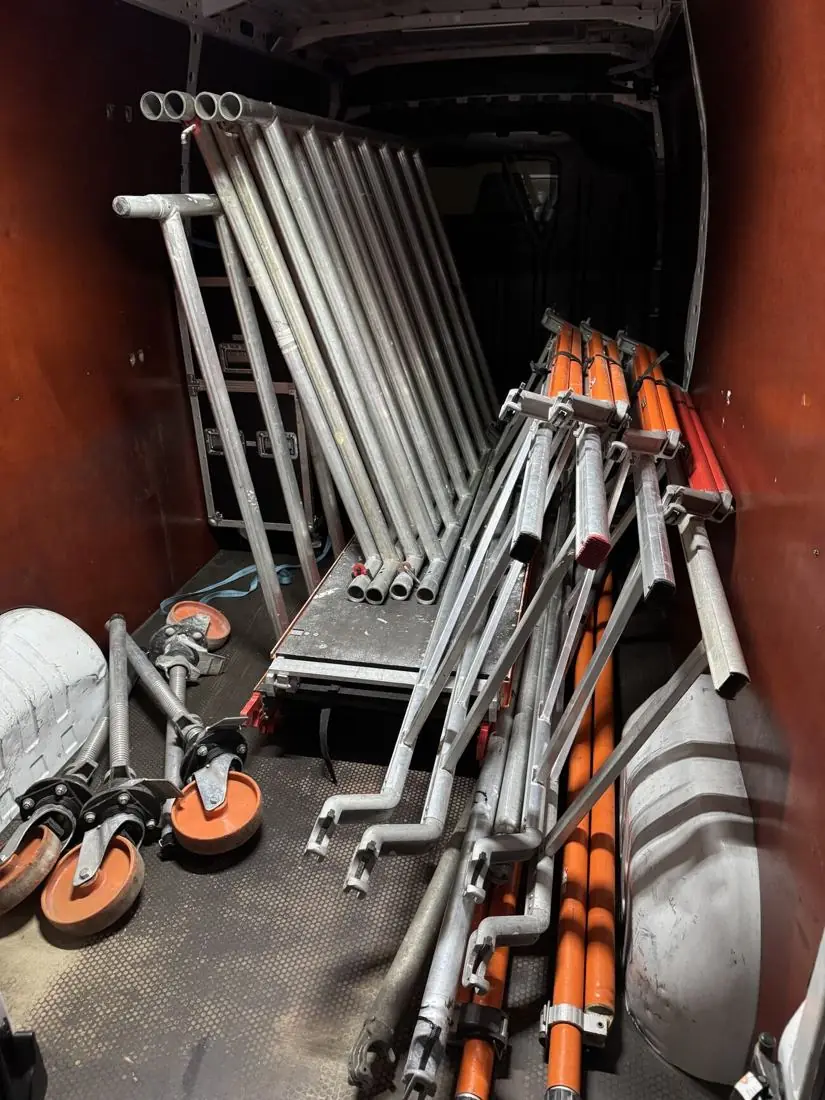
Scaffold uprights, orange braces, platform decks and loose castors loaded in the load space of a van

The sheets still need somewhere to go, so hire a mobile scaffold with that in mind too. The tower is there to get them down safely, but somebody at the bottom has to take them and stack them. Reckon on three pairs of hands if the array is large: one on the roof, one on the platform, one on the ground. Two people can manage it, but the work goes noticeably slower and you climb the ladder far more often. Fix that before the delivery day rather than on the morning itself.
The working height you hire when removing solar panels

For removing solar panels you want your chest at about gutter level, because then a panel comes to you without any reaching. Measure to the gutter, then, and not to the ridge. The number you book as working height is the deck you stand on plus another 2 metres of reach, so count back to the floor you actually want to stand on. Two storeys puts you around eight to ten metres; a third storey underneath takes you towards twelve. Write that figure down before you open the booking form.

Hiring higher than that serves no purpose here and actually makes the job harder. Stand above the gutter and you have to lift a panel down instead of sliding it horizontally towards you, and that is the movement in which people wrench their backs. Look at what a nine metre working height builds up to and compare it with the gutter you measured. A platform half a metre too low is every bit as awkward as one that ends up too high. Half a metre of difference decides how your back feels.

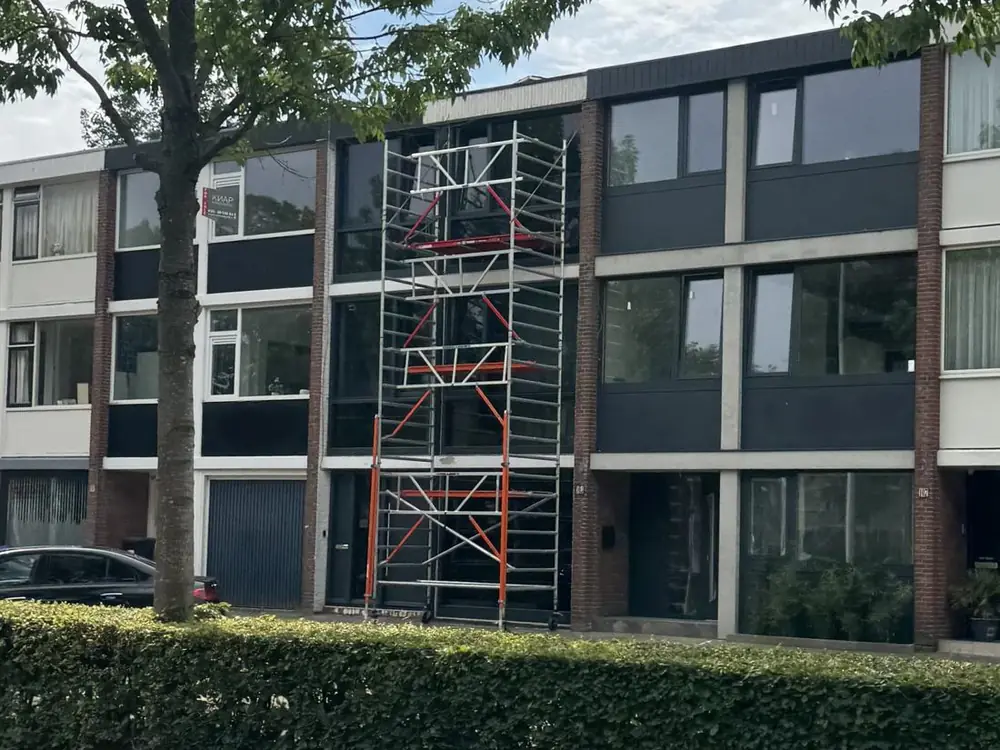
Mobile scaffold built up several lifts against the front elevation of a three storey block, roughly at gutter level

You notice a build that is too low on the very first sheet. You end up reaching upwards for a panel that overhangs the roof edge while the person above lets go, and sooner or later that goes wrong. There is no room left to shift your feet either, not with twenty kilos in your arms. Take one platform more rather than one less; at the booking stage it costs little and on the day it saves hours of struggle with heavy glass. Your shoulders will thank you by the tenth sheet.

Hiring a scaffold tower next to the panel storage spot

Where the tower stands follows from where the solar panels are going to end up. Do not simply put it on the shortest line to the roof, then, but on the line between the gutter and the shed, the garage or the trailer. Every extra metre you carry a sheet you will repeat twenty times over, and across an afternoon that mounts up badly. Then check that the ground is level enough for four stabilisers and that the castors will not sink into the lawn. Walk that line once before the tower goes up.

Set that storage spot up before the first sheet comes down. Panels stand upright on their long edge, on a couple of timber battens and against a wall or a rack, never flat in a stack; under the weight of the ones on top the glass cracks. Make sure the place is dry and that nobody can run a bike or a barrow into it. Allow roughly a linear metre per ten panels, which is less than most people expect. Cardboard between the frames stops them rubbing each other.

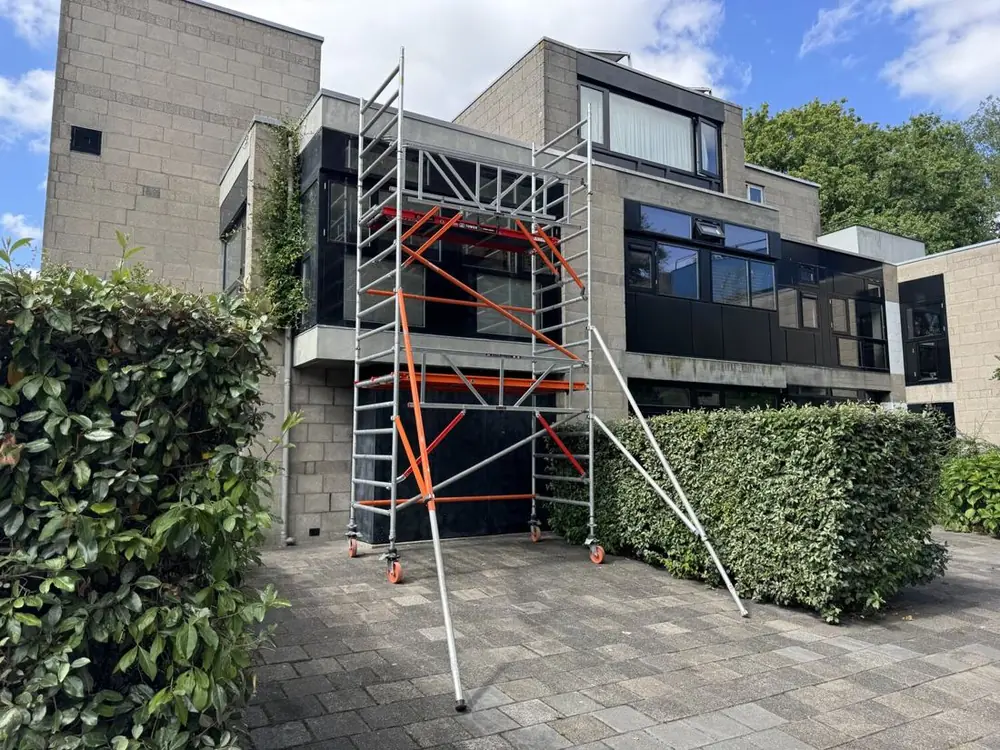
Four stabilisers splayed out from the foot of a built mobile scaffold onto block paving beside a house

Under the tower itself the usual demands apply: level, load bearing and clear of drain covers that a stabiliser would half rest on. A patio or a driveway is ideal; a lawn after a wet week is not, because the castors sink the moment weight lands on the deck. Slide boards under the feet and correct with the spindles. How to handle a slope is set out in the guide to uneven ground under a tower. Check all four feet again once the first lift is on.

How many scaffold hire days removing solar panels takes

An array of fourteen panels is off the roof in one long morning, provided the disconnection is done and three people are standing there. The disconnecting comes first and is not something you fit in between other jobs: the inverter off, the strings uncoupled, everything checked over. Add building the tower and taking it apart again and you are quickly at two hire days. A roof with two slopes, or an installation with many strings, turns that into three or four. Two of those people should have done this work before.

You need not begrudge yourself that third day. Only the opening twenty four hours are billed in full; whatever you keep beyond that carries a 95 per cent reduction, so a margin costs you almost nothing. The rental price for the build you choose is listed with VAT among our rates per model, alongside the charge for the driving. Here the margin is welcome, because you only learn how seized the clamps are once you are undoing the first row. Book the margin at the start rather than chasing it later.

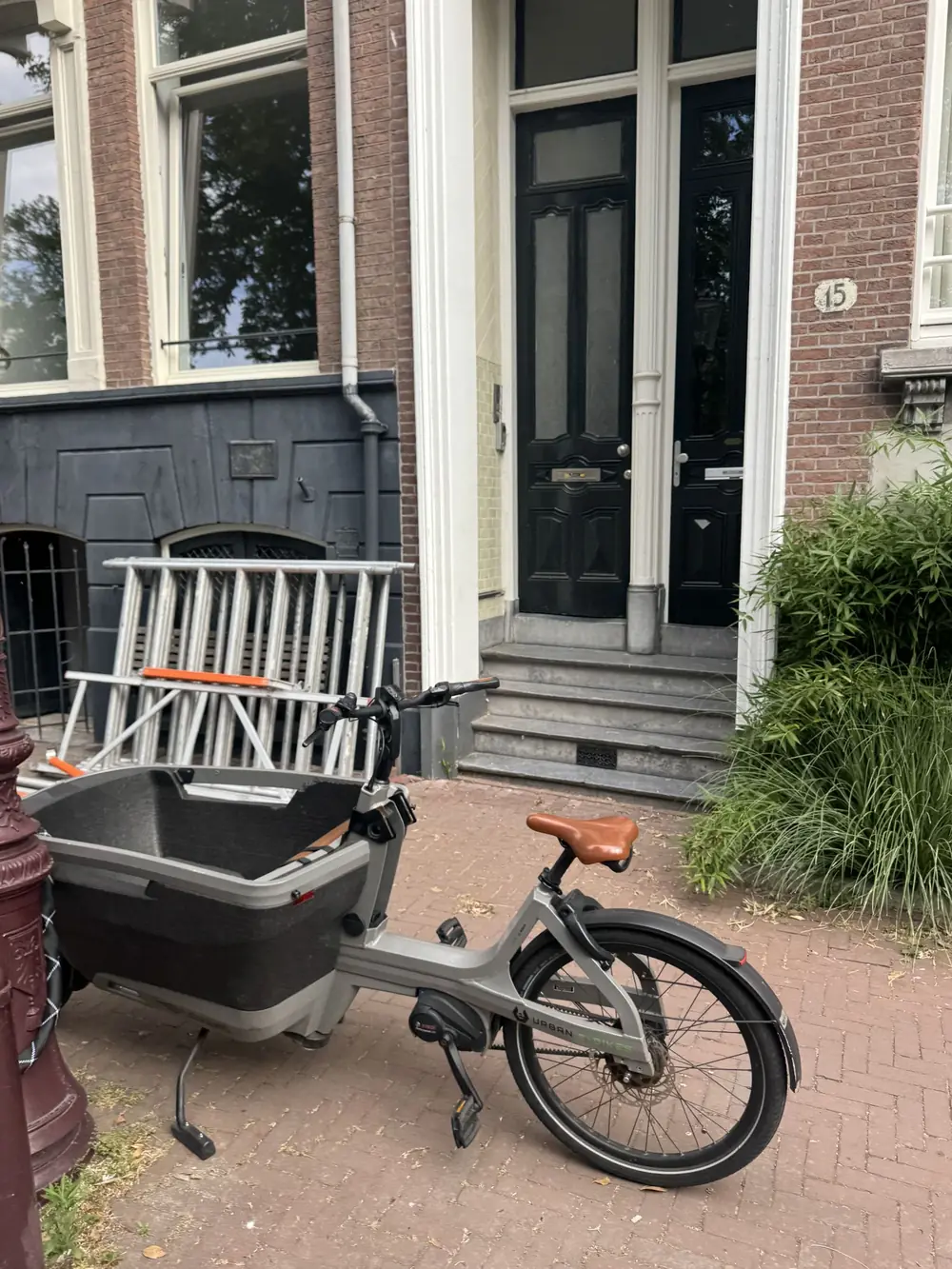
Stacked scaffold frames and guardrails leaning against the wall by the steps of a brick town house

Weather matters more on this job than it ever does on paintwork. A panel is a large flat surface that catches wind, so the moment it blows you stop passing sheets down, however dry it is. Wet glass is slippery and heavy to hold as well. Pick a still day and keep a spare day in hand; you set the collection date yourself, so that costs you next to nothing. A calm morning is worth more than a whole day of gusts. Watch the forecast the evening before you climb.

Which mobile scaffold suits removing solar panels?

Kamersteiger RS44
  • Working height up to 4 metres
  • Compact and narrow
  • Great for indoor and small jobs
View and calculate →
Smalle rolsteiger RS51
  • Working height up to 14.2 metres
  • Narrow (75 cm)
  • Ideal for narrow passages
View and calculate →
Most chosen
Brede rolsteiger RS52
  • Working height up to 14.2 metres
  • Wide platform (135 cm)
  • Extra stability and workspace
View and calculate →
1-persoons steiger MiTower
  • Working height up to 6.2 metres
  • Very compact
  • Quick and easy to assemble
View and calculate →

Removing solar panels one at a time over the gutter

With 245 cm of platform length there is room for exactly two people side by side with a panel between them. The sheet comes over the gutter towards you, you turn it a quarter so the long edge sits along the guardrail, and then it goes down on a line or hand to hand to the person waiting below. Nothing more than one panel should ever be lying up there, tempting though it is once the pace picks up. Keep the next sheet on the roof until the first is down.

Numbering happens before anything comes loose. Write the number from your roof plan on each panel with a marker and note which string it belonged to. If the panels go back on the same roof later you know exactly where each one sat; if they are being sold on, you can show a buyer what you have. Without numbers you are left after an hour with a stack of identical sheets and no history at all.

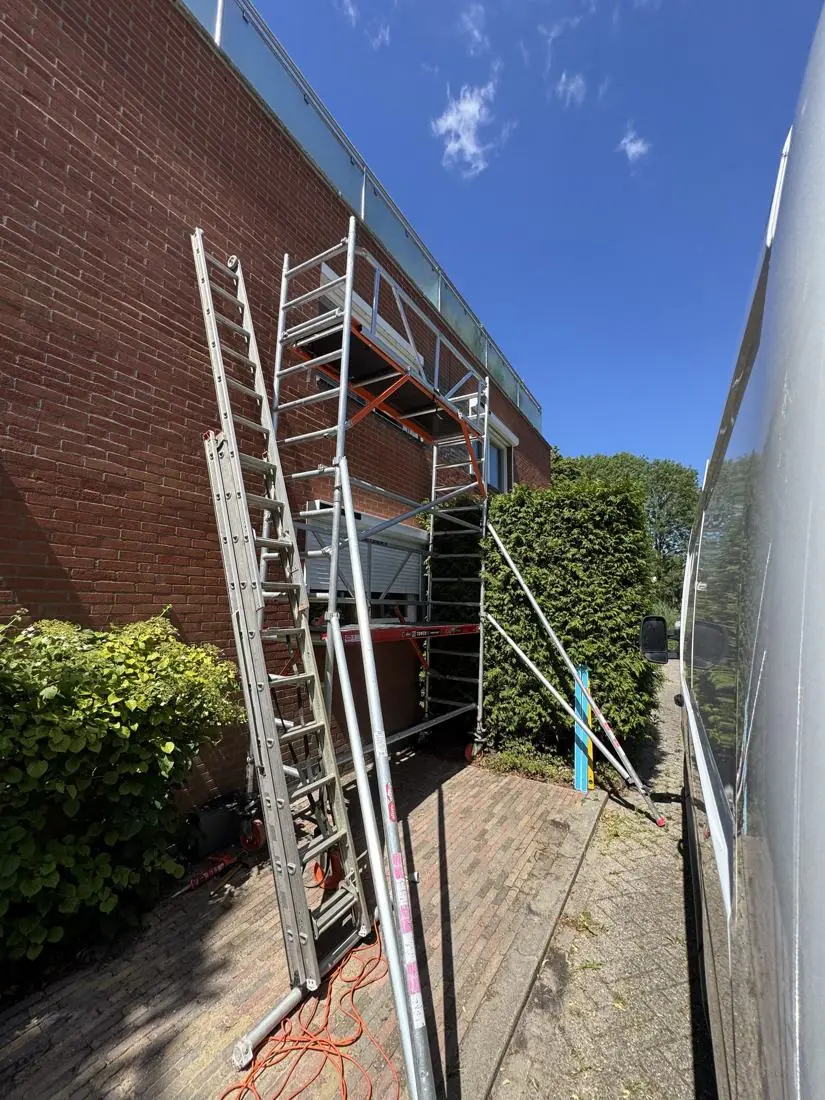
Mobile scaffold built in a narrow side passage between a brick wall and a van, with a ladder leaning alongside

From each position you take off the panels you can reach from there, usually two rows wide. Then the tower has to move, and that happens with an empty deck and nobody on board. What stays on the roof is the rails, the hooks and the cable penetrations; you strip those in a second pass, or leave them if new panels are coming. Allow for that in your hire days, because a second pass eats half a day as well. That extra half day belongs in your booking, not in your hopes.

Delivery and collection when you hire for removing solar panels

What turns up is a counted bundle of loose scaffold parts. Point out in advance where that may lie, because the strip beside the elevation is being kept clear for the panels that are coming down. If your order reaches us before 15:00 on a working day, delivery follows the next working day. Ask for it one day ahead of your start date, leaving the build unhurried and the storage laid out. Two jobs in one day get in each other's way. Chalk the outline on the paving if the space is tight.

Building is your work and not ours. The set comes with a manual, a video shows the order of assembly, and with two people the build at this height runs to two or three hours. Block that time out, because no panel leaves the roof on the build day. We do not erect towers and we do not deliver them assembled, and neither a cherry picker nor a facade scaffold belongs to what we hire out. For work along a gutter a mobile scaffold is the obvious choice anyway.

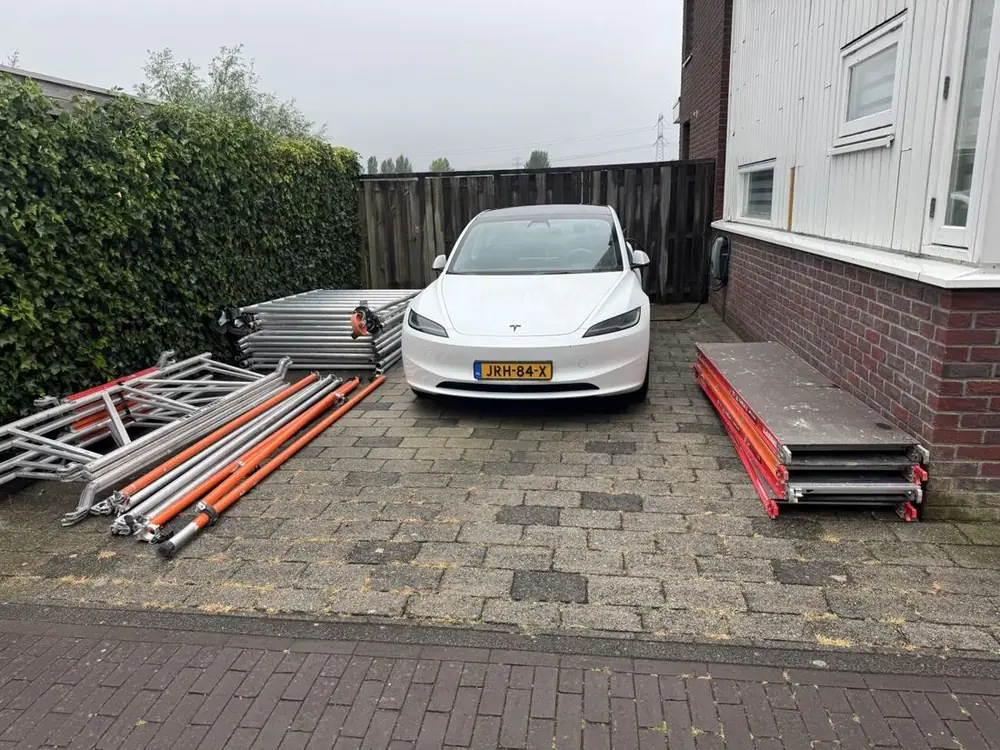
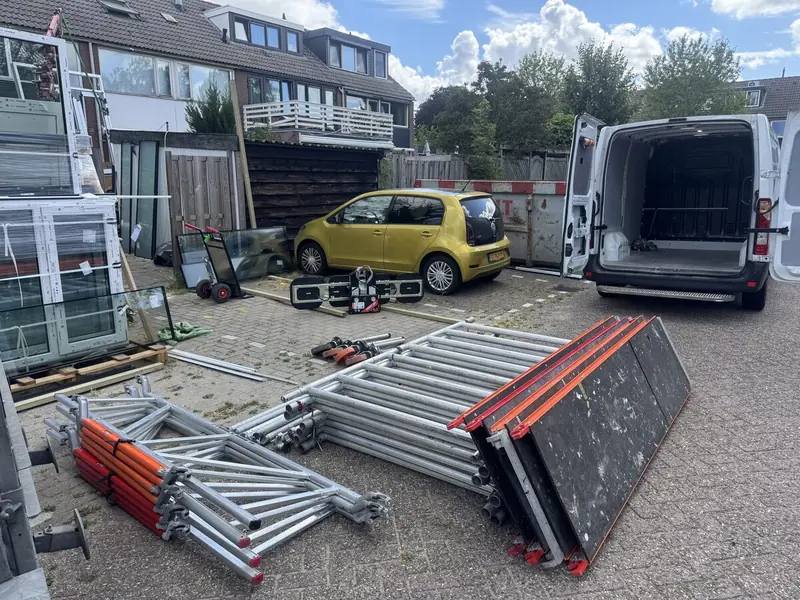
Scaffold frames, orange stabiliser tubes and stacked platform decks laid out on a block paved drive beside a parked car

Once the roof is clear and the solar panels are standing upright, you dismantle the tower and stack the parts together; on the date you gave us we come past to collect everything. Before then, walk the roof slope and the garden once more looking for screws, clamps and offcuts of cable. What the driving costs is fixed per province and listed with VAT under our delivery charges, so you know the amount before you book. A quick sweep now saves a puncture in the mower later.

Safe work on a hired scaffold with loose solar panels

Every scaffold deck carries 200 kg per square metre, because that is what load class 3 in EN 1004 requires. When you are stripping a roof that adds up faster than you think: two people together already weigh a good hundred and fifty kilos, and then comes a panel you set down for a moment. Keep it to one sheet at a time and put tools at the far side of the floor, spread across the deck rather than heaped in one corner. You feel the difference underfoot straight away.

The ordinary rules stand: castors braked before anybody climbs on, no moving the tower while a person or a panel is on the deck, and work stops the moment the wind gets up. That last one is no formality here, since a sheet a metre and a half across catches wind like a sail and pushes you sideways. Put all four stabilisers back out after every move before the next sheet is handed over, even if you only shifted half a row. Treat the wind limit as a stopping rule, not a guideline.

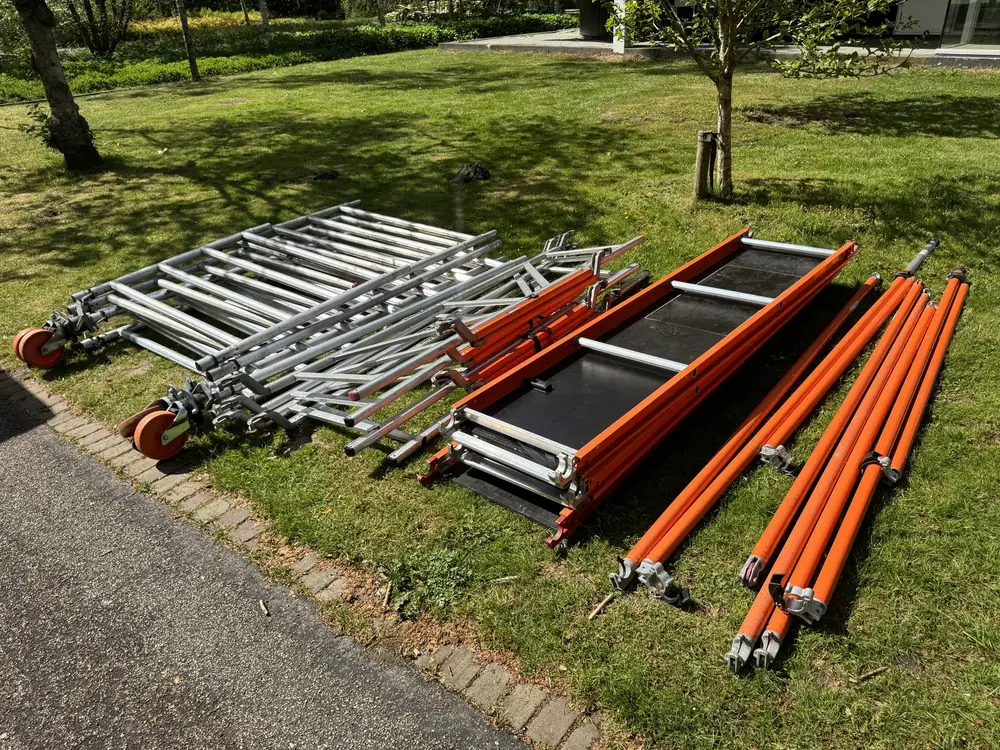
Scaffold frames with red castors, a platform deck and bundled orange stabiliser tubes lying on a sunlit lawn

The risks while removing solar panels sit in electricity and in glass. A string is live for as long as daylight falls on the array, so disconnect in the right order and leave that part to somebody trained for it. Glass also breaks sharp: keep the zone under the tower empty, let nobody walk beneath it and sweep up fragments at once. The wind limit and the rest live in the rules for working at height. Gloves with a decent grip belong on this job throughout.

In 5 steps

How hiring a mobile scaffold works

1
Choose working height

Pick the height that suits your job.

2
Book online

Sorted in 60 seconds, price shown instantly.

3
We deliver

At the agreed spot the next working day.

4
Assemble safely

Assembled by you, with a manual.

5
We collect

One call and we collect the scaffold.

Good to know

Practical tips for removing solar panels

1

Photograph the roof, the inverter cabinet and the string layout before the scaffold is delivered for removing solar panels. Those pictures tell you later which connector belonged to which row, even once the marker on a panel has faded.

2

Have the storage battens ready before the first sheet comes down off the roof. Solar panels laid flat in the grass for a moment get forgotten, and they break as soon as somebody wheels a barrow past them.

3

Work with three people if you possibly can: one on the roof, one on the platform, one on the ground. With two, the person above waits every time, and your hire period stretches to twice the length.

4

Keep the clamps and bolts from each row in separate bags carrying the same number as the panels. If a new array goes on those rails later, that saves you an afternoon of sorting things out on the roof.

5

Have a rope and a pulley ready if you want to lower solar panels down the side of the tower. Carrying a sheet down a ladder in your arms is not an option, however light a panel feels at first.

6

Agree with the neighbours where the trailer will stand on the day the panels leave. A roof full of sheets will not fit in a car, and double parking with a load of glass is asking for damage.

Frequently asked questions

Frequently asked questions about removing solar panels

Which mobile scaffold should you hire for removing solar panels?+

The RS52 on a 135 cm base. Every sheet comes over the gutter towards you, and you want a floor where it can rest for a second while you change your grip. On a narrow deck you have to hold it at arm's length throughout. If the wide tower will not pass the side gate, the 75 cm version is what is left and the work goes slower. Measure that route before you reserve anything, because an eighty centimetre gate settles the matter. That measurement decides the whole approach.

How does hiring a mobile scaffold work when you strip a roof?+

You configure the build online, nominate one date for delivery and another for collection, and pay in advance with VAT included. The parts arrive at your address, you assemble the tower beside the elevation and then take panel after panel off the roof. On the last day of the hire you leave everything dismantled and stacked. Beyond that it is mainly a matter of arranging the storage spot and the people in good time, since those two decide whether you finish. Everything else is your own planning.

How many hire days does clearing a full roof of solar panels take?+

For an average roof of fourteen panels you land on two days: one for building and preparing, one for disconnecting and carrying away. If two roof slopes are covered, or the installation runs many strings, it becomes three. Strip the rails and hooks as well and you add half a day. Better to hire a day too many, because the nasty surprises always sit in seized clamps and bolts, and a spare day barely shows on the bill. Add the second pass to your booking straight away.

What decides the rental price for taking solar panels off a roof?+

The height of the build and the distance we drive together decide the amount, and it appears on screen with VAT included. On this job it works out well that the weight sits in the very first day, since a further day for stripping the rails then barely counts. Anyone who hires the tower generously keeps time in hand for clearing the roof slope and stacking the sheets properly against a wall. The driving charge does not change with the length of the hire, so only the days move.

What working height should you hire to get level with the gutter?+

Measure to the gutter, because that is where you take the panels, and start your measurement at the castors. Two storeys puts that around eight to ten metres, three storeys around twelve. Going higher than the gutter serves nothing: you would be lifting sheets up instead of sliding them towards you. Which platform height belongs to which build is set out among the working heights we hire out, and that is the figure you enter. Enter the figure taken at the castors, not the one at the doorstep.

Can the scaffold be delivered on the day of the strip out?+

It can, though the day before is handier, because then you build without pressure. Delivery is the practical choice on this job anyway, since your car and trailer are needed for the panels themselves. The van comes on the date you picked in your hire, and that trip is charged once. Collecting is possible too: we hand the set over at Zeeburgerpad 89 in Amsterdam, no charge, once an appointment is made. Remember that the panels then need a second run. Plan the two runs on separate days.

Do you put the hired scaffold up for removing solar panels?+

No, assembling and dismantling are yours to do. We bring the counted set and you put it together, from the bottom upwards and in your own time. Steigertaxi does not supply erected scaffolds, so for stripping work along a gutter a mobile tower you raise yourself is the handiest thing to hire. Plan the build into the first day so that it does not eat into your roof time. A manual and a video come with the set, so the order of assembly is clear.

What if the strip out overruns and I need to hire for longer?+

Tell us as soon as it is clear you will not finish inside your period, and we move the collection date, unless that particular set is already spoken for. On this job it overruns because of seized bolts, a string that refuses to go dead, or wind that hangs about. To absorb that, hire the tower a day longer from the outset; the discount on later days makes it almost free. Returning early is no problem either. Give us the new date rather than simply keeping the parts.

How much space does the hired tower need beside it for the panels?+

Besides the width of the base and the spread of the stabilisers you need something extra here: a place where the solar panels can stand upright. Allow a linear metre per ten sheets, on battens and against a wall. Keep the walking route between the hired scaffold and that spot clear as well, because you cross it all day with glass in your hands. A hosepipe or a loose slab is enough to trip somebody. Sweep that route before the first sheet leaves the roof edge.

Does the hire keep running if wind stops the handover?+

The build can stay where it is, but passing sheets down stops. A panel is a large flat surface, and in gusts you can no longer control it hand to hand at gutter level. Use a day like that to finish the disconnection, check your numbers or lay out the storage. Because the tower just stands there for the whole of the period you rent it, you pick up the next morning exactly where you left off. Nothing needs dismantling, and your dates do not have to change.

Do I get the full deposit back after the hire?+

Yes, provided everything comes back complete. You leave a deposit when you book, and it lands back with you the working day after the count comes out right. On strip out work the thing to watch is screws or offcuts of rail left lying in the platforms, and anything abandoned in the garden. Walk the scaffold over before the van arrives, and look under the braces where small items like to disappear. Do your counting while the tower comes apart, not once everything lies on the pavement.

What stays on the roof once the panels are off the hired tower?+

The rails, the roof hooks and the cable penetrations are still up there. You strip those in a second pass, after which the tiles go back and the penetration can be closed. If a new array is coming, you leave the mounting system in place and save yourself work. Either way allow half a day more on the scaffold, because that work is done from gutter level and not off a ladder. If in doubt, keep the tower a day longer and finish the job properly.

Hire a mobile scaffold for removing solar panels today?

Calculate your rental price now or ask for free advice.

Rolsteiger van SteigerTaxi geleverd op locatie
Book it online

Your scaffold sorted in 2 minutes.

Choose your scaffold and working height, see the price instantly and book online.