
See your price
Application

Painting a front door? Choose the right scaffold.

Painting a front door is small work with a large audience: everyone who rings the bell studies the finish from arm's length while they wait. So you want a steady, unhurried standing place, one you can step back on to judge how the coat is lying, and one that reaches the fanlight above the opening. For most houses that means hiring a MiTower with a reach of 4 to 6 metres. Below you will read which model belongs with that, how many days you want it outside, and how it fits a narrow footway.

  • Order before 3 pm, delivered tomorrow
  • Professional Altrex scaffolds
  • Up to 14.2 metres working height
  • Easy to assemble yourself
4,2 tot 14,2 mWorking heights available
12Provinces served
7Days a week
200 kg/m²Load class 3
In short
  • For painting a front door we recommend the 1-person scaffold.
  • For painting a front door you hire a one person MiTower, put up for a reach somewhere between 4 and 6 metres.
  • Measure to the top of the fanlight or the canopy, because on this job that edge is your highest point.
  • Reckon on two or three rental days, because between degreasing, priming and two gloss coats sits mostly waiting on drying.
  • First 24 hours from €100 incl. VAT and delivery; every day after that 95% off.
Key facts for this job
FeatureValue
Recommended scaffold1-person scaffold (Altrex Mi Tower)
Working height for this job4 to 6 metres
Available working heights4.2 to 14.2 metres
StandardEN 1004, load class 3 (200 kg per m²)
DeliveryOrdered before 3 pm, delivered next working day
Each extra day95% off, from €5 a day
Why a mobile scaffold for painting a front door?

Safe, stable and professional work at height

At a front door the finish weighs heavier than the amount of work. Nobody inspects a strip of brickwork seven metres up, but the door is read from thirty centimetres by every visitor standing there. That is why people would sooner hire a small tower for this than balance on a pair of steps: you want both hands free, one unbroken stroke down the full height of a panel, and a deck to step back on and see whether the coat lies flat. Hiring a scaffold for painting a front door therefore means above all that you want it for a few days in a row, because the drying time between coats sets your pace, not your appetite for carrying on.

  • Highest point is the fanlight, not the door
  • Grease around lock and handle removed first
  • Sheen level chosen before any primer goes on
  • Dust and pollen settle into a wet coat
Read more about working safely →

Hiring a MiTower for painting a front door

Painting a front door is nearly always a solo job, with little kit and a small area of surface. The MiTower belongs with that: a one person build, 75 cm across, whose working height runs from 4.2 metres at its lowest to 6.2 at its tallest. That narrow base is the point here, because at a doorway there is seldom more than a metre and a half of footway to work from. What this model can and cannot manage is spelled out on the page for the one person MiTower.

On the deck you need only a few things at a time for door work: a tin of gloss, two brushes, an abrasive pad, a cloth and your degreaser. More would not fit and more you would not want, because at a door everything standing on the platform sits within half a metre of a wet coat. Being able to raise it single handed helps as well, since you need not round anybody up for work you take on during a free Saturday.
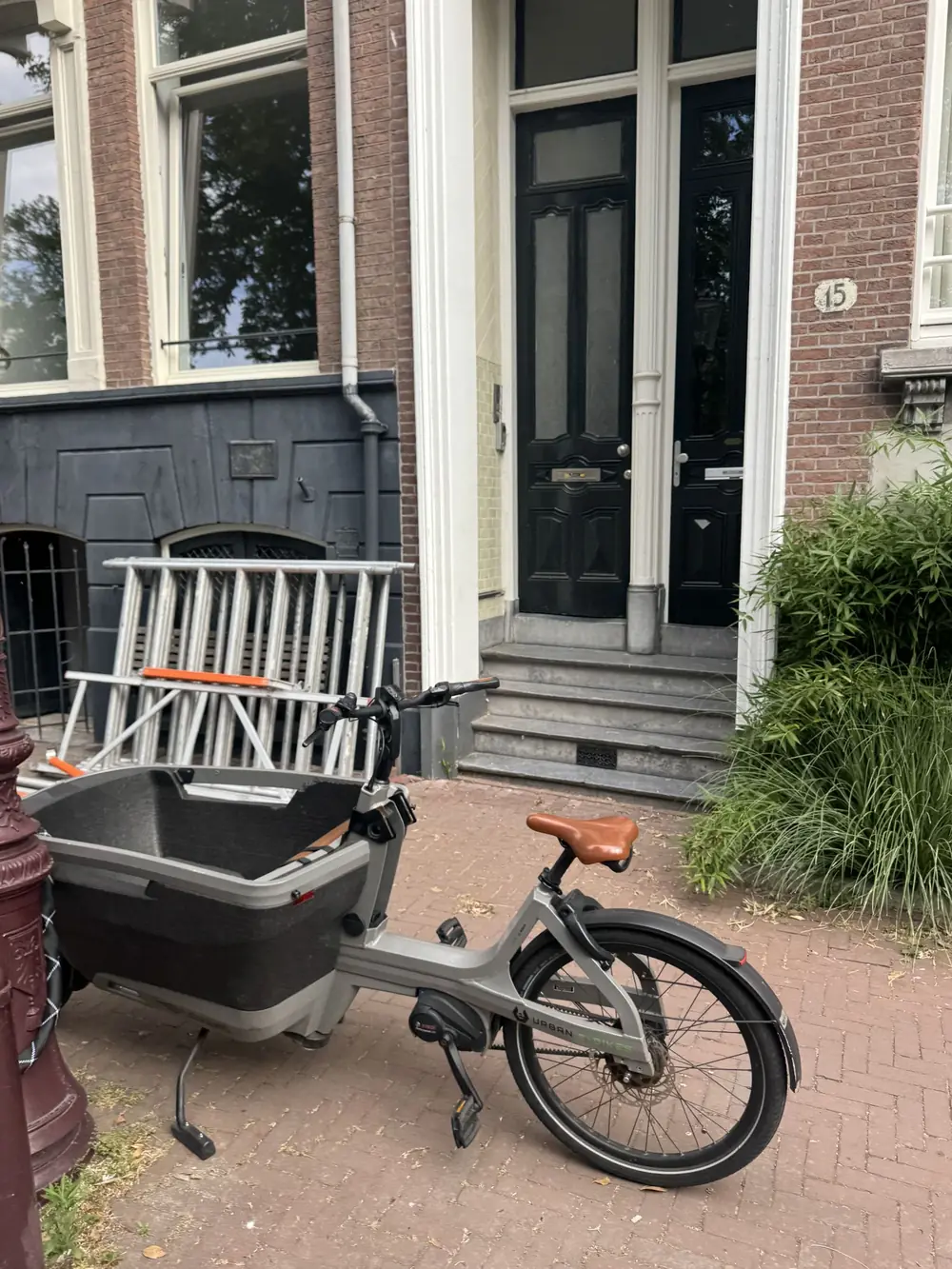
Stacked scaffold frames leaning beside the front steps of a brick townhouse, with a cargo bike parked on the pavement

If the same period has to cover the window frames along the front, the bay or the timber below the gutter, you are better off if you hire a mobile scaffold, which reaches further and gives you more deck to move about on. If it stays at the door and the fanlight above it, such a build is far more tower than the work calls for. Both are weighed against one another, with the heights each is meant for, at the choice between a MiTower and a mobile scaffold.
Working height to hire above a front door fanlight

The highest point when painting a front door is almost never in the door itself. Above the opening you usually find a fanlight, a painted lintel, a porch arch, a canopy or a lamp you have to work around. Measure to the top of that whole assembly and not to the head of the door frame. At an ordinary terraced house or a portico flat you land on 4 to 6 metres that way, and that is exactly the reach you take when you hire the MiTower.

From that figure you subtract roughly two metres to know where your deck has to sit, because that is how far you still reach above the platform. For a fanlight at five metres you stand at three. Measure from the paving slabs where the castors will rest and not from the threshold; with a porch of two steps that soon costs half a metre, and at a basement flat rather more. More worked examples sit with six metres of working height.

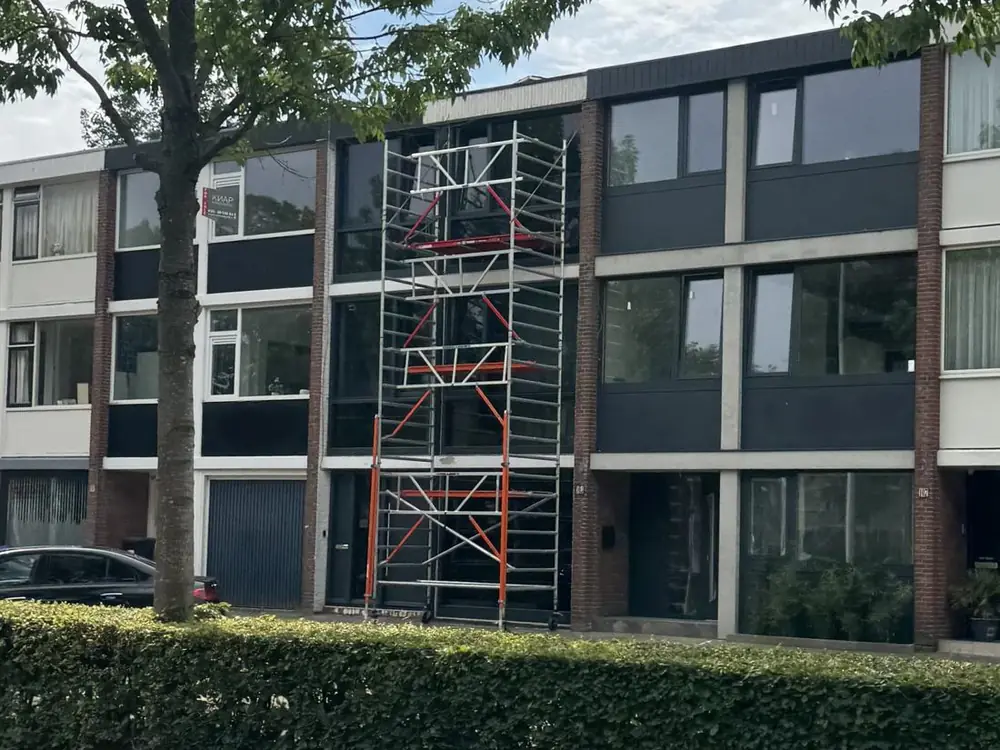
Mobile scaffold built up the full height of a three storey terrace, the stacked deck levels a tall build gives you

Hiring too low takes its revenge at a door in a tiresome way. You want to see the head of the frame and the rebate of the fanlight square on, because that is where most of the dust and most of the old paint stays behind. Stand too low and you look at it at an angle, miss an edge, and only see it once the door has dried and the daylight falls on it from the other side. One notch higher costs no extra time and saves you that recalculation.

Pitching your hired scaffold on the pavement outside the door

The spot for painting a front door is nearly always public ground. You stand on the footway, in a porch or on a small landing, which means working with less room than a garden allows. Put the setup beside the frame and not squarely in front of it: the door stays usable and at the fanlight you get a head on position. Always keep a strip of pavement over, so that people passing need not step into the carriageway while you are up there working.

Look carefully at the ground, because footways are rarely flat. There is a fall towards the gutter, slabs sit askew over tree roots, and at older houses a raised landing with a step in front of it. All four stabilisers have to bear weight; a leg resting on a rocking slab is not a leg. Where there is a step, place the hired scaffold wholly on the higher or the lower level rather than half over the edge, even if that puts you half a metre further from the door.

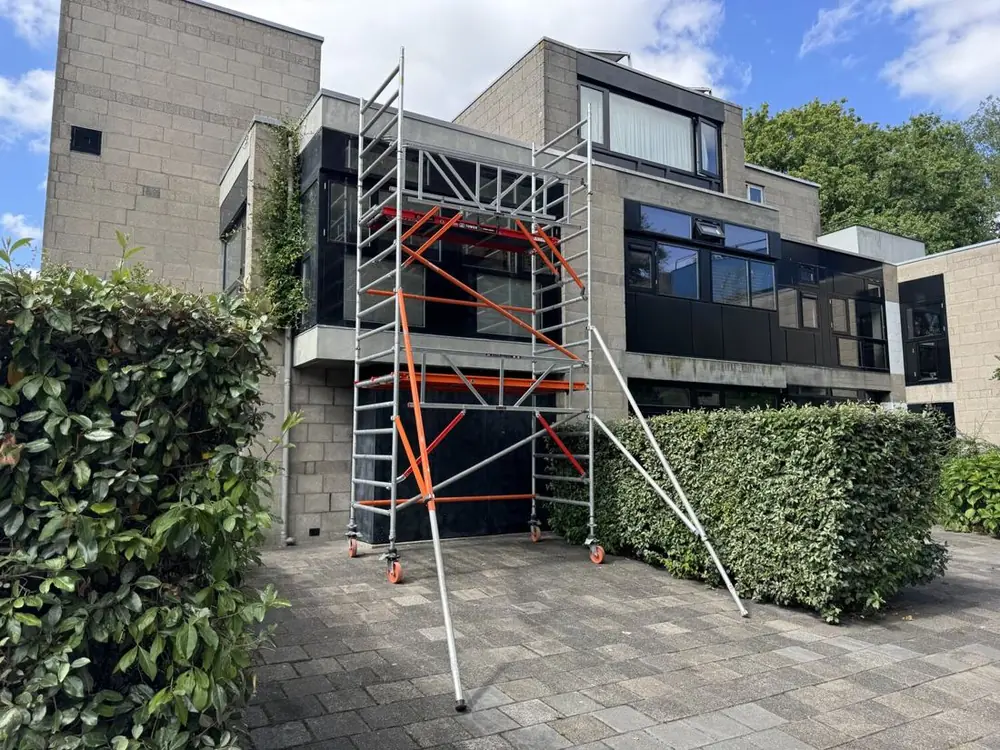
Mobile scaffold pitched on paving outside a grey house, four stabilisers splayed from the base onto the surrounding slabs

Think further about the obstacles that simply come with a doorway: bicycles chained to the railing, a car parked tight against the kerb, a planter beside the step, the meter hatches in the wall and a doormat you would do well to lift away. Ask at your council whether the footway in your street may be used, and place the tower so that the letterplate stays reachable for the post and the courier can still get to it.

How many days to hire the scaffold for one door

The door itself is small, but painting a front door counts a lot of stages. Degreasing, sanding, wiping off dust, filling where it is needed, priming and after that two coats of gloss, and between those coats it genuinely has to dry. For one door you therefore hire two to three days in practice, with half a morning of preparation on the first. Take in the fanlight and the surround as well, which nearly everybody does, and you arrive at three days sooner than two.

The waiting between coats is decided by the material and the weather, not by your diary. A door facing north dries more slowly; a door in full afternoon sun leaves brush marks because the gloss skins over too quickly. A day at the height of the pollen season, or one with rain hanging about, is better skipped entirely than half used. So work from the day on which you are certainly finished rather than the day on which it might just come off, and lay your rental period around it.

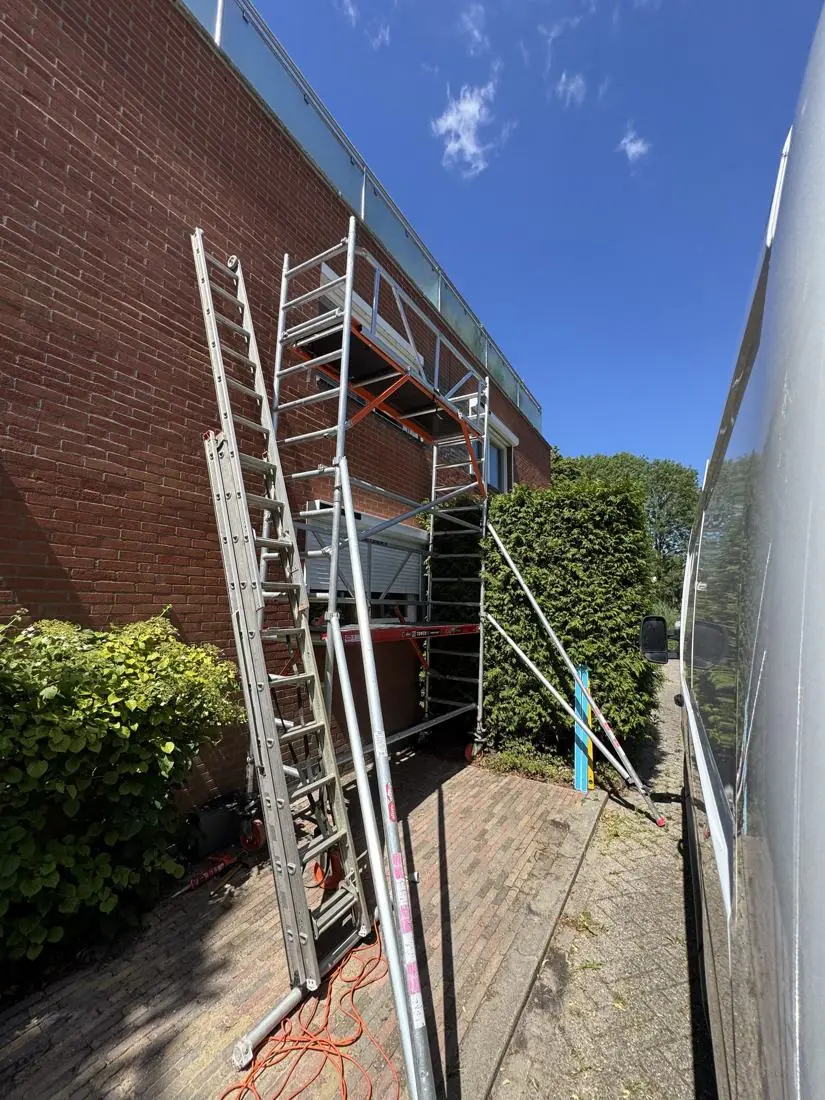
Mobile scaffold erected in a narrow side passage against brickwork, with a long extension ladder leaning alongside it

Your booking cushions that nicely. It is only that first twenty four hour period which carries the whole rate; and on top of it every further day comes in at 95 per cent below that, so one more drying day costs you next to nothing. Book tight and you will be standing at a door in primer watching the van pull up. Anyone who wants to work that out for a job with this much waiting in it will find it under the number of days to hire for.

Which mobile scaffold suits painting a front door?

Kamersteiger RS44
  • Working height up to 4 metres
  • Compact and narrow
  • Great for indoor and small jobs
View and calculate →
Smalle rolsteiger RS51
  • Working height up to 14.2 metres
  • Narrow (75 cm)
  • Ideal for narrow passages
View and calculate →
Brede rolsteiger RS52
  • Working height up to 14.2 metres
  • Wide platform (135 cm)
  • Extra stability and workspace
View and calculate →
Most chosen
1-persoons steiger MiTower
  • Working height up to 6.2 metres
  • Very compact
  • Quick and easy to assemble
View and calculate →

Painting a front door from a 245 cm platform

The platform you hire measures 245 cm, which at a door is longer than the whole opening. That length is what lets the tower stay in one place for the entire job while you still reach the hinge side, the lock side and the fanlight without climbing down. Work the head of the frame first and come down over the panels afterwards, so that a run or a spatter lands on a surface you have yet to lay off with the brush.

Painting a front door is the only paintwork about the house that people study from thirty centimetres. They stand in front of it waiting for you to open, taking in the rebate, the corners and the handle meanwhile. Every dried drip, every bristle out of your brush and every join between two strokes is visible at that distance. That is the argument for a fixed deck rather than a step: you can move back on it and read the surface in raking light before the gloss begins to pull.

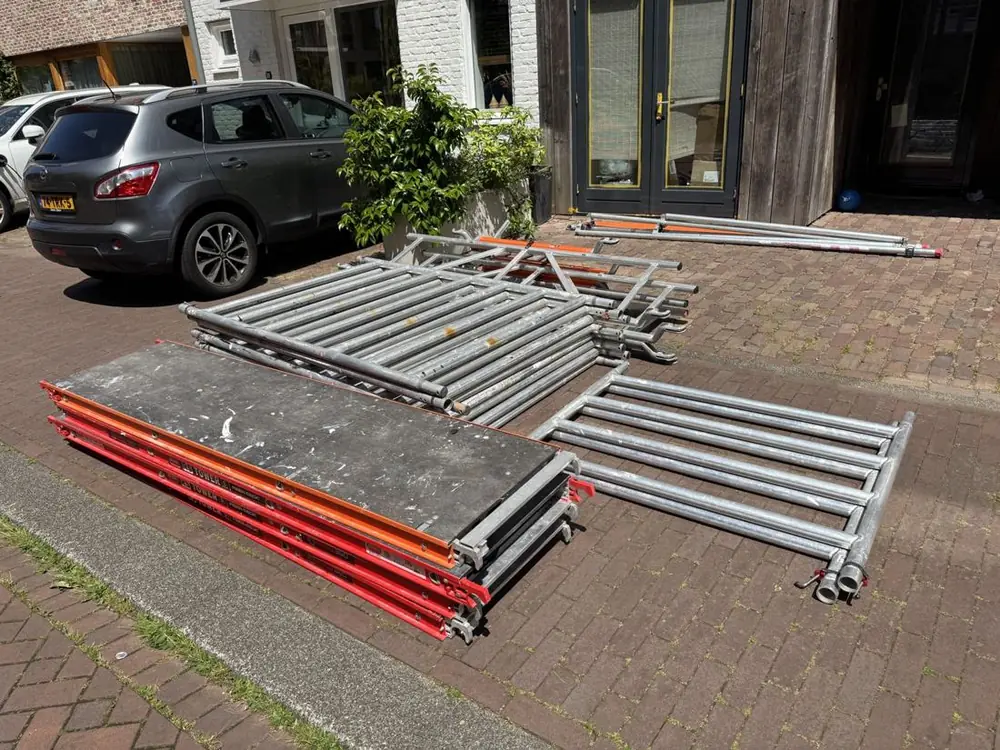
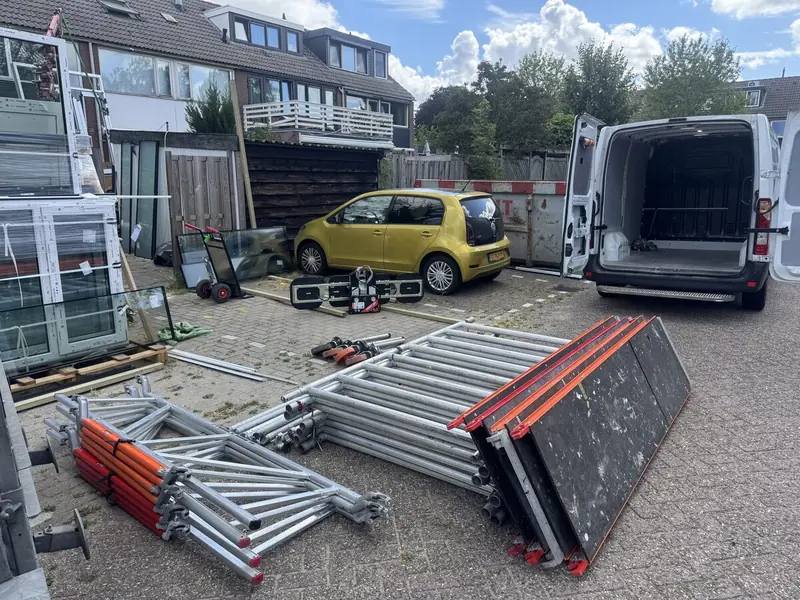
Frames, guardrail tubes and two red edged decks spread across a driveway, with a parked car alongside them

Begin at the lock. Around the handle, the cylinder, the letterplate and the bell sit years of hand grease, and no paint keys to that. Degrease that area first and abrade it only afterwards, because the other way round rubs the grease into the scratches. Choose your sheen deliberately as well: full gloss makes a door crisp and wipes clean but shows every ripple, while satin forgives more on an old panel that is no longer quite flat. From the deck you hire you see both in time.

Scaffold hire and delivery beside a door in daily use

Painting a front door brings a peculiarity with the delivery: the door you are going to paint is usually also the place where the parts get set down. So agree that unloading happens to one side of the opening rather than squarely across it, so you can still get past with a tin of gloss in your hand. Whoever books on a working day before 15:00 finds the counted set waiting the following working day, on a date they picked out themselves.

The set arrives as a counted package of loose parts and is small enough to raise on your own inside an hour. Lay the components next to the landing rather than on it, because you want the step clear for yourself and for the post. Afterwards we collect the complete set again on the day you passed on; you stack it dismantled in one place, preferably not hard up against a door that has only just been glossed.

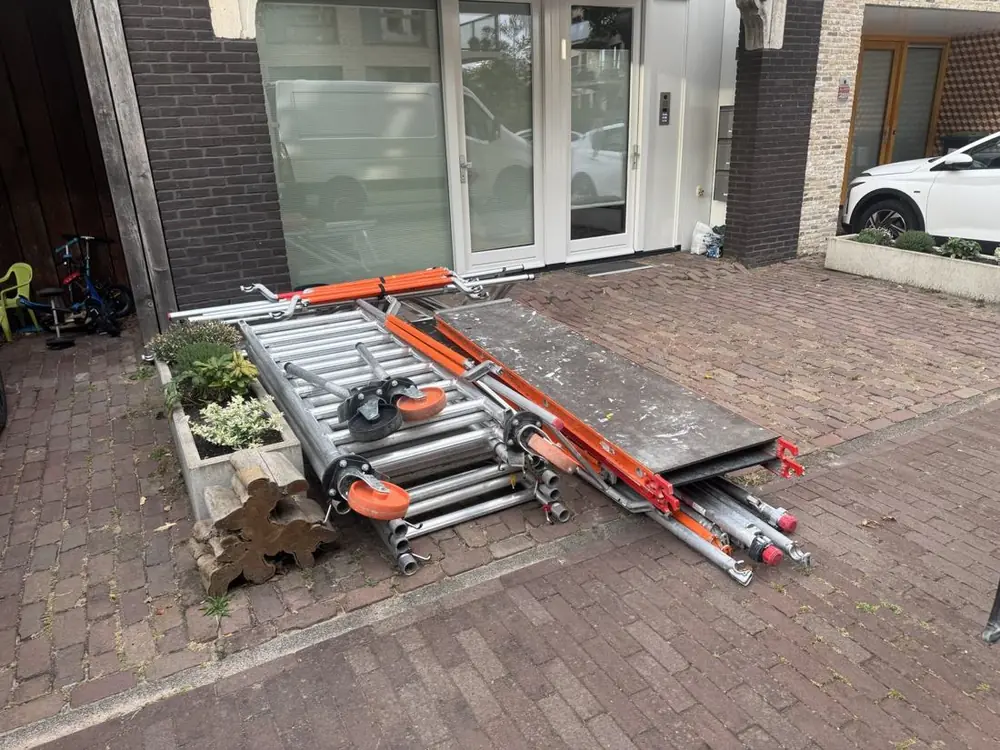
A counted heap of tubes, frames and one platform deck, dropped on the paving right beside a glazed entrance

Let the weather decide your delivery date. For gloss work outdoors you want two or three dry days in a row, so look at the outlook for that week first and only then fix your date. If it disappoints, you shift it; with a rental that is simpler than trying to finish a door between two showers. As long as you pass it on in time nothing else about your booking changes, and hiring the tower simply carries on as it was.

Safe working on a hired tower above an opening door

Door work does not load the deck heavily. Under EN 1004 this equipment counts as load class 3, which sets a limit of two hundred kilos on each square metre of the deck, and with a tin of gloss, some abrasive material and yourself you stay a long way under that figure. What it turns on here is stability on a narrow base: a one person setup on a sloping footway asks that you really run the stabilisers out and lock the castors before your foot goes on the first rung.

Never shift the setup while you are standing on it, not even that half metre from the fanlight to the side of the frame. Step off, release, roll, brake, and climb again. That sounds long winded for such a short distance, but on a footway with a fall a tower rolls away quicker than you think. In hard wind you stop outdoor gloss work anyway, if only because a wet coat then collects dust and blown leaves.

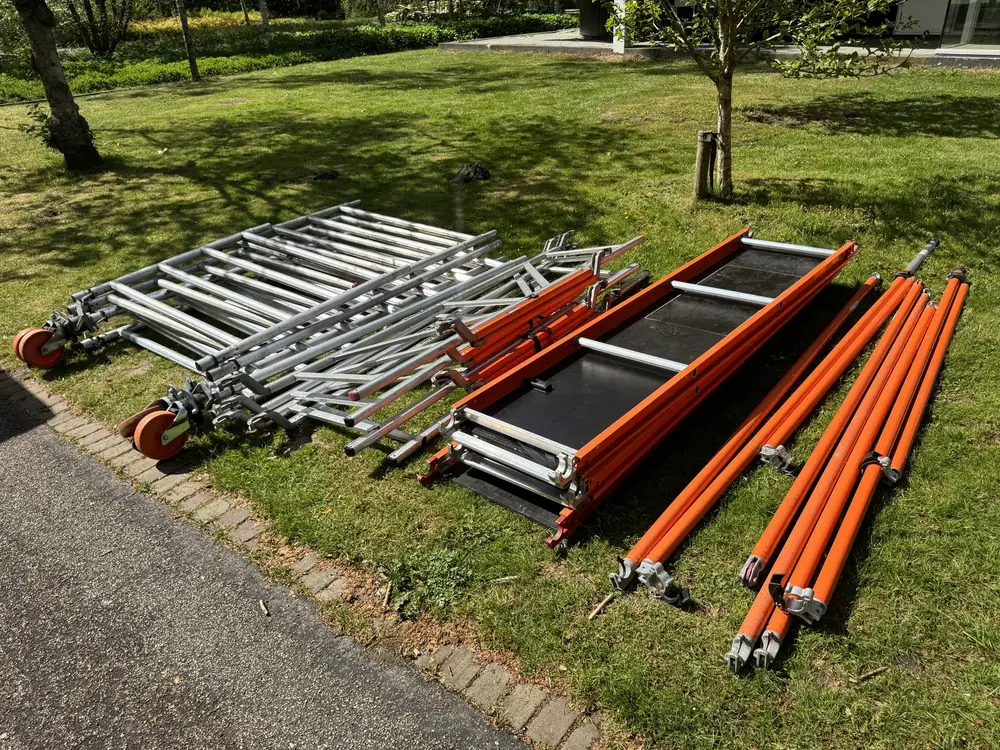
Frames on red castors, orange stabiliser tubes and one deck board arranged across a lawn ahead of building

The risks that belong with painting a front door come from below. People walk past, the post arrives, and the door itself can open from the inside while you are above it. So put a note on the door and warn the household, and keep the pavement under you clear with a cone or a length of tape. Never leave tools on the guardrail above a walking route, because a brush coming down from four metres lands squarely on somebody's shoulder.

In 5 steps

How hiring a mobile scaffold works

1
Choose working height

Pick the height that suits your job.

2
Book online

Sorted in 60 seconds, price shown instantly.

3
We deliver

At the agreed spot the next working day.

4
Assemble safely

Assembled by you, with a manual.

5
We collect

One call and we collect the scaffold.

Good to know

Practical tips for painting a front door

1

Unscrew the handle, the backplate and the letterplate flap rather than masking them. A door without ironmongery takes one continuous stroke, and tape along a backplate always leaves a ridge you have to sand back out.

2

Degrease the bottom rail of the door and the threshold too, where shoes scuff against it. That is where paint lets go first, and it is exactly the spot that seldom gets treated before priming.

3

Halfway through each coat, look along the surface from the side with the light raking across it. From the deck you spot a missed patch or a sagging edge while you can still brush it out.

4

On a spring day gloss in the morning, then stand a screen or a sheet of card at an angle in front of the door. Pollen and dust otherwise settle in the one surface that stays wet for hours.

5

Keep a small remainder of each coat in a sealed jar and write the date on the lid. After a winter of keys and bags along the lock you want the same colour and the same sheen to touch in.

6

Set your collection day half a day after your final coat. You do not want to dismantle beside a door that still feels tacky, and that extra half day of hire hardly registers in your total.

Frequently asked questions

Frequently asked questions about painting a front door

Which scaffold do you hire if you are only tackling the front door?+

In most cases a MiTower. It is a one person setup, narrow enough for a footway and tall enough for a fanlight or a canopy over the opening. Door work means little material carried up, so a large platform gains you nothing and only takes up room on the pavement. If the same period also has to cover the window frames or the wall itself, you are better off if you hire a mobile scaffold that reaches further and carries two people.

How does hiring a scaffold for painting a front door go in practice?+

Online you fix which model and which height you want, together with a delivery date and a collection date; the total, VAT included, is in front of you straight away. On the agreed morning the parts are lying beside your door and you assemble them yourself. After that the tower is yours until your last coat has hardened off. When you are finished you take it apart and leave the complete set stacked ready for the collection run on your closing date.

How many days must I hire for one front door with a fanlight?+

Two to three rental days is realistic for a door with a fanlight above it. The first morning goes on taking off ironmongery, degreasing, sanding and wiping down, then the primer follows, and only on days two and three do your finishing coats arrive. Between those coats it has to be genuinely dry, and that time cannot be cut short. Anyone hiring for a single day will certainly be standing at a half finished door on the morning the van turns up for it.

What does the hire cost for a door job, and how does the discount work?+

Your rental price is built up out of two things: the model on your booking and the height you build it to; bringing and fetching stands next to it as one amount per province. Everything is shown with VAT included in the overview of our rates before you commit to anything. For a door that structure is kind: day one weighs fully, the days after it almost not at all. Planning an extra drying day therefore beats risking a job left half done.

What working height should I hire if there is a canopy over my front door?+

Measure to the top of that canopy, because it is your highest point and not the head of the door frame. At an ordinary house you then hire a tower with a reach between four and six metres, which puts your deck comfortably below the fanlight itself. Sitting in a deep porch or under a balcony, take the tallest build the spot will still hold, and check the headroom above the setup before the parts are delivered to you.

Is the tower delivered, or is fetching it myself better for this hire?+

For work at your own front door delivery is usually handiest; what that costs is a fixed amount per province and you will find it under the charges for bringing and fetching. Because a MiTower is compact, collecting it yourself is more realistic here than with a tall tower: by appointment you can load up free of charge at Zeeburgerpad 89 in Amsterdam. Do measure your load space beforehand, since the deck boards run longer than a back seat and will not bend for anybody.

Do I have to erect the scaffold myself after hiring it for this job?+

Yes, assembly is your part, and with this model one person manages it alone. There is a manual in the set, plus a video that shows the building sequence one stage at a time. What we hire out is mobile towers, room scaffolds and the MiTower, always as a loose set of parts and never standing; neither facade scaffolds nor cherry pickers appear anywhere in our range. At a door that is no hindrance at all, because the setup stays exactly where you put it throughout the period.

Can I hire for longer if the door is not dry on time?+

Yes, and with gloss that happens more often than you would wish. A cold night or a day of high humidity shifts your whole plan along by one. Tell us the revised collection day as soon as it becomes clear, and the tower simply stays standing while your rental runs on at the low daily rate. Dismantling beside a door that has not cured through is the last thing you want, because every tube that taps against it leaves a dent behind.

How much pavement does the setup I am hiring actually ask for?+

Add to the width of the tower the four legs that splay out of the base; together that comes to roughly two metres square around the setup. On a narrow footway that often means placing it beside the frame instead of in front of it, with a walking route left alongside. Where there is a raised landing with a step in front, stand the hired tower wholly on one level and never half over the edge of it.

Suppose it rains right through the days I have hired, what then?+

Then you do not gloss. A wet coat and a shower give you marks that only come out again with abrasive, and pollen after rain sticks just as fast. The tower can stay where it is, provided it is properly braced and you leave it unmoved. Push your collection date back by a day and carry on once it clears up; hiring for longer always works out better than a coat you have to redo entirely a week later.

How quickly do I get the deposit back once I have hired the scaffold?+

Within one working day of the parts coming back, the deposit is on your account again. With gloss work, watch above all that you leave no paint on the deck boards or the guardrails; a drop that cures on a hired tower does not come off any more. Lay a sheet of card under your tin and wipe any spatter away at once with a cloth, and the refund stays a formality that need never occupy you.

Does it matter for the hire whether my door is timber or plastic?+

For the tower it does not, for your planning it does. Timber asks for sanding, degreasing and sometimes filling, and that costs half a day extra. Plastic and powder coated aluminium have to be keyed properly and need an adhesion primer, which brings another drying stage with it. With those two you hire the scaffold for three days rather than two, even though the surface you are covering measures exactly as large as it does on a timber door.

Hire a mobile scaffold for painting a front door today?

Calculate your rental price now or ask for free advice.

Rolsteiger van SteigerTaxi geleverd op locatie
Book it online

Your scaffold sorted in 2 minutes.

Choose your scaffold and working height, see the price instantly and book online.