
See your price
Application

Replacing a chimney cap? Choose the right scaffold.

Replacing a chimney cap does not begin with the new plate but with getting the old one off without the top courses coming away too. Seized bolts, legs bedded into mortar and a head you only read properly from close up make this less predictable than capping a stack for the first time. You hire the RS52 for it, the tower with a 135 cm deck, taken up to work at around 8 to 12 metres. Below: the hire period, the standing place and how the old plate comes down.

  • Order before 3 pm, delivered tomorrow
  • Professional Altrex scaffolds
  • Up to 14.2 metres working height
  • Easy to assemble yourself
4,2 tot 14,2 mWorking heights available
12Provinces served
7Days a week
200 kg/m²Load class 3
In short
  • For replacing a chimney cap we recommend the Wide mobile scaffold.
  • Replacing a chimney cap calls for the wide RS52, built up until you are working somewhere around 8 to 12 metres.
  • That 135 cm deck holds the old plate and the new one side by side, along with your grinder, spanners and drill.
  • Never pull at a cap that has seized; free the fixings first and lower the old plate on a line afterwards.
  • First 24 hours from €175 incl. VAT and delivery; every day after that 95% off.
Key facts for this job
FeatureValue
Recommended scaffoldWide mobile scaffold (Altrex RS TOWER 52)
Working height for this job8 to 12 metres
Available working heights4.2 to 14.2 metres
StandardEN 1004, load class 3 (200 kg per m²)
DeliveryOrdered before 3 pm, delivered next working day
Each extra day95% off, from €8.75 a day
Why a mobile scaffold for replacing a chimney cap?

Safe, stable and professional work at height

On a replacement you work the same head twice: something comes off before anything goes on. That doubles what travels up with you and it makes the duration uncertain, because only when the old cap is free do you see what has been sitting underneath. Sometimes that is tidy brickwork, sometimes a sunken course, a weathered flaunching or an old nest. So replacing a chimney cap needs a deck that swallows tools and two slabs at once, plus enough height to look in under the old plate before you break the fixings. That is the reason to hire a wide tower instead of propping a ladder against the gutter and hoping.

  • Replacing a chimney cap starts with removal
  • Look under the cap before breaking any fixing
  • Two plates and a toolbox on one deck
  • Bringing the old cap down under control
Read more about working safely →

Deck space on a hired tower for replacing a chimney cap

At some point in this job two plates are up there together: the old one you have just freed and the new one still to be tried for fit. The choice therefore lands on the Altrex RS52, 135 cm between the guardrails with a boarded length of 245 cm. That gives you somewhere to put the old cap down while the head is swept off and the holes are checked. Hiring a tower for replacing a chimney cap is really a question of temporary storage at height, halfway between the ground and the head.

A narrow RS51 at 75 cm just about copes with bolting a light plate on, but it grates on a replacement. You are forced to send the old cap down before you can carry on, and that means an extra run with a line at the worst point of the day. Go narrow only where the way through to the back forces it, and measure the tightest pinch point first. Both widths appear in the range of towers you can hire.
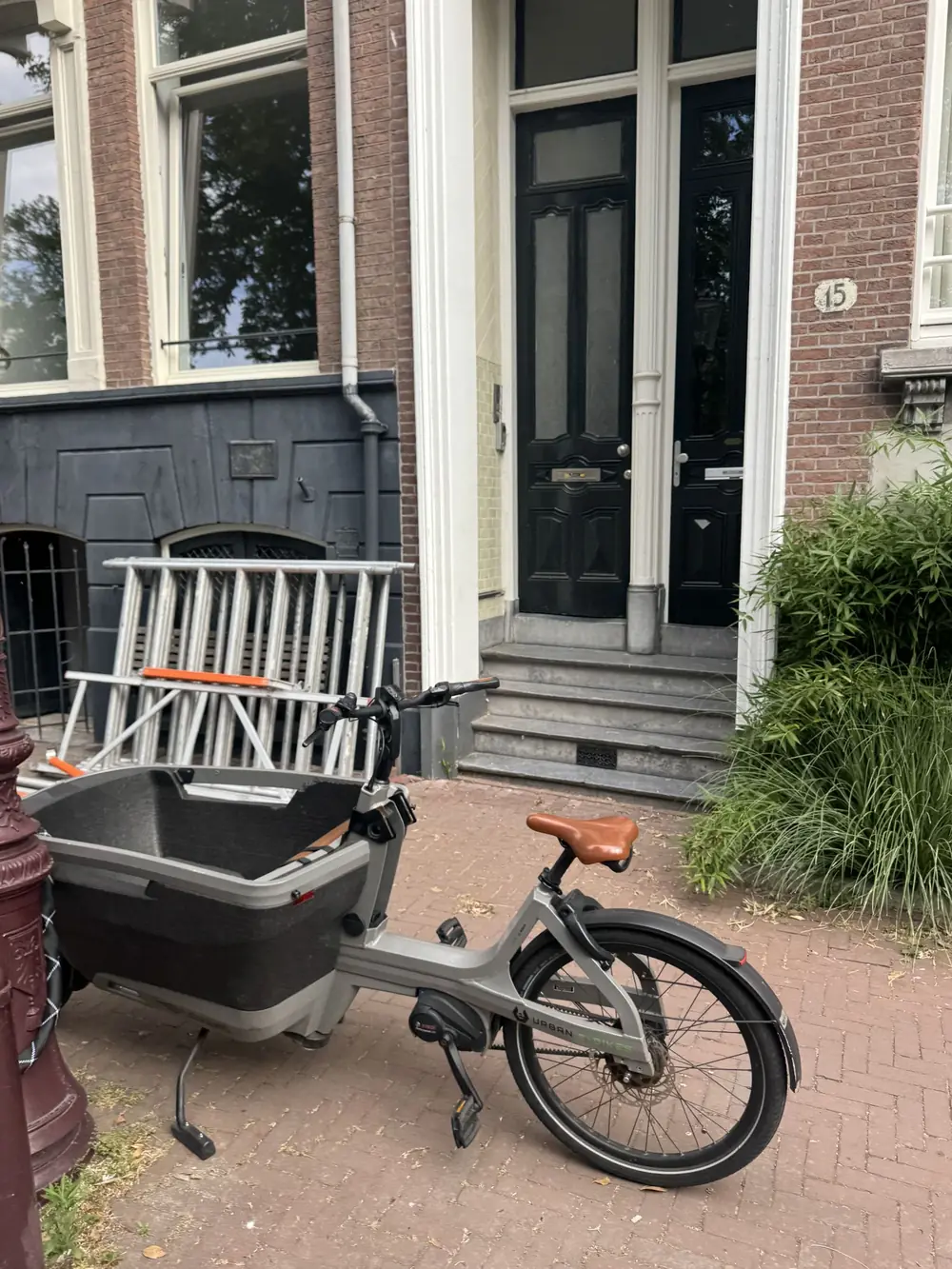
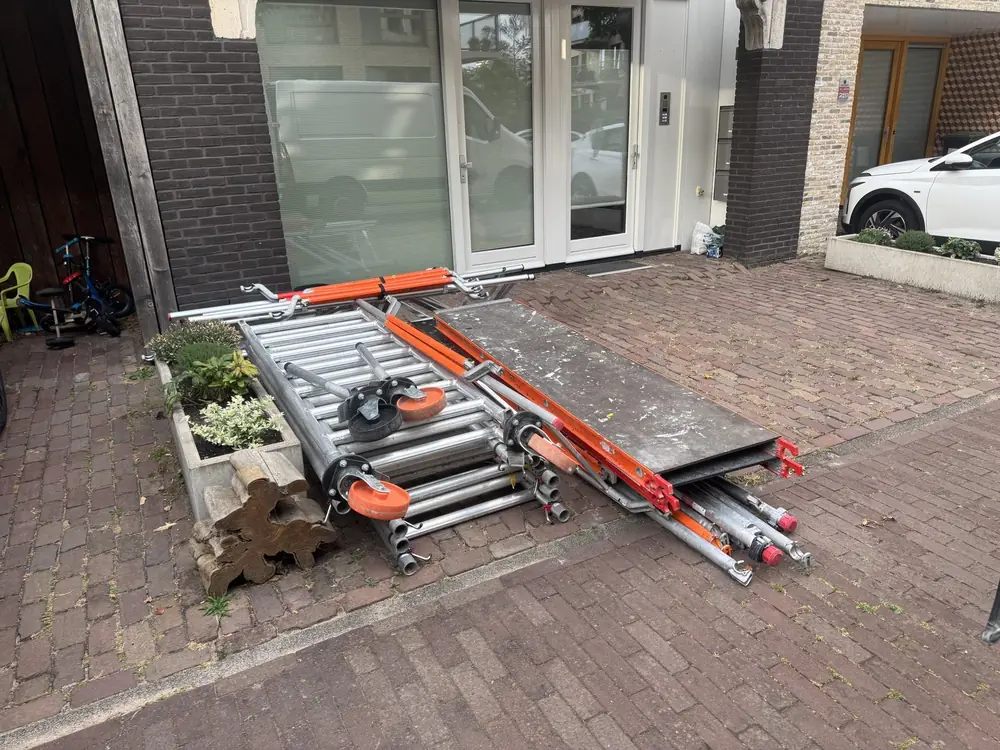
Guardrail frames propped by a front door, arriving as loose parts whether the booking is the wide or the narrow build.

Smaller models are nowhere near a head on a roof. A room scaffold, the RS44, gets you 3 to 4 metres and is built for inside the house, slim enough from around 70 cm to pass an internal doorway. The MiTower takes a single person as far as 6.2 metres, which is not enough to work safely around a heavy concrete plate. Only the RS52, which goes on up to 14.2 metres as a model, is a serious candidate for a head on a roof.
Working height on a hired tower before the old cap shifts

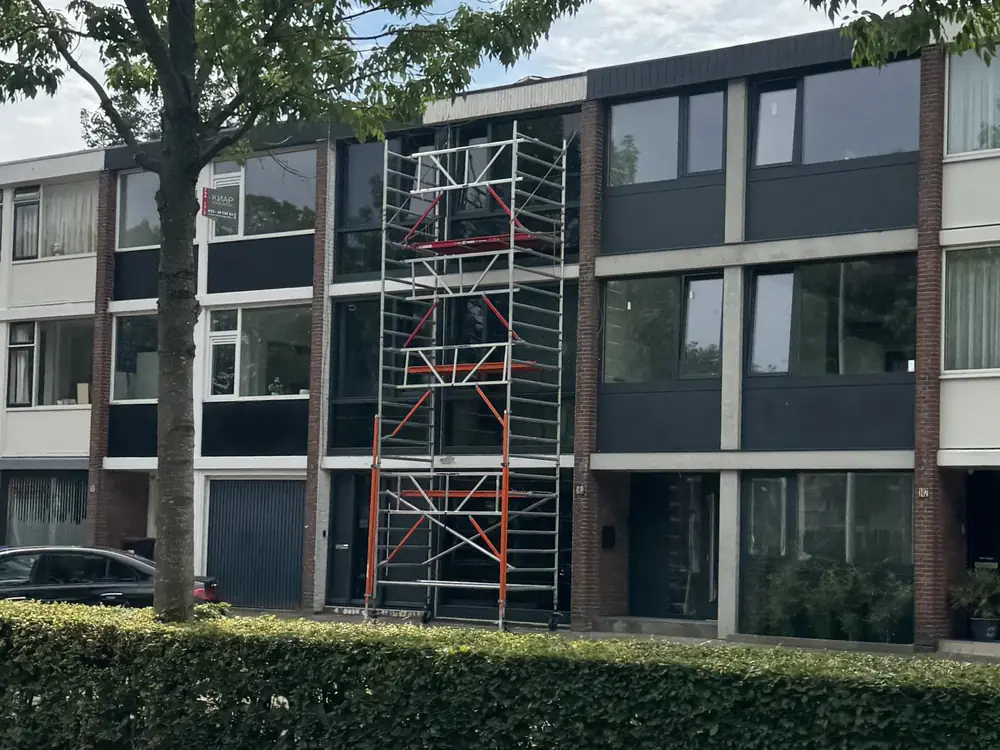
Do not measure to the top of the old cap; measure to the topmost brick of the head beneath it. That plate is coming off, and afterwards you have to clean the rim, inspect the holes and set the replacement true. Two storeys puts you in the 8 to 12 metre band for working height, and the platform then hangs at 6 to 10 metres. The difference between those two numbers is reach: a platform height plus something like 2 metres is what working height means.

On this job, take the extra half lift rather than the one below. Freeing the old fixings means being able to look in under the rim of the plate, and you cannot do that squinting up at it from underneath. Stand a little higher and you see straight away whether the legs are bedded into mortar, whether brackets run round the outside and whether anyone has used sealant. The build that goes with ten metres of working height is set out with its part count.

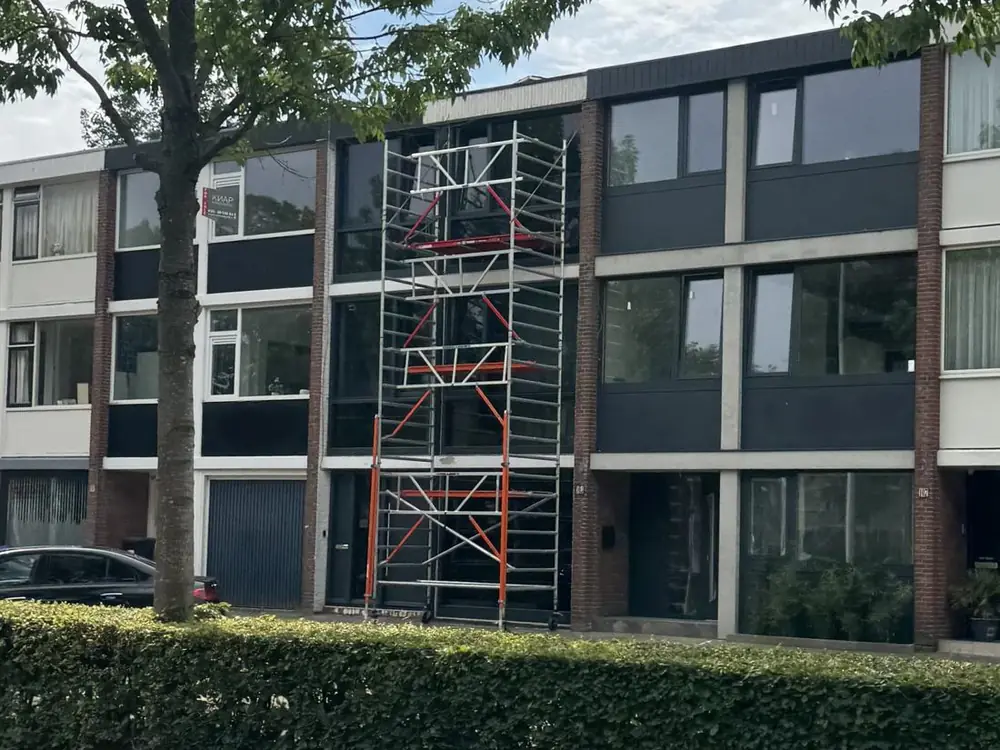
Tower standing along a front elevation and reaching past the roof edge, the sort of build a cap swap needs

The tape begins on the ground where the wheels will sit, not on the threshold or the terrace. Where a back garden lies below street level, count that drop into the build you order. On a house whose chimney breaks out above the second floor you are almost always in the upper part of the band. Fall short and the old plate hangs at chest height while you need to tilt it, which is not a position to be in with concrete.

Clear ground under the tower when replacing a chimney cap

Where the build goes depends on where the chimney comes through the roof. If you can get at it over the flank wall, the tower stands at the side; on a mid terrace it is normally the back garden. Where the head pushes up out of the middle of a pitched slope, no amount of building up will bring you to it and hiring a tower achieves nothing at all. Study that from a distance first, from across the road or from a window on the far side.

Underneath you want level, load bearing ground with clearance on every side for the outriggers. Then set aside somewhere for the old cap to end up once it is down on the ground: a trailer, a barrow, or a sheet spread out on the grass. Without that spot a heavy, dirty slab lands in the middle of your terrace or up against the wall, and you finish up dragging it about later. Give some thought to disposal as well, since a plate like that rarely fits in a car boot.

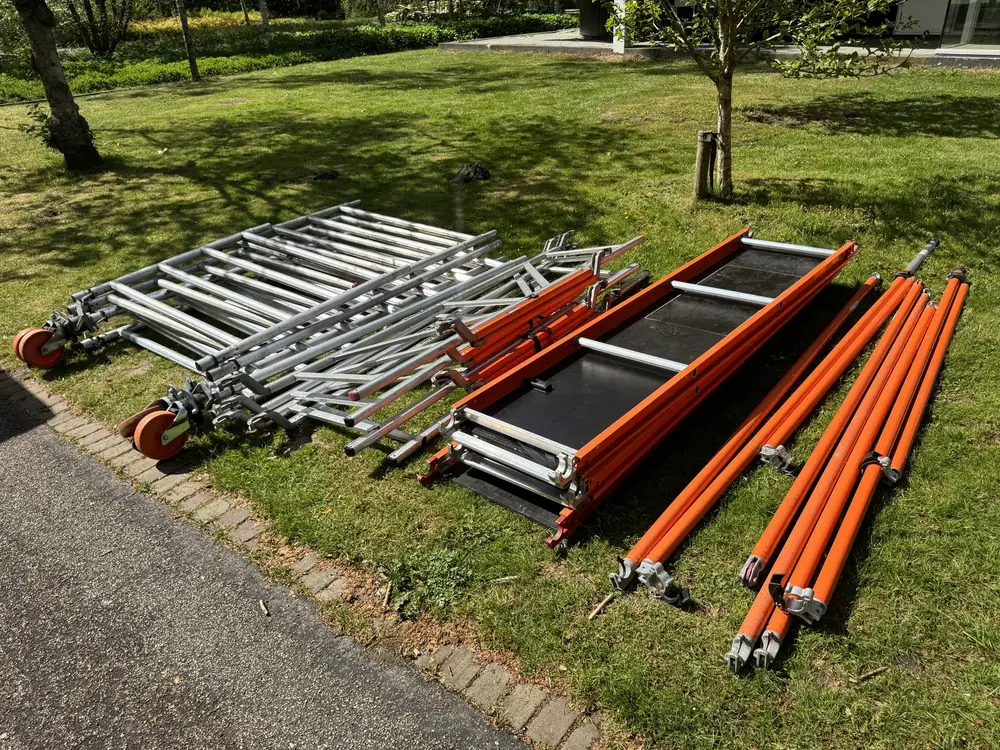
Scaffold components lying on grass beside a house, the clear ground a tower and a discarded plate both need

Keep the zone below completely empty for as long as the old cap is still fixed. Lumps of mortar come away the moment you start freeing the fittings, and a piece of cement occasionally travels well beyond the base of the build. No bicycles, no garden chairs, no children playing, and a word to the neighbours where a garden or a narrow path is shared. If a leg lands on the footway, ask the council what is permitted.

Booking enough hire days for replacing a chimney cap

Two to three hire days is a sensible commitment here, and it is worth setting them out in order. The build fills a half day; freeing the old plate takes an hour when the bolts cooperate and half a day when everything has seized. After that comes cleaning the head, making good whatever you find, and only at the very end the setting and levelling of the new plate. That sequence compresses badly and hurries even worse, particularly ten metres above the garden.

The uncertainty sits in what is waiting under the old cap. Loose bricks, a weathered flaunching or a hole that has been letting water in all mean pointing or rendering before the replacement can go on. Fresh mortar also wants to set before anything heavy sits on it, and that costs a night at least. Reckon on one spare day beyond your programme, then, even if you are convinced the job is a morning's work.

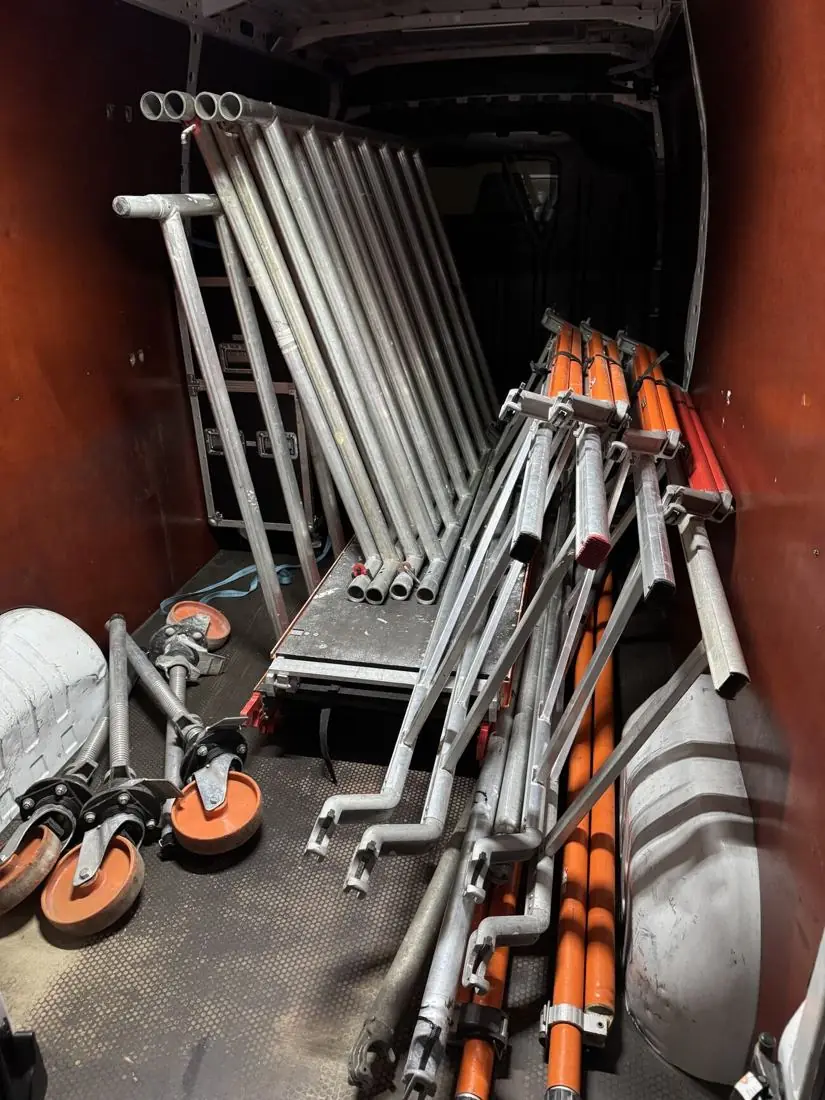
Scaffold parts bundled and ready for transport, the counted load that goes out and comes back at the end

That slack is affordable because every day beyond the first twenty four hours is 95 per cent cheaper. Adding a date behind your planning costs far less than a second delivery and a second build because the old plate turned out worse than expected. Put the collection day after the day you expect to finish, then, rather than on that day itself. Every figure appears with VAT alongside it in the rental prices per model.

Which mobile scaffold suits replacing a chimney cap?

Kamersteiger RS44
  • Working height up to 4 metres
  • Compact and narrow
  • Great for indoor and small jobs
View and calculate →
Smalle rolsteiger RS51
  • Working height up to 14.2 metres
  • Narrow (75 cm)
  • Ideal for narrow passages
View and calculate →
Most chosen
Brede rolsteiger RS52
  • Working height up to 14.2 metres
  • Wide platform (135 cm)
  • Extra stability and workspace
View and calculate →
1-persoons steiger MiTower
  • Working height up to 6.2 metres
  • Very compact
  • Quick and easy to assemble
View and calculate →

Lowering the old plate from the hired scaffold deck

Begin by looking rather than pulling. Walk the four faces and work out how the cap is held: on legs with bolts, on brackets clamped round the head, or on legs bedded into the brickwork. Undo the bolts instead of levering at them, and cut them off when they will not shift at all. Where legs are mortared in, chop the mortar away around them. Hauling on a seized cap brings the top bricks with it, and then you have a masonry job on your hands as well.

Once the plate is loose it goes down under control, not over the edge. Pass a line round it, tilt it gently onto the boards and lower it along the outside while somebody at the bottom steadies it and watches the zone. A concrete slab weighs tens of kilos and shatters into flying pieces if it is dropped from that sort of height. Take your time over that one moment, because it is comfortably the most dangerous quarter of an hour in the entire job.

Platform of a mobile tower against a house, the level from which a freed plate is lowered on a line

Then comes the part nobody can plan for in advance: the cleaning and the judging. Brush the head off, see whether the top course still holds, check whether water has been running down into the flues, and make good anything that has worked loose. That inspection is precisely where replacing a chimney cap differs from putting a first cap onto a bare head, where the brickwork can be assessed before you order. Here you know nothing for certain until the old plate is standing on the ground.

Hiring a tower with delivery once the new cap arrives

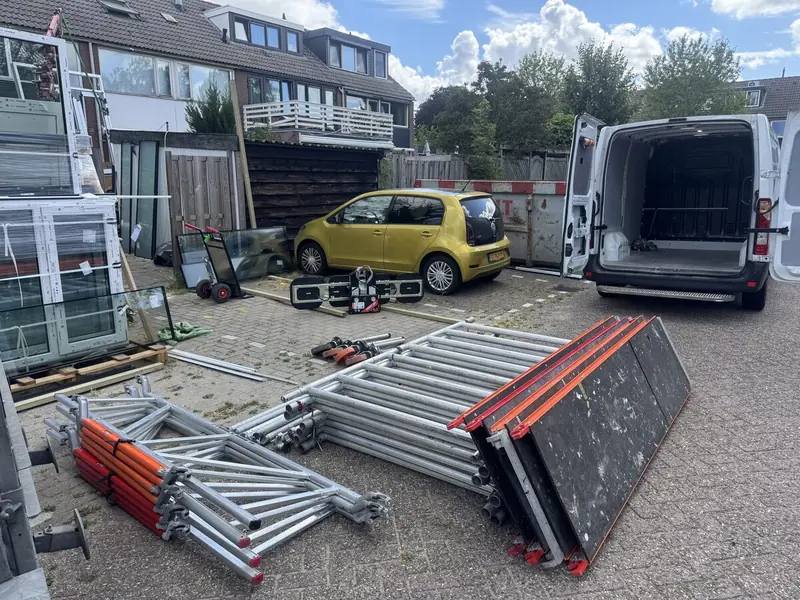
What turns up is a complete, counted heap of separate components; nothing arrives ready built. Pick a place for that heap which is not the place the old cap is going to land, because those two things on one drive do not work. Orders that reach us on a weekday before the clock turns 15:00 go out for the next working day. Ideally schedule the delivery after the replacement cap has been dropped off, so nothing needs storing.

Erecting it stays your job, with the manual beside you and the build video within reach. Two people need a half day for that, outriggers set and guardrails checked all the way round the platform. Do not run the build into the same morning you mean to free the old cap, or you begin the heaviest part of the whole job with half a day already in your arms. A separate build day here is planning rather than luxury.

Counted set of scaffold components stacked on a kerb, delivered loose for the hirer to build up on site

Afterwards you take the tower apart, count the components and stack everything at the agreed spot, and we come for it. Before that, check that no grinding dust or cement residue has been left on the boards from freeing the old plate. A bucket of water and a stiff brush deal with it easily enough, as long as none of it has been left to dry on. What the journey costs in each province is listed under the delivery charges, VAT included.

Replacing a chimney cap safely at the top of the tower

Load class 3 under EN 1004 permits 200 kg on every square metre, and that is the class these boards belong to. On a replacement it matters more than on other work, because at some point an old concrete slab lies next to a new cap with two people and a tool case in between. Send the old plate down before you bring the new one up, then, rather than letting the pair of them wait on the boards together.

Wind counts twice over when there are two loose plates. Old or new, the cap catches like a sail the instant you tilt it, so put off both the freeing and the fixing in a strong blow and leave the plates flat until then. The rest is familiar: brakes on the wheels before anyone goes up, nobody and nothing on the deck while the tower is being moved, and the outriggers reset and checked after each shift.

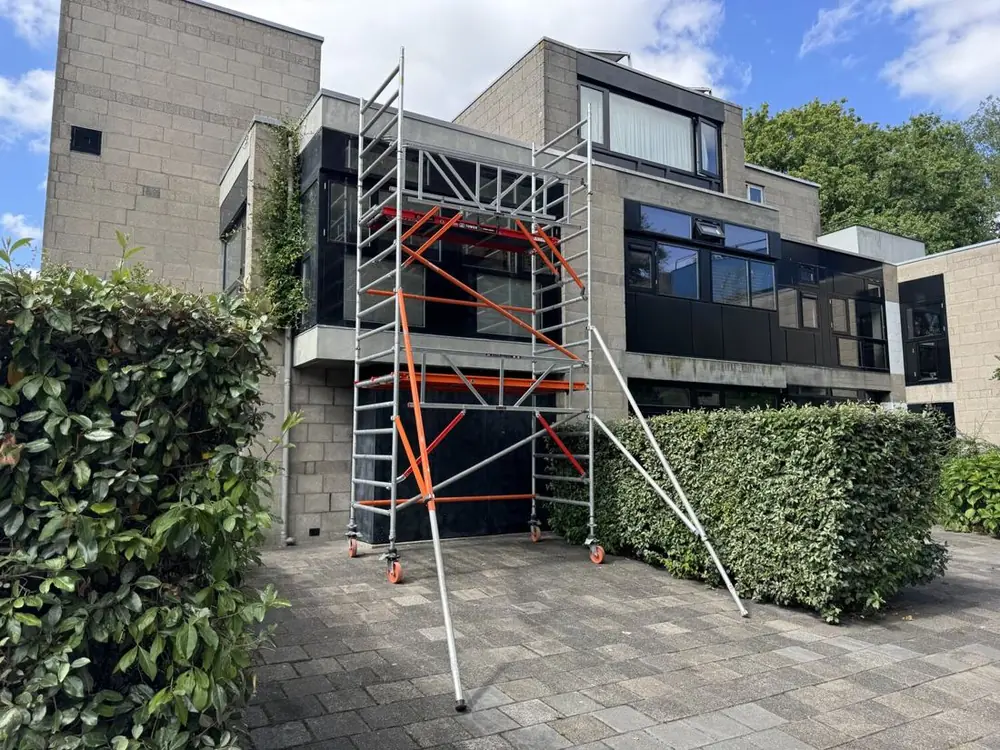
Outriggers set out at the base of an assembled tower, the feet that get checked again after every reposition

The greatest danger in this work is the head itself. A cap that has sat tight for twenty years can come away with the brickwork attached if you lever at it, and then rather more than a plate falls. Work by freeing things off, never by pulling at them, and keep the ground beneath clear the entire time you are busy with the fixings. Guarding against a fall is covered under fall protection on a mobile tower.

In 5 steps

How hiring a mobile scaffold works

1
Choose working height

Pick the height that suits your job.

2
Book online

Sorted in 60 seconds, price shown instantly.

3
We deliver

At the agreed spot the next working day.

4
Assemble safely

Assembled by you, with a manual.

5
We collect

One call and we collect the scaffold.

Good to know

Practical tips for replacing a chimney cap

1

Photograph the old cap on all four faces before anything is undone. Those pictures show exactly how the fixing ran, which saves hunting about when the new plate has to land on the same points.

2

Take an angle grinder and a spare disc up with you. Seized bolts almost never come away with a spanner, and a second trip down for tools costs ten minutes at this height every time.

3

When replacing a chimney cap, put the new plate on the boards only once the old one is down. Two plates on a deck makes turning awkward, and tilting one needs room around your feet.

4

Have a barrow or a sheet waiting where the old cap is going to land. A filthy concrete slab leaves rings and staining on a tidy terrace that you will not get out again afterwards.

5

Measure the head after the old cap is off, not before. The outside dimensions of the brickwork often differ from the plate that has been sitting on it, and you find that out only once it is gone.

6

Keep the collection date one day looser than your programme suggests. If the brickwork under the cap turns out to need repair, you want that mortar set before the plate and the tower both disappear.

Frequently asked questions

Frequently asked questions about replacing a chimney cap

Which mobile scaffold do you hire when the old chimney cap has to come off?+

Take the RS52 with its 135 cm deck width. When replacing a chimney cap the old plate and the new one lie on your platform within a short space of each other, and that width is exactly what it is for. A narrow 75 cm tower obliges you to send the old cap down before you can do anything else. Only a tight passage to the back of the house justifies hiring the slim version, and then everything you need travels up and down on a line.

How does the hire work when you are replacing a chimney cap?+

You fix the model and the height online, nominate an arrival date and a going date for the set, and pay up front with VAT counted in. Nothing else about the hire is complicated. The set is dropped off, the tower goes up by your own hand, the old cap comes away and the new one goes on. On the final day everything stands stripped for the van. Choose that end date generously here, because only from the deck do you learn what state the head is in.

Replacing a chimney cap: how many days should the tower stay on hire?+

Two to three hire days usually covers it. Allow a morning for the build, then freeing the old cap, cleaning the head and, last of all, setting the new plate true. If the bolts have seized or the brickwork beneath turns out to be loose, the job grows by half a day, which happens often enough to be worth planning for. Book tightly and you are standing over an open head halfway through the week, which is the worst possible moment to be handing a hired scaffold back.

What does hiring a scaffold cost when a chimney cap needs replacing?+

Your rental price depends on which model and which build height you settle on, plus a fixed provincial sum for bringing the tower and taking it away again. Everything is quoted online with VAT already beside it, so the sum is clear before you commit to a date. The discount structure suits this job: the first day counts in full and each later one barely at all. Since nobody knows what is under the old plate, a generous period beats a second booking when things go against you.

Which working height do you hire if the chimney cap is being replaced?+

On two storeys you want a working height somewhere around 8 to 12 metres, which sets the deck of the scaffold between 6 and 10 metres. Measure to the topmost brick of the head and not to the top of the old cap, since that is leaving. Take the extra half lift so that you can see in under the rim of the plate before any of the fixings are broken. Then you know at once how it is held.

Is the tower delivered for this, or do you have to hire and fetch it?+

Delivery runs on the day you choose, at a fixed sum per province that already covers taking the scaffold away afterwards. Fetching it is allowed too: by appointment the set is waiting at no charge in Amsterdam, at Zeeburgerpad 89, if your car and trailer manage the whole lot in one run. A build reaching above the roof edge runs to a great many parts, so having the tower brought to you saves two journeys and a good deal of lifting.

Do you erect the tower, or is that down to the person hiring it?+

The build stays with you. We drive the complete set round and take it back when you have finished, while assembling, moving and stripping the scaffold sit on your list. The instructions supplied walk you through the order of work, and two pairs of hands need a few hours for it. Give the build a day of its own, because freeing an old chimney cap wants rested arms and a calm programme rather than a half finished tower waiting on you.

What if the swap overruns and you need the scaffold on hire for longer?+

Ring or email it through and the collection day gets pushed back, unless of course the tower has already been promised to the customer after you. On a cap replacement that comes up more often than average, since only after the plate is off do you see whether the brickwork below wants repair. Book a spare day at the outset if in doubt, because the end date can equally well be pulled forward again if it all goes smoothly and the plate seats first time.

How much room do you need beneath the chimney for a hired tower?+

Count the footprint of the scaffold together with the outward reach of the outriggers, and keep a clear strip besides where the old cap and lumps of mortar may come down. You also want somewhere on the ground for the plate itself once it is down: a trailer, a barrow or a sheet laid out. A shed or a thick hedge hard against the wall moves the whole build round to another side of the house, and sometimes out onto the street.

Can the old cap come off on a windy day during the hire period?+

Rather not. A freed chimney cap catches the wind the moment you tilt it, and that is exactly when both your hands are already committed. The tower can stand there quite happily, so shift the freeing to a calmer morning. Use the day instead to expose the fixings, work penetrating oil into the bolts or check the new plate against the figures you took. One more day on hire is cheaper than a dropped slab.

How soon does the deposit come back after the hire ends?+

The sum you paid as a deposit lands back in your account within 1 working day of the return, straight after the set has been counted. On this job look particularly for grinding dust, cement residue or fragments of the old cap left on the boards and tubes. Walk the garden as well for a brace or a cap nut that rolled off while the tower was coming down, because a gap like that shows up straight away in the count.

Is hiring for a replacement different from hiring for a first cap?+

Not in height or model, but certainly in duration. Anyone putting a first plate on knows in advance what they will meet and can programme the work tightly. On a replacement something comes off before you learn whether the head underneath is sound. Reckon on a longer hire period and a looser collection date, even though you hire a mobile scaffold of exactly the same model either way. That uncertainty is built into the work, not into the booking.

Hire a mobile scaffold for replacing a chimney cap today?

Calculate your rental price now or ask for free advice.

Rolsteiger van SteigerTaxi geleverd op locatie
Book it online

Your scaffold sorted in 2 minutes.

Choose your scaffold and working height, see the price instantly and book online.